A soft rain tapped against the kitchen window the afternoon my granddaughter Clara decided she wanted to “bake something fancy.” She had just come back from a school event, still wearing a paper bracelet and carrying a tiny dried flower she insisted was a rose. She placed it on the counter as if it were something precious, then looked up and asked if we could make a dessert that smelled like it.
Now, I’ve baked plenty over the years—pies for church gatherings, cookies for school events, cakes for birthdays—but I paused for a moment. A dessert that smelled like a rose felt almost poetic, and not something I rushed into lightly. I remembered a small box of madeleines I once tasted years ago, lightly perfumed and shaped like seashells, and thought that might be just the thing.
Clara pulled up a chair and watched closely as I gathered the ingredients. She asked questions the whole time—why the butter had to cool, why we needed to chill the batter, why the pan had those little shell shapes. I answered as best I could, though some things, I’ve learned, are better felt than explained.
By the time the batter was resting in the refrigerator, she had drawn little flowers on a scrap of paper, already planning how we might decorate them. The kitchen felt calm, the kind of calm that only comes when there’s something waiting quietly to become special.
When the madeleines finally came out of the oven, golden and gently puffed, she leaned in and smiled before even tasting one. That soft floral scent filled the room, subtle but unmistakable. And in that moment, I realized we hadn’t just baked a dessert—we had created a memory, one that felt just as delicate as the little cakes themselves.
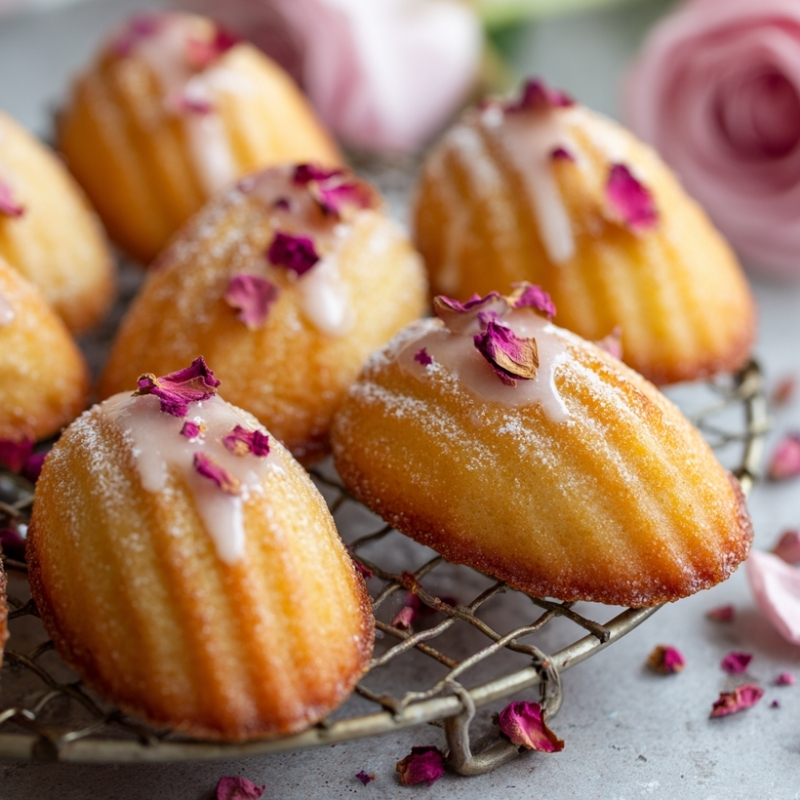
Short Description
These delicate rose madeleines are light, buttery French-style sponge cakes infused with a gentle floral aroma, finished with a soft glaze and dried rose petals for an elegant touch.
Key Ingredients
- 7 tbsp (100 g) unsalted butter, melted (40–50°C)
- 2 eggs (100 g), room temperature
- 7 tbsp (90 g) caster sugar
- ½ tbsp (10 g) honey (optional)
- ½ tsp rose water
- 13 tbsp (100 g) cake flour
- 1 tsp (4 g) baking powder
For the glaze:
- ½ cup (65 g) confectioners’ sugar
- 3–4 tsp water
- 3–4 drops rose water
- 1–2 drops pink food coloring (optional)
- Edible dried rose petals
Tools Needed
- Mixing bowls
- Whisk
- Spatula
- Sifter
- Madeleine pan
- Piping bag or spoon
- Cooling rack
Cooking Instructions
Step 1: Mix the Base Batter
In a large bowl, whisk together eggs, caster sugar, honey, and rose water for 3–4 minutes until the sugar dissolves and the mixture looks slightly pale and smooth.
Step 2: Add Dry Ingredients
Sift in cake flour and baking powder. Whisk gently until just combined, making sure there are no lumps but avoiding overmixing.
Step 3: Incorporate Melted Butter
Pour in the melted butter (cooled to warm, not hot). Stir until fully incorporated and the batter looks silky.
Tip: If the butter is too hot, it can cook the eggs slightly—always let it cool first.
Step 4: Chill the Batter
Cover the bowl with plastic wrap and refrigerate for at least 1 hour or overnight. This step helps the madeleines develop their signature hump and improves texture.
Step 5: Prepare the Pan
Preheat oven to 400°F (200°C). Grease the madeleine pan with butter and lightly dust with flour if needed.
Step 6: Fill the Molds
Remove batter from the fridge and gently stir to loosen it. Pipe or spoon batter into molds, filling each about 80–90% full.
Step 7: Bake with Temperature Change
Place the pan in the oven, then immediately reduce temperature to 350°F (180°C). Bake for 10–12 minutes until golden and slightly springy to the touch.
Step 8: Cool Immediately
Remove madeleines from the pan right away and transfer to a cooling rack. Leaving them in the pan too long can cause soggy bottoms.
Step 9: Prepare the Glaze
Mix confectioners’ sugar with water and rose water until smooth. Add a drop or two of pink coloring if desired.
Step 10: Decorate
Dip or drizzle glaze over cooled madeleines. Sprinkle with dried rose petals while the glaze is still soft so they stick.
Why You’ll Love This Recipe
Elegant Flavor: Light floral notes give these cakes a refined, gentle taste without being overpowering.
Soft and Airy Texture: The chilled batter and proper mixing create a tender crumb.
Simple Ingredients: No complicated items—just pantry basics with a floral twist.
Beautiful Presentation: Perfect for tea gatherings, celebrations, or thoughtful gifts.
Make-Ahead Friendly: Batter can rest overnight for convenience.
Mistakes to Avoid & Solutions
Skipping the chilling step
This leads to flat madeleines without the classic hump.
Solution: Chill at least 1 hour for proper structure.
Overmixing the batter
This creates dense, tough cakes.
Solution: Mix just until combined, especially after adding flour.
Butter too hot
Hot butter can affect texture and partially cook eggs.
Solution: Let butter cool to warm before adding.
Sticking to the pan
Madeleines can break easily if not prepared well.
Solution: Grease and lightly flour the pan thoroughly.
Overbaking
Results in dry edges and loss of delicate flavor.
Solution: Remove when edges are golden and centers spring back lightly.
Serving and Pairing Suggestions
Serve slightly warm or fully cooled with afternoon tea.
Pair with light herbal teas like chamomile or rose tea.
Arrange on a tiered tray for gatherings or special occasions.
Add fresh berries on the side for contrast and freshness.
Storage and Reheating Tips
Room Temperature: Store in an airtight container for up to 2 days.
Refrigerator: Keep up to 5 days, though texture may firm slightly.
Freezer: Freeze unglazed madeleines for up to 2 months.
Reheating: Warm gently in a 300°F oven for 3–5 minutes to refresh softness.
FAQs
1. Why didn’t my madeleines get the classic hump?
The batter likely wasn’t chilled long enough or the oven wasn’t hot at the start.
2. Can I skip the rose water?
Yes, but you’ll lose the floral note. You can substitute with vanilla or almond extract.
3. Why are my madeleines dry?
They were likely overbaked. Check them a minute or two earlier next time.
4. Can I make these without a madeleine pan?
You can use a mini muffin pan, though the shape and texture will differ slightly.
5. How strong should the rose flavor be?
It should be subtle. Too much rose water can taste soapy—start small and adjust.
Tips & Tricks
Use room temperature eggs for smoother mixing.
Tap the pan lightly before baking to remove air pockets.
For a bakery-style look, dust lightly with powdered sugar instead of glaze.
Let the batter rest overnight for even better flavor development.
Recipe Variations
Vanilla Rose Madeleines
Replace half the rose water with 1 tsp vanilla extract.
Follow the same steps; flavor becomes softer and more familiar.
Lemon Rose Madeleines
Add 1 tsp lemon zest to the batter.
The citrus brightens the floral notes beautifully.
Chocolate-Dipped Rose Madeleines
Skip glaze. Melt dark chocolate and dip half of each cooled madeleine.
Let set before serving for a richer finish.
Final Thoughts
Clara insisted on arranging the finished madeleines on her little painted plate, carefully placing each one as though it had a story to tell. She chose the smallest one for herself and took a slow bite, pausing before saying anything. I watched her expression shift into quiet satisfaction, the kind that doesn’t need many words.
That afternoon lingered longer than most. The rain softened, the kitchen stayed warm, and the simple act of baking turned into something gentle and lasting. These madeleines carry that same feeling—a soft balance of flavor and care, something made slowly and shared with intention.
Moments like these don’t ask for perfection. They ask for patience, a bit of curiosity, and someone to share the result with. And sometimes, that’s all a good recipe needs.
Rose Madeleines

Ingredients
- 7 tbsp 100 g unsalted butter, melted (40–50°C)
- 2 eggs 100 g, room temperature
- 7 tbsp 90 g caster sugar
- ½ tbsp 10 g honey (optional)
- ½ tsp rose water
- 13 tbsp 100 g cake flour
- 1 tsp 4 g baking powder
For the glaze:
- ½ cup 65 g confectioners’ sugar
- 3 –4 tsp water
- 3 –4 drops rose water
- 1 –2 drops pink food coloring optional
- Edible dried rose petals
Instructions
- Whisk eggs, caster sugar, honey, and rose water for 3–4 minutes until smooth and slightly pale.
- Sift in cake flour and baking powder, then whisk gently just until combined and lump-free.
- Stir in the melted butter (cooled to warm) until the batter turns silky and well blended.
- Cover and refrigerate for at least 1 hour or overnight to improve texture and help form the classic hump.
- Preheat the oven to 400°F (200°C). Grease the madeleine pan and lightly dust with flour if needed.
- Stir the chilled batter to loosen, then pipe or spoon into molds, filling each about 80–90% full.
- Place in the oven and immediately reduce the temperature to 350°F (180°C). Bake for 10–12 minutes until golden and springy.
- Remove from the pan right away and transfer to a wire rack to cool completely.
- Mix confectioners’ sugar with water and rose water until smooth, adding a touch of pink coloring if desired.
- Dip or drizzle glaze over cooled madeleines and finish with dried rose petals while the glaze is still soft.