
The afternoon sun leaned gently across the kitchen counter the day my neighbor, Mr. Hargrove, knocked on the door with a jar of his homemade dill pickles. He’s the kind of man who speaks slowly, like he’s choosing each word with care, and he handed me that jar as if it held something precious.
I hadn’t planned on baking that day, but something about those crisp pickles changed my mind. My husband peeked over the newspaper and raised an eyebrow when I started pulling out flour and my sourdough starter.
I kept thinking about the flavors—sharp, briny, a little herbal—and how they might settle into a loaf of bread. It felt like a small experiment, one of those quiet kitchen moments that doesn’t ask for attention but ends up meaning more than expected. By evening, the dough rested under a damp cloth, and I found myself checking on it more often than necessary. There’s a certain patience in sourdough baking that reminds me of teaching—give it time, don’t rush the process, and trust that something good is forming beneath the surface.
The next morning, as I scored the dough, my granddaughter wandered in, curious about the little green flecks peeking through. She wrinkled her nose at the thought of pickles in bread but stayed close anyway. When the loaf finally came out of the oven, golden and crackling, even she leaned in for a closer look. Some ideas sound odd at first, but they have a way of surprising you. This bread turned out to be one of those quiet surprises that linger longer than expected.
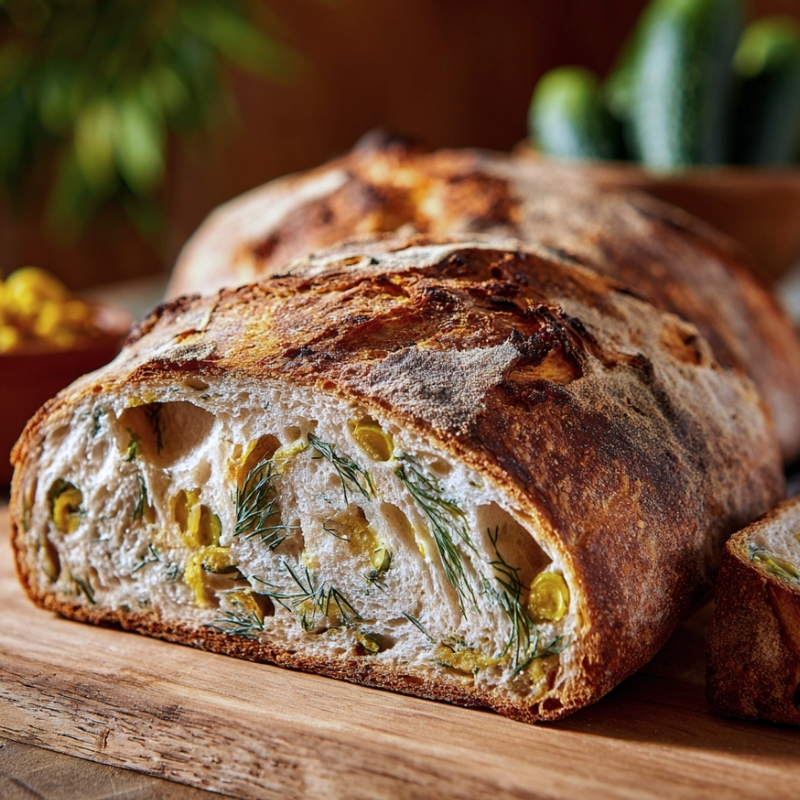
Short Description
A rustic sourdough loaf infused with tangy dill pickle brine, fresh herbs, and bursts of diced pickles, baked to a crisp golden crust with a soft, flavorful interior.
Key Ingredients
For the dough:
- 50g active sourdough starter
- 7g fine sea salt
- 35g whole wheat flour
- 260g filtered water (85°F)
- 375g white bread flour
- 30g dill pickle brine
For the mix-ins:
- 1½ tbsp fresh dill, finely chopped
- 80g diced dill pickles, patted dry
Tools Needed
- Large mixing bowl
- Bench scraper or spatula
- Kitchen scale
- Banneton basket or bowl with towel
- Dutch oven with lid
- Parchment paper
- Sharp knife or bread lame
Cooking Instructions
Step 1: Mix and Initial Rest
Combine starter, warm water, and pickle brine in a bowl until mostly dissolved. Add both flours and mix until a shaggy dough forms with no dry patches. Sprinkle salt over the dough, cover, and let rest for 40 minutes.
If the dough feels too dry, add 1 tablespoon water at a time.
Step 2: Knead and First Stretch
Work the salt into the dough by kneading for about 2 minutes. Stretch one side upward and fold it over itself. Cover and rest for 30 minutes. The dough should feel slightly elastic but still soft.
Step 3: Add Pickles and Dill
Scatter chopped pickles and dill across the dough. Perform another stretch and fold to incorporate. Rest for 30 minutes.
If mix-ins slip out, press them gently back into the dough.
Step 4: Continue Structure Building
Repeat two more stretch-and-fold cycles with 30-minute rests in between. By the final round, the dough should feel smoother and hold its shape better.
Step 5: Bulk Fermentation and Shaping
Let the dough rise, covered, until about 75% larger (around 4 hours at 74°F). It should look slightly puffy with small bubbles. Transfer to a floured surface, rest 10–15 minutes, then shape gently. Place seam-side up in a floured banneton and cover.
If the dough spreads too much, tighten the shape with a gentle fold.
Step 6: Final Proof and Bake
Proof in the fridge overnight (up to 12 hours) or at room temperature for about 1½ hours. Preheat oven with Dutch oven inside to 450°F. Turn dough onto parchment, score at least ½ inch deep, and place into the hot pot. Cover and bake 25 minutes, then uncover, reduce to 435°F, and bake 20 more minutes until deeply golden and crisp. The crust should sound hollow when tapped.
Step 7: Cooling
Cool on a rack for at least 1 hour before slicing. Cutting too soon will result in a gummy texture due to trapped steam.
Why You’ll Love This Recipe
Bold Flavor Twist: Tangy pickle brine and fresh dill create a savory loaf unlike traditional sourdough.
Crispy Artisan Crust: The Dutch oven method delivers a bakery-style crackling crust.
Naturally Fermented: Easier on digestion compared to standard bread.
Great for Sandwiches: Pairs beautifully with meats, cheeses, or even a simple spread of butter.
Creative Yet Simple: A unique idea that doesn’t require complicated techniques.
Mistakes to Avoid & Solutions
Overhydrated Dough: Too much moisture from pickles can weaken structure.
→ Pat pickles dry thoroughly before adding.
Dense Texture: Often caused by under-fermentation.
→ Let the dough rise until visibly airy with bubbles.
Flat Loaf: Weak shaping or overproofing can lead to spreading.
→ Shape tightly and monitor proofing time carefully.
Burnt Bottom Crust: Dutch ovens can trap too much heat.
→ Place a baking sheet under the pot during baking.
Gummy Interior: Cutting too early traps steam.
→ Always cool for at least an hour.
Serving and Pairing Suggestions
Serve thick slices with salted butter for a simple start.
Pair with soups like potato or creamy chicken for a hearty meal.
Use for grilled sandwiches with ham and cheese.
Slice thin for a rustic appetizer platter with cured meats.
Works well in a casual family-style meal or a weekend brunch spread.
Storage and Reheating Tips
Room Temperature: Store in a paper bag or bread box for up to 2 days.
Refrigerator: Not recommended, as it dries out the bread.
Freezer: Slice and freeze in airtight bags for up to 2 months.
Reheating: Toast slices or warm in a 350°F oven for 5–7 minutes to refresh crust.
FAQs
1. Can I skip the pickle brine?
Yes, but the bread will lose its signature tang. Replace with equal water if needed.
2. Why is my dough sticky?
High hydration is normal. Lightly flour your hands instead of adding too much flour.
3. Can I use dried dill instead of fresh?
Yes, use about 1 teaspoon dried dill, but fresh gives a brighter flavor.
4. Do I need a Dutch oven?
It helps create steam for crust, but you can use a baking stone with a tray of water.
5. How do I know when bulk fermentation is done?
Look for a slight rise, soft texture, and small air bubbles on the surface.
Tips & Tricks
Keep your starter active and bubbly before mixing.
Use slightly warm water to encourage fermentation.
Score confidently—shallow cuts won’t allow proper expansion.
Add a sprinkle of coarse salt on top before baking for extra flavor.
Recipe Variations
Cheesy Dill Pickle Bread
Add 1 cup shredded sharp cheddar during Step 3 with the pickles. Fold gently to distribute. The result is rich, savory, and slightly gooey inside.
Garlic Dill Pickle Bread
Mix in 2 teaspoons minced garlic with the dill. The flavor becomes deeper and more aromatic, perfect for savory meals.
Spicy Pickle Bread
Add 1 teaspoon red pepper flakes or diced jalapeños during mix-ins. This version carries a gentle heat that balances the tanginess.
Final Thoughts
The loaf sat on the table longer than usual that afternoon, mostly because we kept slicing “just one more piece.” Even my granddaughter, who had her doubts, came back for another slice with butter. Mr. Hargrove stopped by later, and I sent him home with half the loaf, wrapped in a clean kitchen towel. He nodded quietly after his first bite, which felt like enough praise.
Some recipes feel like they belong to a season, while others settle comfortably into everyday life. This bread leans toward the second kind. It brings a bit of curiosity into the kitchen without asking for anything complicated in return. The process takes time, but it’s the kind of time that feels well spent. By the end of it, the kitchen carries a warmth that lingers, even after the oven cools down.
Dill Pickle Sourdough Bread

Ingredients
For the dough:
- 50 g active sourdough starter
- 7 g fine sea salt
- 35 g whole wheat flour
- 260 g filtered water 85°F
- 375 g white bread flour
- 30 g dill pickle brine
For the mix-ins:
- 1½ tbsp fresh dill finely chopped
- 80 g diced dill pickles patted dry
Instructions
- Mix the starter, warm water, and pickle brine until mostly dissolved. Add both flours and stir until a shaggy dough forms with no dry spots. Sprinkle salt over the top, cover, and let rest for 40 minutes. If the dough feels dry, add water 1 tablespoon at a time.
- Knead the dough for about 2 minutes to work in the salt, then stretch one side upward and fold it over itself. Cover and let rest for 30 minutes. The dough should feel soft and slightly elastic.
- Add the chopped pickles and dill, then perform another stretch and fold to incorporate. Rest for 30 minutes. If pieces fall out, gently press them back in.
- Repeat two more rounds of stretch and folds with 30-minute rests in between, until the dough becomes smoother and holds its shape better.
- Let the dough rise, covered, until about 75% larger, around 4 hours at 74°F. It should look puffy with small bubbles. Transfer to a floured surface, rest 10–15 minutes, then shape and place seam-side up in a floured banneton. If it spreads too much, tighten it with a gentle fold.
- Proof in the fridge overnight (up to 12 hours) or at room temperature for about 1½ hours. Preheat the oven with a Dutch oven inside to 450°F. Turn the dough onto parchment, score at least ½ inch deep, place into the hot pot, cover, and bake for 25 minutes. Uncover, reduce heat to 435°F, and bake another 20 minutes until deep golden and crisp. The crust should sound hollow when tapped.
- Cool on a rack for at least 1 hour before slicing to prevent a gummy texture.