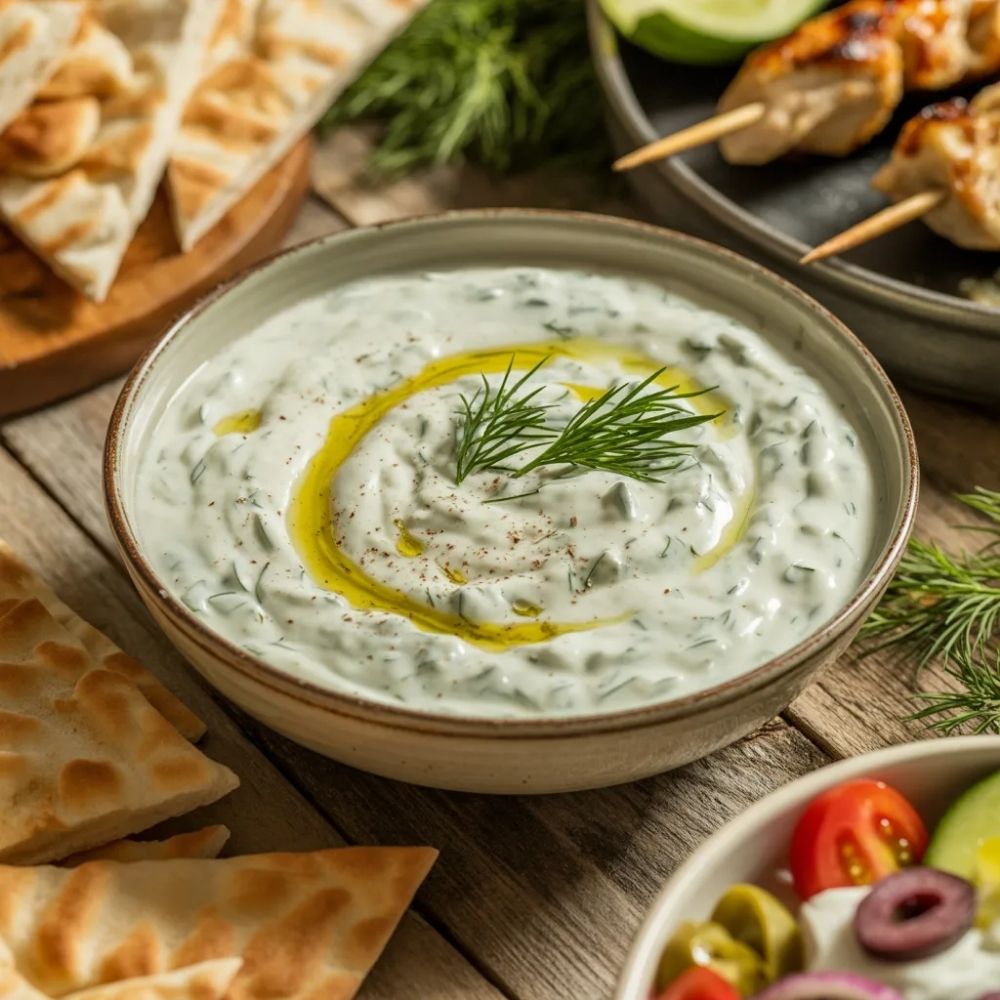
Whether you are assembling a vibrant Mediterranean mezze platter or searching for the perfect gyro sauce for gyros, a well-crafted bowl of tzatziki is a cornerstone of Greek cuisine. This refreshing, creamy cucumber yogurt sauce balances a rich, tangy base with a crisp, herbaceous punch. It is traditionally paired with flame-roasted meats, acting as a cooling counterweight to heavy spices.
Many home cooks who try to create a tzatziki recipe at home end up with a watery, separated mess that thins out over time. Fortunately, achieving a luxurious, steakhouse-quality consistency simply requires mastering one fundamental mechanical step during prep.
This comprehensive guide covers the biochemical science of yogurt sauces, a foolproof easy greek tzatziki recipe, a complete nutritional profile, and an essential troubleshooting FAQ section.
The Science of Liquid Extraction: Preventing Watery Separation
The primary challenge when creating an authentic greek tzatziki recipe lies in the anatomical structure of the humble cucumber (Cucumis sativus). Cucumbers are composed of roughly 95% water.
If you grate a cucumber and stir it directly into greek yogurt tzatziki, a physical process called osmosis will immediately ruin your sauce. The surrounding yogurt contains a high concentration of dissolved sugars, minerals, and proteins, while the raw cucumber tissue holds pure water.
This creates an osmotic pressure imbalance, causing the cucumber cells to continuously purge their internal water into the yogurt matrix. Within an hour, your thick greek gyro sauce will break apart into a watery puddle.
To bypass this entirely and guarantee a thick homemade tzatziki, you must intentionally force osmosis before combining the ingredients. Salting the grated cucumber draws out the cellular moisture rapidly. Squeezing the remaining pulp dry allows you to fold the crisp vegetable fibers into the yogurt without altering the thick texture of the sauce.
Required Equipment and Ingredient Selection
To achieve a pristine greek dip tzatziki texture, your choice of tzatziki ingredients must mirror traditional Mediterranean standards.
Essential Equipment
-
A Box Grater: Use the large holes to shred the cucumber into clean ribbon strands.
-
Cheesecloth or a Clean Kitchen Towel: For wringing out excess liquid.
-
A Fine-Mesh Strainer: To rest the salted vegetable pulp.
The Ingredients Matrix
The Dairy Base: Always use full-fat, plain greek yogurt tzatziki sauce configurations. Standard yogurt or a gyro sauce recipe with sour cream variations contain too much liquid whey. Genuine Greek yogurt is strained multiple times to remove this liquid whey, yielding a dense, spreadable consistency packed with natural casein proteins.
The Cucumber: English hothouse cucumbers or Persian cucumbers are the absolute standard. They feature soft, tender skin and far fewer bitter seeds than thick-skinned slicing varieties, simplifying your greek cucumber sauce for gyros setup.
The Aromatics: Freshly crushed garlic cloves (never garlic powder) and high-quality extra virgin olive oil.
The Acid & Herbs: Fresh lemon juice or a splash of white wine vinegar provides a bright finish, combined with chopped fresh dill or mint leaves.
Step-by-Step Authentic Greek Tzatziki Sauce Recipe
Follow this traditional method to ensure your homemade gyro sauce holds a perfect, thick texture from start to finish.
Ingredients
-
2 Cups Full-Fat Plain Greek Yogurt
-
1 Large English Cucumber: Partially peeled and grated.
-
3 Cloves Garlic: Finely minced or pressed into a smooth paste.
-
1 Tablespoon Extra Virgin Olive Oil
-
1 Tablespoon Fresh Lemon Juice
-
2 Tablespoons Fresh Dill: Finely chopped.
-
1/2 Teaspoon Kosher Salt (plus extra for sweating the cucumber).
Step-by-Step Instructions:
Grate your cucumber over a clean cutting board using the coarse side of a box grater. Transfer the shredded pulp into a fine-mesh strainer set over a clean bowl.
Sprinkle 1/2 teaspoon of kosher salt evenly over the grated cucumber. Toss gently to distribute the salt. Let the mixture sit undisturbed for 10 to 15 minutes. You will notice water dripping rapidly into the bowl beneath.
Gather the salted cucumber pulp and transfer it to the center of a square of cheesecloth or a clean kitchen towel. Draw the corners together to form a pouch, and wring it out with maximum force over the sink. Squeeze until no more moisture drops from the cloth. The remaining pulp will be remarkably dry and compact.
In a medium mixing bowl, combine your thick Greek yogurt, minced garlic paste, extra virgin olive oil, and fresh lemon juice. Whisk thoroughly until the oil is completely emulsified into the yogurt base.
Fold your dry, squeezed cucumber pulp and chopped fresh dill into the seasoned yogurt matrix using a spatula.
Taste your traditional greek tzatziki recipe and add a final pinch of kosher salt if needed. Cover the bowl tightly and refrigerate for at least 1 hour before serving. This resting window allows the garlic oils to fully infuse into the dairy fats, mellowing the sharp bite of the garlic and creating a balanced, authentic flavor profile.
Preparation and Alternative Method Parameter Chart
Use this quick-reference table to adapt your tzatziki sauce recipe based on your specific dietary preferences or alternative ingredient availability.
| Recipe Variant Selection | Core Dairy/Plant Base | Key Acid Component | Herbal Profile | Best Culinary Use Case | |
| Authentic Greek Standard | Full-Fat Greek Yogurt | Fresh Lemon Juice | Fresh Dill & Olive Oil | lamb gyros recipes or meat platters | |
| Rich Tangy Alternative | 50% Sour Cream / 50% Yogurt | White Wine Vinegar | Fresh Dill & Mint | Thick spreading on pita sandwiches | |
| Plant-Based Version | Strained Dairy-Free Coconut Yogurt | Fresh Lemon Juice | Fresh Dill & Garlic | Vegan Mediterranean bowls | |
| Quick Cucumber Salad Dip | Standard Plain Yogurt | Lemon Juice & Zest | Mint Leaves & Oregano | Light dipping sauce for raw vegetables |
🧪 Nutritional Breakdown
A traditional healthy tzatziki sauce prepared with whole-milk Greek yogurt is an exceptionally nutrient-dense addition to your diet. It is naturally low in simple sugars, rich in protein, and loaded with gut-friendly probiotics. A standard 1/4-cup serving of this homemade dip contains approximately the following values:
-
Total Energy Output: 55 Calories (kcal)
-
Protein Content: 5 grams (derived primarily from strained dairy casein)
-
Total Lipid Fat: 3.5 grams
-
Monounsaturated Fats: 2 grams (heart-healthy fats from extra virgin olive oil)
-
Saturated Fat: 1.5 grams
-
-
Carbohydrates: 2 grams
-
Dietary Fiber: 0.2 grams
-
Sugars: 1.5 grams (natural dairy lactose; no added refined sugars)
-
-
Sodium Matrix: 140 mg (highly controlled baseline)
-
Key Micronutrients: High concentrations of Calcium, Zinc, Vitamin B12, and active probiotic cultures.
Frequently Asked Questions (FAQ)
Can I make a delicious tzatziki recipe using sour cream instead of yogurt?
Yes, you can absolutely substitute all or part of the yogurt to create a gyros sauce recipe with sour cream. Sour cream yields a noticeably richer, heavier texture with a higher fat content. To ensure balance when making a recipe for tzatziki sauce with sour cream, add a touch more lemon juice to cut through the heavy fats, keeping in mind that the flavor profile will taste more like an American style ranch dip than a traditional Mediterranean yogurt preparation.
How long can I safely store a batch of homemade tzatziki sauce in the fridge?
Because homemade tzatziki sauce uses fresh garlic, raw cucumbers, and live dairy cultures, store it in an airtight glass jar in the coldest part of your refrigerator and consume it within 4 to 5 days. Do not freeze tzatziki; the freezing process breaks down the delicate cell walls of the cucumber and destabilizes the yogurt proteins, causing the sauce to thaw out into an unappealing, watery curd texture.
Is it necessary to peel the cucumber skin when making gyro sauce?
Peeling is a matter of personal preference. If you are using an English or Persian cucumber, the skin is naturally thin and sweet, so you can leave it completely unpeeled or create a beautiful striped pattern by peeling away alternating ribbons of skin.
Leaving a bit of skin on adds a vibrant green color and a pleasant crunch to your tzatziki dipping sauce. However, if you only have standard regular field cucumbers, peel the skin away entirely, as it is often coated in a thick food-grade wax and can taste intensely bitter.
How can I make a completely plant-based or vegan tzatziki dressing?
To execute an exceptional vegan tzatziki sauce, swap the traditional dairy for a high-quality, unsweetened almond-milk or coconut-milk Greek-style yogurt.
Ensure the vegan yogurt alternative is thoroughly strained through a coffee filter overnight to mimic the heavy, thick texture of dairy cream. Follow the exact same salting, squeezing, and seasoning steps outlined in the master recipe above to achieve an ideal tzatziki vegan recipe profile.
My tzatziki tastes way too sharp and bitter. How do I fix it?
If your greek tzatziki has a harsh, burning garlic flavor, it means the raw garlic oils have overwhelmed the sauce. You can easily fix this using two simple adjustments.
First, add an extra splash of extra virgin olive oil; the fats will naturally encapsulate the sulfur compounds in the garlic, smoothing out the sharp bite. Second, simply allow the bowl to rest covered in the refrigerator overnight. The cool environment slows down chemical reactions, allowing the dairy sugars to naturally mellow the garlic heat over 12 hours.
Tzatziki Recipe
Print ThisIngredients
- 2 Cups Full-Fat Plain Greek Yogurt
- 1 Large English Cucumber: Partially peeled and grated.
- 3 Cloves Garlic: Finely minced or pressed into a smooth paste.
- 1 Tablespoon Extra Virgin Olive Oil
- 1 Tablespoon Fresh Lemon Juice
- 2 Tablespoons Fresh Dill: Finely chopped.
- 1/2 Teaspoon Kosher Salt (plus extra for sweating the cucumber).
Instructions
Grate your cucumber over a clean cutting board using the coarse side of a box grater. Transfer the shredded pulp into a fine-mesh strainer set over a clean bowl.
Sprinkle 1/2 teaspoon of kosher salt evenly over the grated cucumber. Toss gently to distribute the salt. Let the mixture sit undisturbed for 10 to 15 minutes.
Gather the salted cucumber pulp and transfer it to the center of a square of cheesecloth or a clean kitchen towel. Draw the corners together to form a pouch, and wring it out with maximum force over the sink. Squeeze until no more moisture drops from the cloth.
In a medium mixing bowl, combine your thick Greek yogurt, minced garlic paste, extra virgin olive oil, and fresh lemon juice. Whisk thoroughly until the oil is completely emulsified into the yogurt base.
Fold your dry, squeezed cucumber pulp and chopped fresh dill into the seasoned yogurt matrix using a spatula.
Taste your traditional greek tzatziki recipe and add a final pinch of kosher salt if needed. Cover the bowl tightly and refrigerate for at least 1 hour before serving.