
A quiet evening settled over the kitchen as a bare pan warmed on the stove and a pork tenderloin rested on the counter. The house was hushed, broken only by the soft tap of a knife and the low hum of the refrigerator.
A jar of Dijon mustard caught the light, bringing back a small memory of a roadside café and a sauce that stayed in the mind long after the plate was cleared.
When the oil hit the pan, the air shifted. The pork touched the hot surface and released a steady sizzle, while garlic and shallots joined in, sending a gentle, savory scent through the room. Outside noise faded, and the kitchen turned into its own small world, guided by simple movements and familiar rhythms.
As the cream and mustard folded together, the sauce slowly thickened, carrying the fragrance of thyme and soft onions. Steam rose in quiet swirls, wrapping the space in warmth. By the end, the scene felt complete, a small, peaceful moment built from heat, patience, and a few humble ingredients.
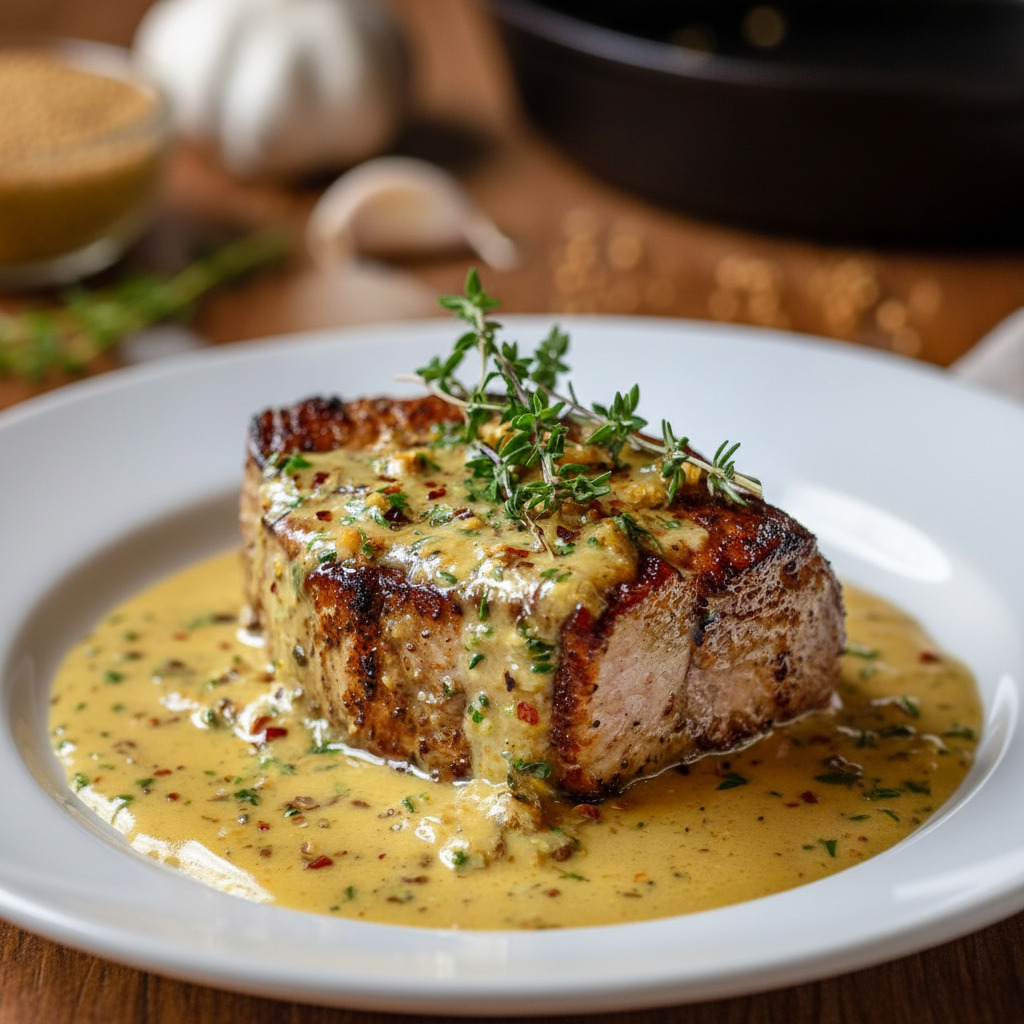
Short Description
Best Pork Tenderloin with Dijon Mustard Cream Sauce, a tender, pan-seared pork tenderloin served with a smooth Dijon mustard cream sauce made with garlic, shallots, and fresh thyme.
Key Ingredients
- Large skillet
- Tongs
- Meat thermometer
- Cutting board
- Sharp knife
- Wooden spoon
Cooking Instructions
Step 1: Prepare the Pork
Pat the pork tenderloin dry with paper towels so the surface is completely dry. Season all sides generously with salt and freshly ground black pepper. Let the meat rest at room temperature for about 10 minutes to ensure even cooking.
Step 2: Sear the Pork
Heat 2 tbsp olive oil in a large skillet over medium high heat until the oil shimmers. Place the pork in the pan and sear for 3 to 4 minutes per side, turning with tongs, until a deep golden crust forms. The surface should look browned and slightly crisp. Remove the pork and set aside on a plate.
Step 3: Sauté the Aromatics
In the same skillet, reduce the heat to medium. Add the minced garlic and chopped shallot. Sauté for 1 to 2 minutes, stirring constantly, until soft and fragrant. If they start to brown too quickly, lower the heat slightly.
Step 4: Build the Sauce Base
Pour in ½ cup chicken broth and use a wooden spoon to scrape up all the browned bits from the bottom of the pan. Let the liquid simmer for 2 to 3 minutes until slightly reduced and glossy.
Step 5: Create the Creamy Dijon Sauce
Reduce the heat to low. Stir in ½ cup heavy cream, 2 tbsp Dijon mustard, and the thyme. Let the sauce simmer gently for 3 to 4 minutes, stirring often, until it thickens to a silky, spoon coating consistency.
Step 6: Finish Cooking the Pork
Return the pork tenderloin to the skillet and spoon sauce over the top. Simmer gently for 5 to 7 minutes, turning once, until the internal temperature reaches 145°F or 63°C. The pork should feel firm but still springy to the touch.
Step 7: Rest and Serve
Remove the skillet from heat and let the pork rest in the sauce for 3 minutes. Slice into medallions, spoon the Dijon cream sauce over the top, and garnish with fresh parsley before serving.
Why You’ll Love This Recipe
This recipe delivers tender, juicy pork with a rich but balanced sauce.
It is made in one pan for easier cleanup.
The Dijon adds depth without overpowering the dish.
It feels elegant but is simple enough for busy weeknights.
It is naturally low in carbohydrates when served with vegetables.
Mistakes to Avoid & Solutions
Overcooking the pork
This happens when the temperature gets too high or the pork cooks too long. Overcooked tenderloin becomes dry and tough.
Solution: Use a meat thermometer and remove the pork as soon as it reaches 145°F or 63°C, then allow it to rest so the juices redistribute.
Burning the garlic and shallot
High heat can cause garlic and shallot to turn bitter very quickly.
Solution: Lower the heat before adding them and stir constantly so they soften gently without browning.
Sauce too thin
Sometimes the sauce does not reduce enough and stays watery.
Solution: Let the sauce simmer an extra 2 to 3 minutes over low heat, stirring often, until it thickens and lightly coats the back of a spoon.
Sauce too thick
If the sauce reduces too much, it can become heavy.
Solution: Stir in 1 to 2 tablespoons of warm chicken broth to loosen it to a silky texture.
Pork not browning
Crowding the pan or using too low heat can prevent proper searing.
Solution: Make sure the skillet is hot before adding the pork and leave space around it so it can brown properly.
Serving and Pairing Suggestions
Serve the sliced pork on a warm platter with the sauce spooned over the top.
Pair it with roasted green beans, steamed broccoli, or creamy mashed potatoes.
It pairs beautifully with a crisp green salad and a light vinaigrette.
This dish works well served plated for a cozy dinner or placed family style in the center of the table.
For drinks, pair with sparkling water with lemon or a dry white wine.
Storage and Reheating Tips
Store leftover pork and sauce together in an airtight container in the refrigerator for up to 3 days.
To reheat, place the pork and sauce in a skillet over low heat, adding 1 to 2 tablespoons of chicken broth or cream to loosen the sauce.
Heat slowly for 5 to 7 minutes until warmed through.
Avoid microwaving at high power, as this can make the pork tough and cause the sauce to separate.
FAQs
1. Why is my pork tenderloin dry
Dry pork usually means it was cooked past 145°F. Using a thermometer helps keep it juicy.
2. Can I use pork loin instead of tenderloin
Pork loin is thicker and cooks differently. If using it, slice into smaller portions and increase cooking time.
3. Can I make this recipe dairy free
You can use full fat coconut milk or cashew cream instead of heavy cream for a dairy free version.
4. What can I use if I do not have Dijon mustard
Whole grain mustard or yellow mustard can work, though the flavor will be slightly different.
5. Can I prepare the sauce ahead of time
Yes, you can make the sauce up to one day ahead and gently reheat it before adding the cooked pork.
Tips & Tricks
Let the pork sit at room temperature before cooking for more even results.
Use fresh thyme for a brighter flavor, but dried thyme works well.
Stir the sauce constantly while simmering to prevent sticking.
Slice the pork against the grain for the tenderest texture.
Recipe Variations
Mushroom Dijon Pork: Add 1 cup sliced mushrooms to the skillet after sautéing the shallot. Cook them for 4 to 5 minutes until golden before adding the broth. This adds an earthy depth and a richer flavor.
Garlic Herb Cream Pork: Add ½ tsp rosemary and ½ tsp parsley to the sauce along with the thyme. The flavor becomes more herb forward and fragrant.
Spicy Dijon Pork: Stir in ¼ tsp red pepper flakes with the cream. This adds a gentle heat that balances the richness of the sauce.
Lemon Dijon Pork: Add 1 tbsp fresh lemon juice and ½ tsp lemon zest at the end of cooking. This brightens the sauce with a fresh, citrusy finish.
Final Thoughts
Placing the sliced pork onto a warm plate and spooning the sauce over the top always feels like closing a small chapter in the evening. The tender meat, the gentle sharpness of Dijon, and the softness of the cream come together in a way that feels balanced and generous. Each bite carries careful steps, small pauses, and attention that quietly show up on the plate.
This meal has a way of staying with you long after the dishes are done. The scent of thyme in the air, the smooth sauce at the edge of the plate, and the quiet satisfaction of a homemade dinner create a calm ending to the day. It brings people a little closer to the table, encourages slower eating, and leaves behind a gentle sense of care that lingers in the kitchen.
Best Pork Tenderloin With Dijon Mustard Cream Sauce

Ingredients
For the pork and sauce
- 1.2 lbs or about 550 g pork tenderloin
- Salt and freshly ground black pepper to taste
- 2 tbsp olive oil
- 2 cloves garlic minced
- 1 small shallot finely chopped
- ½ cup or 120 ml chicken broth
- ½ cup or 120 ml heavy cream
- 2 tbsp Dijon mustard
- 1 tsp fresh thyme leaves or ½ tsp dried thyme
- Fresh parsley for garnish
Instructions
- Pat pork dry, season with salt and pepper, and rest for 10 minutes.
- Sear pork in hot oil until golden on all sides, then set aside.
- Sauté garlic and shallots until soft and fragrant.
- Add chicken broth and reduce slightly, scraping up browned bits.
- Stir in cream, Dijon, and thyme; simmer until thick and silky.
- Return pork to pan and cook until internal temp reaches 145°F (63°C).
- Rest briefly, slice, spoon sauce over, and serve.