How to cook spaghetti squash for tender, fluffy strands in just 30–45 minutes—never mushy, always flavorful. This easy roasting method brings out a naturally sweet, golden taste that pairs with almost anything.
The idea came to me in an afternoon. The afternoon sun slipped through the kitchen window just as my neighbor Mrs. Caldwell knocked, holding a pale yellow squash in both hands like a quiet treasure. She had just returned from the farmers market, cheeks still rosy from the walk, and insisted I take it. “You’ll know what to do with it,” she said with a wink. That small moment lingered with me longer than expected.
Dinner that evening wasn’t meant to be anything special, yet I kept glancing at that squash resting on the counter. My husband was reading in the living room, the house calm and familiar, but something about that gift nudged me toward trying something new. I turned it over in my hands, admiring its weight, its smooth skin, and wondering how such a simple vegetable could hold so much promise.
There’s a quiet joy in cooking ingredients you didn’t plan for. It slows you down. Makes you pay attention. I sliced it open carefully, surprised by how sturdy it felt, and as it roasted, the kitchen filled with a gentle, almost nutty aroma. When I finally scraped those tender strands free, they reminded me of soft ribbons—simple, yet satisfying.
By the time we sat down to eat, what started as a neighborly gesture turned into one of those meals that feels unexpectedly comforting. The kind you don’t forget, not because it was fancy, but because it carried a small story with it.
Short Description
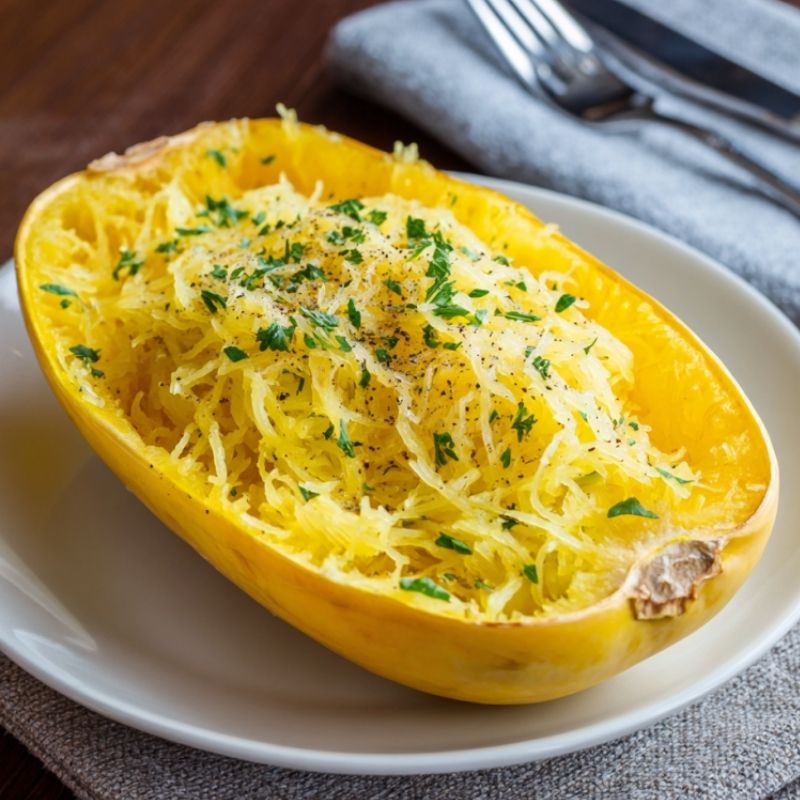
A simple, healthy, and versatile dish, spaghetti squash transforms into tender, noodle-like strands when roasted. It’s a light, low-carb alternative to pasta that pairs beautifully with a wide range of flavors.
Key Ingredients
- 1 spaghetti squash (2–5 pounds)
- 1–2 teaspoons olive oil per half
- Salt, to taste
- Black pepper, to taste
Tools Needed
- Baking sheet
- Sharp chef’s knife
- Spoon (for removing seeds)
- Fork (for fluffing strands)
- Parchment paper or foil
Cooking Instructions
Step 1: Gather Your Ingredients and Tools
Start by setting everything out within reach. Having your squash, oil, seasoning, and tools ready makes the process smoother and safer, especially when working with a firm vegetable like this one.
Step 2: Preheat and Prep
Preheat your oven to 400°F (200°C). Line a baking sheet with parchment paper or foil to prevent sticking and make cleanup easier later.
Step 3: Cut Squash Lengthwise
Carefully slice the squash from stem to tail using a sharp knife. If it feels too tough, microwave it whole for about 2 minutes to soften the skin slightly. Always keep your hands steady and take your time—this step requires patience.
Step 4: Remove Seeds
Use a spoon to scoop out the seeds and stringy center. If you like, set the seeds aside to roast later. The cavity should be clean and smooth before moving on.
Step 5: Season
Drizzle olive oil over the inside of each half, then sprinkle with salt and pepper. Rub gently so the seasoning coats the surface evenly, helping the squash develop better flavor as it roasts.
Step 6: Roast, Cut-Side Down
Place the halves cut-side down on the baking sheet. Roast for 30–45 minutes depending on size. The squash is ready when the skin yields slightly under pressure and a fork slides easily into the flesh. If it feels firm, give it a few more minutes.
Step 7: Scrape and Fluff the Strands
Let the squash cool for about 10 minutes. Then, using a fork, gently scrape along the flesh lengthwise to create long strands. If the strands feel too soft, it may have cooked a bit too long—but they’ll still taste lovely.
How Long to Cook Spaghetti Squash
Cooking time depends on size:
Small (2 lbs): 30–35 minutes
Medium (3 lbs): 35–40 minutes
Large (4–5 lbs): 40–50 minutes
Check early. Overcooking leads to mushy strands.
Why Spaghetti Squash Is Worth Cooking
Spaghetti squash stands out because it solves multiple problems at once—health, convenience, and versatility.
Light Yet Satisfying: Tender strands offer a comforting texture without heaviness.
Simple Preparation: Just a handful of ingredients and straightforward steps.
Versatile Base: Works with countless sauces, spices, and toppings.
Low-Carb Friendly: A smart option for those cutting back on refined carbs.
Family-Friendly: Mild flavor makes it easy to please different tastes.
Nutrient-rich: High in fiber, vitamin C, and antioxidants
Filling but light: Keeps you satisfied without feeling heavy
How to Choose the Best Spaghetti Squash
A good squash makes a noticeable difference in texture and flavor.
Firm and heavy: Indicates freshness and moisture inside
Even yellow color: Avoid green patches or dull skin
No soft spots or cracks: These can signal spoilage
Dry stem attached: Helps extend shelf life
Store whole squash at room temperature for up to 1 month. Once cut, refrigerate and use within 3–4 days.
Alternative Cooking Methods
Microwave (Fastest)
Cut and remove seeds
Place cut-side down with a little water
Microwave 10–15 minutes
Air Fryer
Cook halves at 375°F for 25–30 minutes
Slightly crisp edges with soft interior
Boiling (Least Recommended)
Produces watery strands
Reduces flavor intensity
Why Your Spaghetti Squash Can Turn Mushy
This is one of the most common issues.
Causes:
- Overcooking
- Too much moisture
- Steaming instead of roasting
Fix:
- Roast cut-side down
- Check early
- Let it rest before scraping
Expert Tips For Best Spaghetti Squash
These small adjustments can improve texture, flavor, and overall results.
Cut Lengthwise: This gives longer, more spaghetti-like strands.
Don’t Overcook: Check early; overbaking leads to mushy texture.
Use a Sharp Knife: Makes cutting safer and easier.
Roast Cut-Side Down: Helps retain moisture without making it watery.
Let It Cool Slightly: Prevents over-softening from residual heat.
Season Lightly First: You can always add more later.
Check Doneness with a Fork: It should slide in easily but not collapse.
Best Ways to Serve Spaghetti Squash
This is where it becomes exciting. The base is simple, but the possibilities are wide.
Classic
- Tomato sauce + basil
- Garlic + olive oil
- Butter + parmesan
Healthy
- Grilled chicken + veggies
- Spinach + chickpeas
- Avocado + herbs
Comfort Style
- Cheese + marinara
- Cream sauce + mushrooms
Creative
- Pesto + pine nuts
- Thai peanut sauce
- Taco-style with beans and salsa
Nutrition Information
Approximate values per 1 cup cooked spaghetti squash:
| Nutrient | Amount |
|---|---|
| Calories | 42 |
| Carbohydrates | 10g |
| Fiber | 2g |
| Sugars | 4g |
| Protein | 1g |
| Fat | 0.5g |
| Vitamin C | 9% DV |
| Manganese | 8% DV |
A light, fiber-rich option that fits easily into a balanced meal.
Health Benefits of Spaghetti Squash
This dish supports a balanced lifestyle with simple, nourishing ingredients.
Spaghetti Squash (Fiber): Supports digestion and gut health
Spaghetti Squash (Vitamin C): Helps strengthen immunity
Olive Oil (Healthy fats): Supports heart health
Spaghetti Squash (Low calorie): Aids weight management
Potassium: Helps maintain fluid balance
Antioxidants: May help reduce inflammation
A gentle, wholesome addition to everyday meals.
Why Roasting vs. Other Cooking Methods
Choosing the right method affects both taste and texture.
| Method | Cook Time | Texture | Flavor | Nutrient Retention | Convenience |
|---|---|---|---|---|---|
| Roasting | 30–45 min | Tender, firm | Rich, caramelized | High | Moderate |
| Microwave | 10–15 min | Soft, watery | Mild | Medium | High |
| Steaming | 20–25 min | Soft | Light | High | Moderate |
| Boiling | 15–20 min | Mushy | Diluted | Lower | Easy |
Roasting stands out for its deeper flavor and better texture.
Mistakes to Avoid & Solutions
Overcooking the squash
This leads to soft, mushy strands. Check at 30 minutes and adjust time gradually.
Cutting the wrong direction
Cutting crosswise results in shorter strands. Always cut lengthwise for better texture.
Skipping seasoning
The squash can taste bland. Even a small amount of salt and oil makes a difference.
Not letting it cool
Scraping too early can burn your hands and affect texture. Let it rest briefly.
Serving and Pairing Suggestions
Serve as a light main dish with protein on top, or as a side alongside roasted meats. It pairs well with grilled chicken, baked fish, or a simple salad.
For gatherings, it works nicely in a family-style bowl where everyone can add their own toppings.
Storage and Reheating Tips
Refrigerator: Store in an airtight container for up to 5 days
Freezer: Freeze for up to 3 months in sealed bags
Reheating: Warm gently in a pan or microwave
Texture Tip: Drain excess liquid after thawing
FAQs
1. Can I cook spaghetti squash in the microwave?
Yes, but the texture will be softer and less flavorful than roasting.
2. How do I know it’s done?
A fork should slide in easily, and the strands should separate without effort.
3. Can I freeze cooked spaghetti squash?
Yes, once cooled, store it in airtight containers for later use.
4. Why is my squash watery?
It may be overcooked or steamed instead of roasted.
5. Can I eat the seeds?
Yes, they can be roasted just like pumpkin seeds.
Tips & Tricks
Roast seeds separately for a crunchy snack
Add herbs after cooking for fresher flavor
Use leftovers in soups or casseroles
Recipe Variations
Cheesy Baked Version
Mix cooked strands with cheese, return to oven at 375°F for 10 minutes until melted.
Garlic Herb Style
Sauté strands in olive oil with garlic and herbs for 5 minutes before serving.
Spicy Twist
Add chili flakes and a drizzle of hot sauce after roasting.
Final Thoughts
That simple squash from Mrs. Caldwell stayed with me longer than expected. Not because it turned into anything complicated, but because it reminded me how little moments shape what ends up on the table. Cooking doesn’t always need planning or precision; sometimes it just needs curiosity and a bit of patience.
This dish has a quiet way of fitting into any meal without asking for much attention. It’s flexible, forgiving, and surprisingly comforting. Even on busy evenings, it feels like something made with care rather than convenience.
I’ve come to appreciate recipes like this more over the years. They leave room for creativity, but also stand on their own without fuss. You can dress it up or keep it simple, and it still feels complete.
Meals like this tend to gather people without much effort. A bowl placed in the center of the table, a few toppings nearby, and suddenly everyone is building their own plate. It becomes less about the recipe and more about the moment.
And perhaps that’s what keeps me returning to it. Not the technique, not even the flavor alone, but the ease it brings into the kitchen. A small reminder that good food doesn’t have to be complicated to feel meaningful.

How to Cook Spaghetti Squash

Ingredients
- 1 spaghetti squash 2–5 pounds
- 1 –2 teaspoons olive oil per half
- Salt to taste
- Black pepper to taste
Instructions
- Start by setting everything within reach. Keeping the squash, oil, seasoning, and tools ready makes the process smoother and safer, especially when working with a firm vegetable.
- Preheat the oven to 400°F (200°C) and line a baking sheet with parchment paper or foil to prevent sticking and simplify cleanup.
- Carefully slice the squash lengthwise from stem to tail using a sharp knife. If it’s too tough, microwave it whole for about 2 minutes to slightly soften the skin before cutting.
- Scoop out the seeds and stringy center with a spoon until the cavity is clean. You can save the seeds for roasting if you like.
- Drizzle olive oil over the inside, then season with salt and pepper. Rub gently to coat the surface evenly.
- Place the halves cut-side down on the baking sheet and roast for 30–45 minutes, depending on size. It’s ready when the skin gives slightly and a fork slides in easily.
- Let the squash cool for about 10 minutes, then use a fork to scrape the flesh lengthwise into strands. Fluff gently before serving.