Some dishes begin with a craving, but this one grew from a small moment at my kitchen counter on a quiet Saturday afternoon. My grandson came in from the garden with my husband, gripping a handful of herbs he’d gathered with all the focus in the world. Among them was a tiny bundle of dill, warm from the sun. He set it in my palm with such pride that the idea for dinner arrived almost instantly, simple, fresh, and full of brightness.
As I trimmed the dill by the sink, the late-day light moved slowly across the kitchen. The scene carried traces of earlier years, when my own children used to hover nearby, handing me herbs or stirring bowls with unshakable determination. Little moments like that tend to settle into the corners of a home without anyone noticing, and preparing the cod that evening felt gently linked to all those earlier afternoons, quiet, ordinary, and meaningful in their own way.
When the lemon zest and Dijon came together, the air lifted with a lively freshness. Spoonful by spoonful, the sauce coated the fillets, and the kitchen filled with a calm warmth as they baked. When the cod came out tender and perfectly flaky, releasing a soft citrus-herb steam, it felt like a meal made to be shared without rush, simple ingredients, easy preparation, and the kind of flavours that bring everyone a little closer around the table.
Short Description
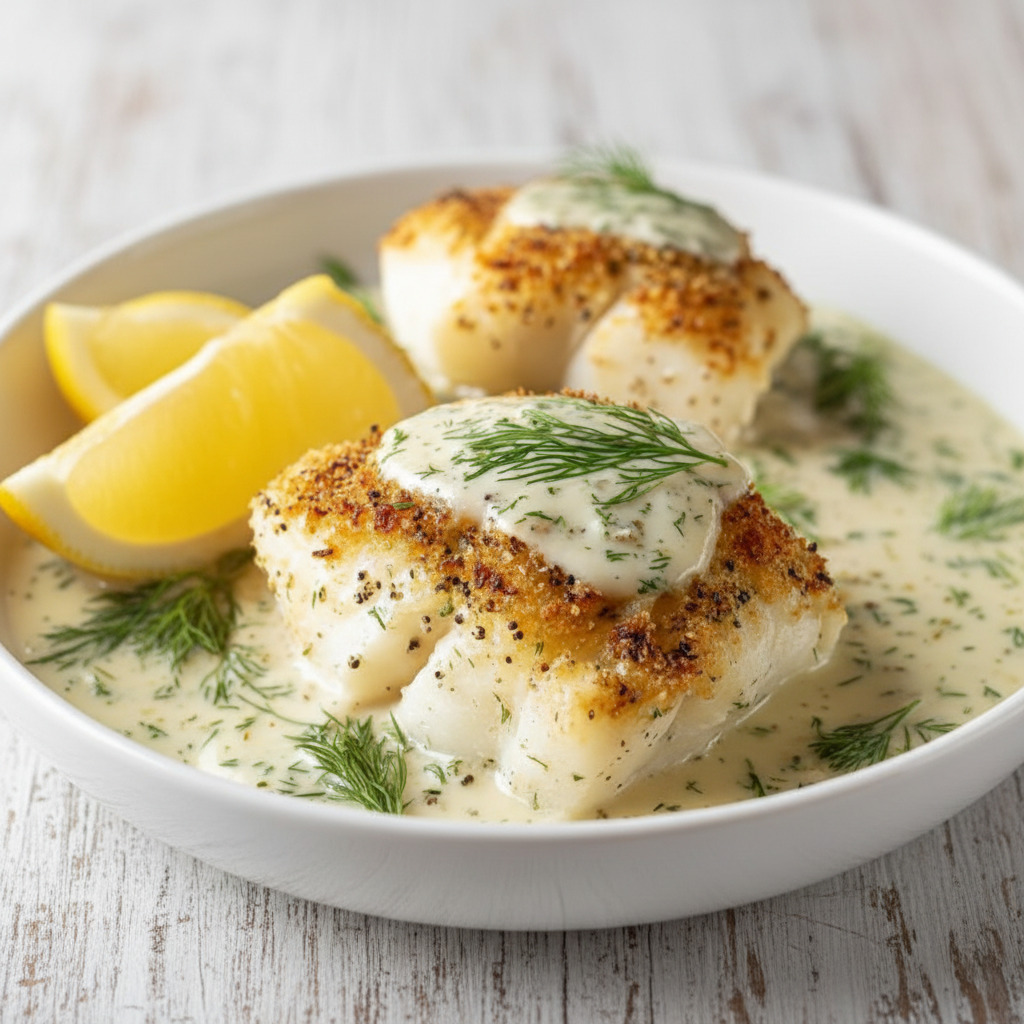
Baked Cod with Lemon Dill Sauce is a bright, tender seafood dish featuring fresh cod and a zesty lemon dill sauce for an easy, wholesome meal.
Key Ingredients
- 4 cod fillets
- 2 tablespoons olive oil
- Salt and pepper, to taste
- 1 lemon, zest and juice
- 2 tablespoons fresh dill, chopped
- 1 tablespoon Dijon mustard
- 2 cloves garlic, minced
- 1 tablespoon honey
Tools Needed
- Baking sheet
- Parchment paper
- Small mixing bowl
- Microplane or zester
- Sharp knife
- Measuring spoons
- Cooking brush or spoon
Cooking Instructions
Step 1: Prepare the oven
Preheat your oven to 400°F (200°C). Line a baking sheet with parchment paper to prevent sticking and make cleanup easy.
Step 2: Season the cod fillets
Place the cod fillets on the prepared baking sheet. Drizzle the olive oil evenly over each piece, then season lightly with salt and pepper. If the fillets are thick, gently pat the oil to help it coat the fish evenly.
Step 3: Mix the lemon dill sauce
In a small mixing bowl, combine the lemon zest, lemon juice, chopped dill, Dijon mustard, minced garlic, and honey. Stir until the mixture is smooth and cohesive. It should smell bright and aromatic with a gentle hint of garlic.
Step 4: Coat the fillets with sauce
Spoon the lemon dill sauce generously over the cod fillets. Ensure each fillet is well coated so the flavors soak into the fish as it cooks. If some sauce pools around the edges, that’s perfect — it keeps the fish moist.
Step 5: Bake the cod
Bake in the preheated oven for 12 to 15 minutes. The cod is done when it flakes easily with a fork and turns opaque in the center. Avoid overbaking, as cod is naturally lean and can dry out quickly.
Step 6: Garnish and serve
Remove the cod from the oven and top with extra fresh dill. Serve immediately while warm and tender.
Troubleshooting Tip: If the fillets release too much liquid during baking, simply spoon a bit of the sauce back on top before serving for extra flavor.
Why You’ll Love This Recipe
Light, fresh flavors that brighten any meal
Ready in under 20 minutes
High in protein and naturally low in calories
Perfect for meal prep or weeknight dinners
Elegant enough for entertaining
Pairs beautifully with vegetables, grains, or salads
Mistakes to Avoid & Solutions
Overbaking the cod
Overbaking causes cod to become dry and tough.
Solution: Start checking for doneness at 12 minutes. The fish should look opaque and flake easily with a fork.
Using bottled lemon juice
Packaged lemon juice lacks the brightness and aroma needed for this sauce.
Solution: Always use fresh lemon juice and zest. The essential oils in the zest make a noticeable difference.
Not drying the fillets before seasoning
Wet fish prevents the olive oil and seasonings from sticking properly.
Solution: Pat the fillets dry with paper towels before adding oil and seasoning.
Skipping the honey
Removing the honey can throw off the balance of acidity in the sauce.
Solution: If avoiding sugar, replace honey with a sugar-free syrup or a small pinch of a natural sweetener.
Pouring too much sauce on only one area
Uneven coating leads to uneven flavor.
Solution: Use the back of a spoon to spread the sauce gently across the entire surface.
Serving and Pairing Suggestions
Serve over warm basmati rice or lemon herb quinoa.
Pair with roasted asparagus, sautéed green beans, or a crisp cucumber salad.
For a lighter option, serve with mixed greens tossed in a simple olive oil and vinegar dressing.
Works beautifully for family-style dinners where everyone can spoon sauce over their portion.
Add crusty bread to soak up the extra sauce for a more rustic meal.
Storage and Reheating Tips
Store leftovers in an airtight container for up to 2 days.
Refrigerate as soon as the cod has fully cooled.
Reheat gently in a covered dish at 300°F for 8 to 10 minutes until warmed through.
Avoid microwaving for too long, as the cod can become rubbery.
If the sauce thickens in the fridge, add a teaspoon of warm water before reheating to restore its texture.
FAQs
1. Can I use frozen cod?
Yes. Thaw completely and pat dry before seasoning to prevent excess moisture.
2. Can I substitute another fish?
Mild white fish like haddock, halibut, or tilapia work very well.
3. How do I know if cod is fully cooked?
It should appear opaque and flake easily when pressed with a fork.
4. Can I make the sauce in advance?
Yes, you can prepare the sauce up to 24 hours ahead and refrigerate it.
5. Can I make this dairy-free?
This recipe is naturally dairy-free, making it suitable for many dietary preferences.
Tips & Tricks
Add a pinch of paprika for subtle warmth.
Use a microplane for finer zest that blends better into the sauce.
If your cod fillets are uneven in thickness, fold the thin ends underneath so they cook evenly.
Let the fish rest for 2 minutes before serving to retain moisture.
Recipe Variations
Herb Garlic Cod: Swap dill for parsley and add an extra clove of garlic for a deeper, earthier flavor.
Creamy Lemon Cod: Stir 2 tablespoons of Greek yogurt into the sauce before baking for a creamier finish.
Spicy Citrus Cod: Add ½ teaspoon red pepper flakes and extra lemon zest for a brighter, spicier profile.
Mustard Herb Cod: Increase Dijon mustard to 2 tablespoons and include chopped chives for a sharper, savory twist.
Honey Citrus Glaze Cod: Double the honey and reduce garlic by half for a sweeter, more glazed finish that caramelizes lightly in the oven.
Final Thoughts
Baked Cod with Lemon Dill Sauce brings a gentle calm to the kitchen, with citrus and herbs creating a warm, inviting aroma. The fillets soften in the oven with almost no effort, turning into a tender, bright dish that feels clean and refreshing.
It fits easily into busy days yet still feels special enough for a shared meal. The lemon dill sauce adds lightness and freshness in every bite. Simple, balanced, and nourishing, this dish has a way of bringing comfort to the table with very little work.

Baked Cod with Lemon Dill Sauce

Ingredients
- 4 cod fillets
- 2 tablespoons olive oil
- Salt and pepper to taste
- 1 lemon zest and juice
- 2 tablespoons fresh dill chopped
- 1 tablespoon Dijon mustard
- 2 cloves garlic minced
- 1 tablespoon honey
Instructions
- Preheat oven to 400°F (200°C) and line a baking sheet with parchment.
- Place cod on the sheet, drizzle with olive oil, and season with salt and pepper.
- Mix lemon zest, lemon juice, dill, Dijon, garlic, and honey into a smooth sauce.
- Spoon sauce over the fillets, coating well.
- Bake 12–15 minutes, until the fish flakes easily and is opaque.
- Garnish with fresh dill and serve warm.