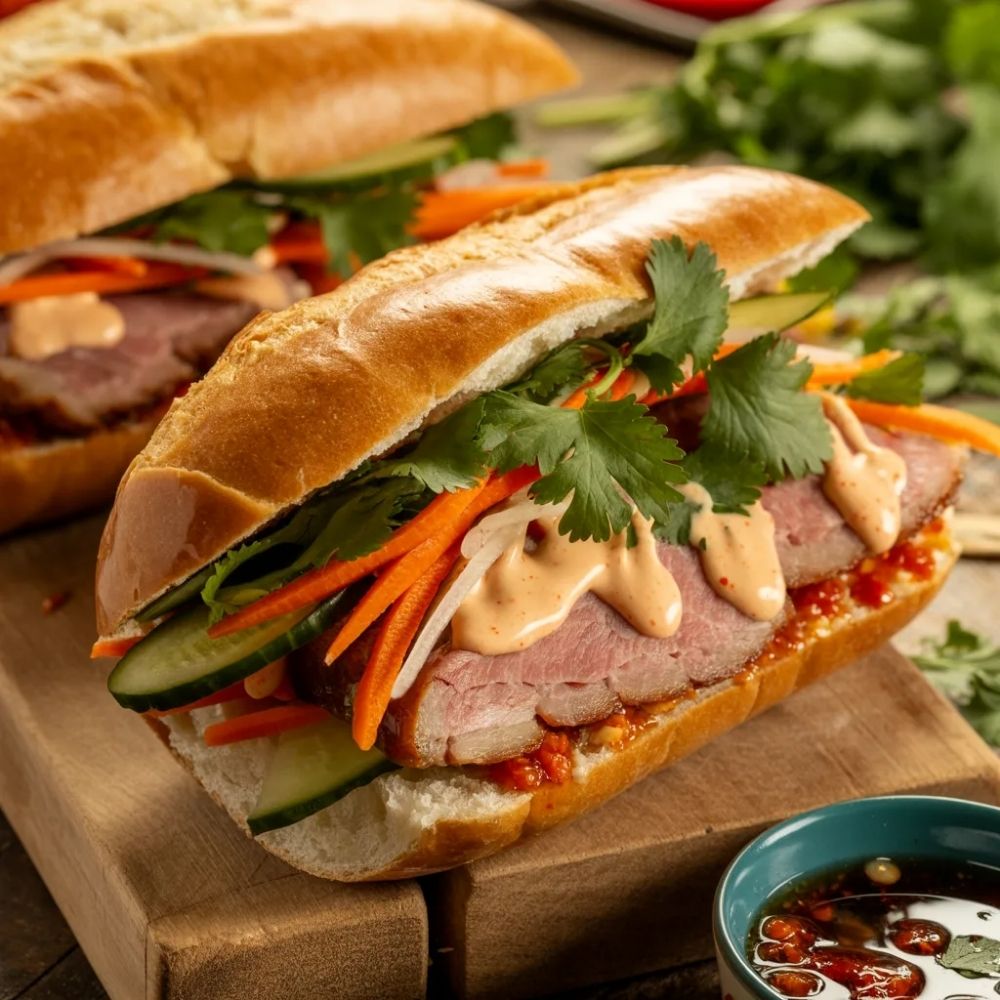
Among globally celebrated street food sensations, few dishes offer a more spectacular contrast of textures and temperatures than the traditional Vietnamese banh mi. A true vietnamese sandwich is a sensory masterpiece: a warm, weightless, shattering crust collapses into a cloud of soft, pillowy dough, followed immediately by the rich depth of savory meats, velvety liver pâté, and the bright, icy crunch of sweet pickled vegetables and fresh herbs.
The name banh mi translates literally to “wheat bread.” Rather than a single fixed recipe, banh mis represent an evolutionary culinary timeline—a masterclass in cross-cultural culinary fusion that transformed a classic French colonial staple into an intensely vibrant street-food icon.
This comprehensive guide covers the colonial history and baking physics of the sandwich, a step-by-step master preparation guide, classic style variations, a nutrient breakdown, and an essential FAQ troubleshooting section.
The Physics of the Crumble: Why Banh Mi Bread Shatters
To build a flawless banh mi sandwich, you cannot simply buy a standard French baguette from a western supermarket. French baguettes are defined by a thick, rugged, chewy crust and a dense, structural interior crumb. If you use one for a viet sandwich, the tough bread will squeeze your fillings out the sides the moment you take a bite.
True banh mi food relies on a modified baguette with an incredibly light, airy interior and a paper-thin “eggshell” crust that shatters into a storm of tiny flakes upon impact. Achieving this unique structural matrix requires managing two specific elements:
Ascorbic Acid (Vitamin C) & Bread Improvers: Vietnamese bakers operating in intensely hot, humid tropical environments face volatile dough proofing cycles. Adding minute amounts of pure ascorbic acid strengthens the gluten bonds within high-protein wheat flour. This allows the dough walls to stretch incredibly thin without collapsing, trapping massive, airy gas pockets.
Note: While a popular culinary myth claims this lightness comes from mixing in heavy amounts of rice flour, modern bakery documentation proves the texture is driven entirely by high-speed mechanical kneading and dough enhancers.
Aggressive Oven Steaming: When the shaped loaves enter the oven, they are instantly blasted with a heavy cloud of water steam. This moisture delays the setting of the outer crust, allowing the internal gases to expand violently. As the steam eventually evaporates, it leaves behind a hyper-thin, blistered, fragile outer layer that crisps beautifully without turning tough or chewy.
Required Equipment and Ingredient Assembly
To successfully execute how to make vietnamese banh mi at home without your sandwich turning soggy, assembling the traditional layering elements is crucial.
Essential Equipment
-
A Long, Serrated Bread Knife: Vital for sawing through the fragile crust without crushing the delicate internal crumb structure.
-
A Mandoline Slicer: For cutting your pickling vegetables into perfect, uniform matchsticks.
-
A Heavy Cast Iron Skillet: To sear and caramelize your proteins uniformly.
The Foundational Layering Elements
An authentic Bánh Mì Đặc Biệt (The House Special) is built using a precise, calculated sequence of textures and moisture barriers:
[Top Crust]
─────── Fresh Cilantro Sprigs & Sliced Jalapeños ───────
────────── Crispy Fresh Cucumber Spears ──────────
──────── Sweet & Tangy Pickled Daikon / Carrots ────────
────────── Savory Proteins (Pork / Chicken) ──────────
─────────── Savory Maggi Seasoning Liquid ───────────
───── Silky Smooth Chicken Liver Pâté & Umami Mayo ─────
[Bottom Crust]
Step-by-Step Ultimate Vietnamese Banh Mi Recipe
Follow this optimized preparation method to assemble a world-class banh mi sandwich vietnamese style utilizing classic savory pork.
Ingredients
The Sweet & Tangy Pickled Veggies (Đồ Chua)
-
1 Large Carrot (Peeled and cut into thin matchsticks)
-
1 Medium Daikon Radish (Peeled and cut into thin matchsticks)
-
1/2 Cup Rice Vinegar
-
1/2 Cup Warm Water
-
3 Tablespoons Granulated Sugar
-
1 Teaspoon Kosher Salt
The Savory Protein Component
-
1 Pound Pork Shoulder or Loin: Sliced into thin, bite-sized strips (banh mi pork style).
-
2 Cloves Garlic: Finely minced.
-
1 Small Shallot: Finely minced.
-
1 Tablespoon Fish Sauce
-
1 Tablespoon Soy Sauce
-
1 Tablespoon Brown Sugar
-
1 Tablespoon Cooking Oil
The Sandwich Assembly Matrix
-
4 Authentic Vietnamese Baguettes (or light, airy individual French rolls)
-
4 Tablespoons High-Quality Creamy Mayonnaise
-
4 Tablespoons Smooth Chicken or Pork Liver Pâté
-
1 Medium Cucumber: Sliced into long, thin spears.
-
1 Bunch Fresh Cilantro Sprigs
-
1 Large Jalapeño or Bird’s Eye Chili: Thinly sliced into rings.
-
A Few Dashes of Maggi Seasoning Sauce (or light soy sauce)
Step-by-Step Instructions:
Step 1: Execute the Quick-Pickle Matrix
In a medium bowl, whisk together your rice vinegar, warm water, sugar, and salt until the sugar crystals dissolve completely. Toss your carrot and daikon matchsticks directly into the liquid. Press the vegetables down so they are fully submerged, and let them marinate at room temperature for at least 30 minutes (they will become pleasantly tangy, crunchy, and lose their harsh raw bite).
Step 2: Marinate and Sear the Pork
In a bowl, mix your minced garlic, shallot, fish sauce, soy sauce, brown sugar, and cooking oil. Add your thinly sliced pork strips, tossing thoroughly to coat the meat. Marinate for 20 minutes. Place your heavy skillet over high heat. Add the pork strips in a single layer and sear undisturbed for 2 to 3 minutes per side until beautifully caramelized and charred on the edges. Remove from the heat.
Step 3: Prep and Termally Charge the Bread
Preheat your oven or toaster oven to 350°F (177°C). Place your baguettes directly on the center wire rack for 3 to 4 minutes. This brief flash of heat evaporates any ambient moisture locked inside the crust, instantly restoring its signature light, shattering crispiness. Use your serrated knife to slice the warm bread lengthwise, leaving one side attached to create a hinge.
Step 4: Systematically Layer Your Fillings
The Moisture Barriers: Spread a thick, generous layer of creamy mayonnaise across the bottom interior wall of the bread. Follow immediately by spreading your smooth liver pâté across the opposite top wall.
The Umami Boost: Shake 3 to 4 drops of Maggi Seasoning Sauce directly onto the mayonnaise layer.
The Proteins: Arrange your hot, caramelized savory pork strips evenly along the length of the baguette.
The Cool Crunch: Layer your long cucumber spears directly on top of the meat. Follow with a generous handful of your drained, tangy pickled carrots and daikon.
The Aromatic Finish: Top the sandwich with fresh, leafy sprigs of cilantro and your spicy sliced jalapeño rings. Close the hinged crust firmly, press gently to compress the layers, and bite down to experience the ultimate street-food symphony.
Flavor Modifications and Lifestyle Adaptations
The structural architecture of a banh mi vietnamese food build can easily swap proteins to accommodate diverse dietary preferences.
Variant 1: The Plant-Based Crispy Tofu Banh Mi
To assemble a spectacular vegetarian or vegan banh mi tofu, cut extra-firm tofu into thick slabs. Marinate the blocks in a mixture of soy sauce, minced lemongrass, and garlic, then pan-fry or bake them until the exterior develops a deep, golden crust. Swap standard liver pâté for a rich, savory roasted mushroom and walnut pâté, and utilize an eggless vegan mayonnaise to keep the sandwich entirely plant-based.
Variant 2: Street-Style Lemongrass Chicken
For an incredibly aromatic poultry alternative, marinate boneless chicken thighs in a mixture of finely minced fresh lemongrass stalks, fish sauce, honey, and a splash of lime juice. Grill or char-sear the meat over high heat until the sugars caramelize into a smoky glaze. Slice thin and layer generously into your warm baguette.
Nutritional Breakdown
A standard, single 8-inch house-special pork banh mi provides a balanced macro-profile combining complex carbohydrates, muscle-building proteins, and an abundance of raw micronutrients.
-
Total Energy Output: 510 Calories (kcal)
-
Protein Content: 24 grams (high-density delivery via fresh pork and liver proteins)
-
Total Lipid Fat: 19 grams
-
Saturated Fat: 6 grams
-
Monounsaturated Fat: 8.5 grams (derived naturally from real mayo and pork lipids)
-
-
Total Carbohydrates: 58 grams
-
Dietary Fiber: 3.5 grams
-
Sugars: 8 grams (primarily derived from the quick-pickling brine matrix)
-
-
Sodium Matrix: 1,150 mg (highly driven by traditional fermented fish and soy sauces)
-
Key Micronutrients: High concentrations of Vitamin A (from liver pâté), Vitamin C, Bioavailable Iron, B-Vitamins, and Folate.
Frequently Asked Questions (FAQ)
What can I use as a substitute if I cannot find authentic Vietnamese baguettes?
If your local Asian bakeries do not stock traditional banh mi loaves, look for standard Mexican Bolillo rolls or cheap, individual-sized soft French or Italian hero rolls at your local grocery store. Avoid high-end artisanal sourdough or dense rustic baguettes. You want a mass-market, budget-friendly roll with a thin crust and an airy, feather-light interior that can be crisped quickly in a toaster oven.
What is Maggi Seasoning, and why is it mandatory for a true banh mi?
Maggi Seasoning is a dark, wheat-based hydrolyzed vegetable protein liquid condiment that looks similar to soy sauce but boasts a significantly deeper, meatier, and more concentrated umami profile. Introduced by European trade, it became a fundamental staple of Vietnamese cuisine. Sprinkled directly onto the mayonnaise layer of a bha mi, it binds with the dairy fats to create an intensely savory, savory taste bridge that links the cold pickles to the warm meats.
My pickled carrots and daikon smell incredibly pungent. Did they go bad?
No, your pickles are completely fine. Daikon radish contains high amounts of sulfur compounds. When fermented or submerged in an acidic vinegar brine, it naturally releases a very strong, distinctively pungent odor when you first open the storage container. This scent is a completely normal biological byproduct of the pickling process. The flavor remains perfectly sweet, crisp, sharp, and delicious.
How long can I store the leftover components for future meal prep?
A fully assembled vietnamese food sandwich will turn soggy within an hour due to the moisture leaking from the fresh cucumbers and pickles into the bread. To meal-prep properly, store your components in separate airtight containers inside your refrigerator.
Your cooked pork will keep perfectly for 4 days, your pickled carrots and daikon will stay fresh and crunchy in their brine for up to 3 weeks, and your fresh herbs should be wrapped in a damp paper towel and used within 3 days.
Can I completely omit the liver pâté if I don’t like the taste of organ meats?
Yes, you can absolutely skip it. While traditionalists consider liver pâté the structural backbone of a true Đặc Biệt style sandwich, many regional variations in Vietnam omit it entirely. If you want to bypass the organ meats while keeping a creamy texture, simply increase the amount of mayonnaise on your bread, or substitute the pâté with a smooth, savory spread like mashed avocado mixed with a tiny drop of soy sauce.
Banh Mi Recipe
Print ThisIngredients
- Ingredients
- The Sweet & Tangy Pickled Veggies (Đồ Chua)
- 1 Large Carrot (Peeled and cut into thin matchsticks)
- 1 Medium Daikon Radish (Peeled and cut into thin matchsticks)
- 1/2 Cup Rice Vinegar
- 1/2 Cup Warm Water
- 3 Tablespoons Granulated Sugar
- 1 Teaspoon Kosher Salt
- The Savory Protein Component
- 1 Pound Pork Shoulder or Loin: Sliced into thin, bite-sized strips (banh mi pork style).
- 2 Cloves Garlic: Finely minced.
- 1 Small Shallot: Finely minced.
- 1 Tablespoon Fish Sauce
- 1 Tablespoon Soy Sauce
- 1 Tablespoon Brown Sugar
- 1 Tablespoon Cooking Oil
- The Sandwich Assembly Matrix
- 4 Authentic Vietnamese Baguettes (or light, airy individual French rolls)
- 4 Tablespoons High-Quality Creamy Mayonnaise
- 4 Tablespoons Smooth Chicken or Pork Liver Pâté
- 1 Medium Cucumber: Sliced into long, thin spears.
- 1 Bunch Fresh Cilantro Sprigs
- 1 Large Jalapeño or Bird's Eye Chili: Thinly sliced into rings.
- A Few Dashes of Maggi Seasoning Sauce (or light soy sauce)
Instructions
Step 1: Execute the Quick-Pickle Matrix
Step 2: Marinate and Sear the Pork
Step 3: Prep and Termally Charge the Bread
Step 4: Systematically Layer Your Fillings