A few summers ago, my husband and I spent a Saturday morning wandering through a small international farmers market about forty minutes from home. We had gone for peaches and tomatoes, but I ended up lingering near a tiny booth where a young couple served samples of spicy grilled chicken over rice. Their little boy stood on a stool beside them proudly sprinkling sesame seeds over each bowl like he was finishing a masterpiece.
I remember how the warm skillet hissed behind them while music from another vendor drifted through the building. The young woman noticed me studying the sauce and laughed softly before saying, “The secret is balance—sweet, spicy, salty, all together.” That sentence stayed with me longer than expected.
Back at home, I kept thinking about those flavors and decided to try my own version the following week when my grandchildren came over after swimming lessons. One grandson asked if the chicken was “barbecue and tacos mixed together,” which honestly made me smile for the rest of the evening. The bowls disappeared faster than any casserole I had served that month. My daughter even packed leftovers into a container before heading home because she wanted them for lunch the next day.
Since then, these Korean BBQ chicken bowls have found their way onto our table during busy weekdays, warm evenings on the porch, and even casual birthday dinners. They feel colorful and lively without being difficult to make. The marinade fills the kitchen with garlic, ginger, and toasted sesame while the fresh vegetables keep everything crisp and balanced. For a dish with such bold flavor, it comes together with surprising ease.
Short Description
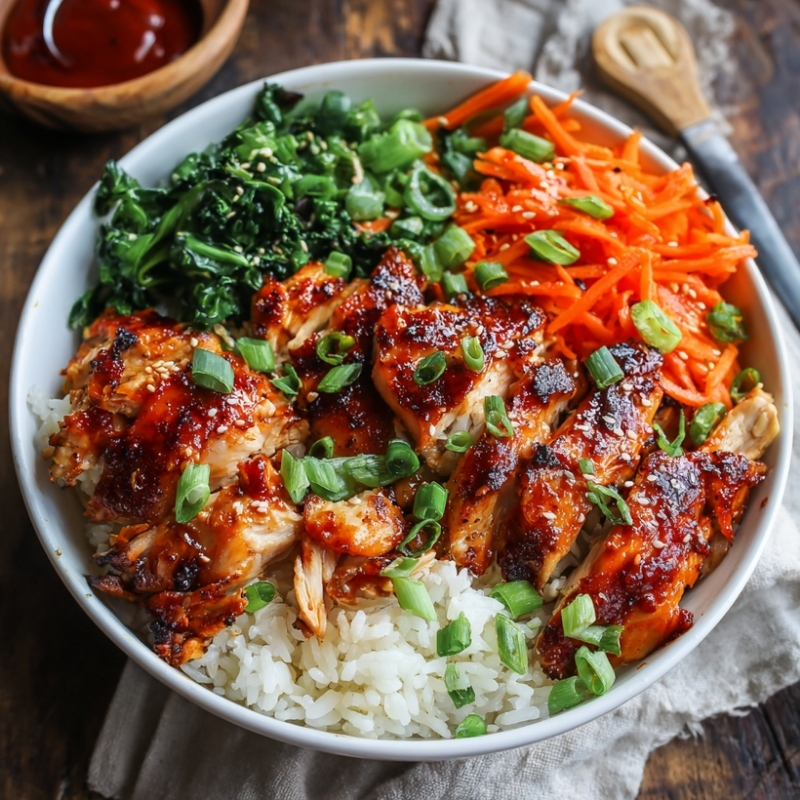
These savory Korean BBQ Chicken Bowls combine tender caramelized chicken, fluffy rice, crisp vegetables, and spicy-sweet gochujang sauce in one satisfying meal. Perfect for quick weeknight dinners, meal prep lunches, or casual family gatherings.
Key Ingredients
For the Chicken & Marinade
- 1½ pounds boneless, skinless chicken thighs, cut into 1-inch pieces
- ¼ cup low-sodium soy sauce
- 3 tablespoons gochujang (Korean chili paste)
- 2 tablespoons packed brown sugar
- 1 tablespoon sesame oil
- 3 cloves garlic, minced
- 1 teaspoon fresh ginger, grated
- 1 teaspoon rice vinegar
For the Bowls
- 4 cups cooked rice
- 1 cup cucumber, thinly sliced
- 1 cup shredded carrots
- 1 cup shelled edamame, cooked
- ½ cup kimchi (optional)
- 1 tablespoon sesame seeds
- 2 tablespoons sliced green onions
Tools Needed
- Large mixing bowl
- Whisk
- Sharp knife
- Cutting board
- Large skillet or sauté pan
- Wooden spoon or spatula
- Measuring cups and spoons
- Rice cooker or saucepan
- Serving bowls
Cooking Instructions
Step 1: Make the Marinade
In a medium bowl, whisk together the soy sauce, gochujang, brown sugar, sesame oil, garlic, ginger, and rice vinegar until smooth. The marinade should look glossy and deep reddish-brown.
If the gochujang feels thick straight from the refrigerator, let it sit at room temperature for a few minutes so it blends more easily.
Step 2: Marinate the Chicken
Add the chicken pieces to the marinade and toss until fully coated. Cover and refrigerate for at least 30 minutes or up to 4 hours.
Longer marinating creates deeper flavor, but avoid leaving it overnight since the soy sauce can make the chicken too salty.
Step 3: Prepare the Bowl Ingredients
While the chicken marinates, cook the rice and prepare the toppings. Slice the cucumbers thinly, shred the carrots, cook the edamame if needed, and set everything aside in separate bowls.
Keeping the vegetables cold and crisp balances the warm spicy chicken beautifully.
Step 4: Cook the Chicken
Heat a large skillet over medium-high heat. Add the chicken in a single layer, working in batches if necessary. Cook for 3–4 minutes per side until caramelized and fully cooked through.
The edges should look slightly charred and sticky from the sauce. Avoid overcrowding the pan or the chicken will steam instead of browning.
For food safety, chicken should reach an internal temperature of 165°F.
Step 5: Assemble the Bowls
Divide the cooked rice evenly among four bowls. Top with the Korean BBQ chicken, then arrange the cucumber, carrots, edamame, and kimchi around the chicken.
The colorful arrangement makes the bowls feel fresh and inviting before the first bite.
Step 6: Garnish and Serve
Sprinkle sesame seeds and sliced green onions over each bowl before serving. Serve immediately while the chicken is warm and the vegetables stay crisp.
Why You’ll Love This Recipe
Bold Flavor Balance: The sweet brown sugar, savory soy sauce, spicy gochujang, and nutty sesame oil create layers of flavor in every bite.
Fresh and Filling: Crisp vegetables lighten the richness of the chicken and make the bowls feel satisfying without being overly heavy.
Meal Prep Friendly: The chicken reheats beautifully, making these bowls excellent for lunches during the week.
Customizable: Everyone can build their bowl exactly how they like it by adjusting toppings and spice levels.
Protein Packed: Chicken thighs and edamame provide plenty of protein to keep you full longer.
Restaurant-Style at Home: The caramelized chicken tastes like something from a cozy Korean café but uses simple pantry ingredients.
Quick Enough for Busy Nights: Once the chicken is marinated, the cooking process moves quickly.
Mistakes to Avoid & Solutions
Skipping the Marinade Time:
Rushing this step can leave the chicken tasting flat. Even 30 minutes helps the flavors soak in properly. If short on time, cut the chicken into slightly smaller pieces so it absorbs the marinade faster.
Overcrowding the Pan:
Too much chicken in the skillet lowers the heat and causes steaming. Cook in batches if needed so the edges caramelize properly.
Using Cold Chicken Straight from the Refrigerator:
Ice-cold chicken can cook unevenly. Let it sit at room temperature for 10–15 minutes before cooking.
Adding Too Much Gochujang at First:
Gochujang can vary in spice level. Start with the recipe amount and add more later if desired.
Overcooking the Vegetables:
Fresh toppings should stay crisp. Avoid cooking the cucumbers or carrots since their crunch balances the warm chicken.
Using Watery Rice:
Mushy rice makes the bowls heavy. Fluffy rice with separated grains gives the best texture.
Serving and Pairing Suggestions
Serve family-style with bowls of toppings spread across the table so everyone can build their own bowl.
Pair with steamed dumplings or light miso soup for a fuller dinner.
Add sliced avocado for extra creaminess.
Serve with sparkling water, iced green tea, or a citrus drink to cool the spice.
For gatherings, arrange everything buffet-style so guests can customize their bowls.
A soft fried egg on top adds richness and makes the meal feel extra comforting.
Storage and Reheating Tips
Refrigerator:
Store the chicken, rice, and vegetables separately in airtight containers for up to 4 days. Keeping them separate preserves texture.
Freezer:
The cooked chicken freezes well for up to 2 months. Thaw overnight in the refrigerator before reheating.
Reheating the Chicken:
Warm the chicken in a skillet over medium heat with a splash of water to loosen the sauce and prevent drying out.
Reheating Rice:
Add a teaspoon of water before microwaving rice to restore moisture.
Fresh Toppings:
Slice cucumbers fresh if possible since they soften after storage.
FAQs
1. Can I use chicken breast instead of chicken thighs?
Yes. Chicken breast works well, though it cooks a bit faster and can dry out more easily. Reduce cooking time slightly and avoid overcooking.
2. Is gochujang very spicy?
Gochujang has moderate heat with sweetness and depth. If sensitive to spice, start with 1½ tablespoons instead of 3.
3. Can these bowls be made ahead?
Absolutely. The chicken can be marinated a day ahead, and the bowls assemble quickly when ready to serve.
4. What can I substitute for kimchi?
Pickled cucumbers, quick-pickled onions, or shredded cabbage add a similar tangy contrast.
5. Can I make this recipe gluten-free?
Yes. Use gluten-free tamari instead of soy sauce and double-check that the gochujang is gluten-free.
6. Which rice works best?
Jasmine rice, short-grain rice, or brown rice all work nicely. Brown rice gives a nuttier flavor and extra fiber.
Tips & Tricks
- Pat the chicken dry slightly before adding it to the skillet for better browning.
- A cast-iron skillet creates excellent caramelization on the chicken.
- Chill the cucumber slices in ice water for 10 minutes to keep them extra crisp.
- Toast sesame seeds briefly in a dry pan for deeper flavor.
- Add a drizzle of extra sesame oil just before serving for richer aroma.
- If the sauce thickens too much in the pan, stir in a tablespoon of water.
Recipe Variations
Spicy Honey Korean BBQ Bowls
Add 1 tablespoon honey and 1 teaspoon sriracha to the marinade. The honey softens the heat slightly while creating a shinier glaze on the chicken. Garnish with extra green onions and chili flakes for a sweeter-spicier finish.
Low-Carb Lettuce Bowl Version
Replace the rice with chopped romaine or butter lettuce. Add sliced avocado and extra cucumber for a lighter meal with refreshing crunch.
Vegetarian Korean Bowls
Swap the chicken for extra-firm tofu or mushrooms. Press the tofu well before marinating so it absorbs the sauce properly. Pan-sear until golden and crisp around the edges.
Pineapple Korean BBQ Bowls
Add grilled pineapple chunks to the bowls for sweet contrast. The fruit pairs beautifully with the spicy chicken and smoky sesame flavor.
Crunchy Noodle Bowl Twist
Top the finished bowls with crispy ramen noodles or crunchy wonton strips for extra texture and a fun take on the original recipe.
Final Thoughts
These Korean BBQ chicken bowls brought an unexpected kind of energy into my kitchen. The colors alone brighten the table before anyone even picks up a fork. My husband usually reaches for traditional comfort meals, but even he asked for seconds the first evening I served these bowls. I think part of their charm comes from the balance between warm and cool ingredients, rich flavors and fresh crunch. The spicy sauce settles into the rice while the cucumbers and carrots keep each bite lively.
Meals like this remind me that trying something slightly different can open the door to new family favorites and good conversations around the table. My youngest granddaughter now insists on sprinkling the sesame seeds herself because she says it makes the bowls “restaurant fancy.” I happily let her take the job. Small moments like that tend to stay with me longer than the recipe itself.
Korean BBQ Chicken Bowls

Ingredients
For the Chicken & Marinade
- 1½ pounds boneless skinless chicken thighs, cut into 1-inch pieces
- ¼ cup low-sodium soy sauce
- 3 tablespoons gochujang Korean chili paste
- 2 tablespoons packed brown sugar
- 1 tablespoon sesame oil
- 3 cloves garlic minced
- 1 teaspoon fresh ginger grated
- 1 teaspoon rice vinegar
For the Bowls
- 4 cups cooked rice
- 1 cup cucumber thinly sliced
- 1 cup shredded carrots
- 1 cup shelled edamame cooked
- ½ cup kimchi optional
- 1 tablespoon sesame seeds
- 2 tablespoons sliced green onions
Instructions
- Whisk together the soy sauce, gochujang, brown sugar, sesame oil, garlic, ginger, and rice vinegar until smooth and glossy. If the gochujang feels too thick, let it sit at room temperature for a few minutes first.
- Add the chicken pieces and toss until fully coated. Cover and refrigerate for at least 30 minutes or up to 4 hours for deeper flavor.
- While the chicken marinates, cook the rice and prepare the toppings. Slice the cucumbers, shred the carrots, and cook the edamame if needed. Keep the vegetables chilled for the best texture.
- Heat a large skillet over medium-high heat. Cook the chicken in a single layer for 3–4 minutes per side until caramelized and cooked through. The edges should look slightly charred and sticky. Avoid overcrowding the pan. Chicken should reach 165°F internally.
- Divide the rice among four bowls. Top with the Korean BBQ chicken, then arrange the cucumber, carrots, edamame, and kimchi around the bowl.
- Finish with sesame seeds and sliced green onions. Serve immediately while the chicken is warm and the vegetables stay crisp.