
Corned beef and cabbage has the kind of comforting aroma that fills the kitchen slowly and makes dinner feel like an event. The beef simmers until tender, the broth becomes savory and spiced, and the vegetables soak up all that warm flavor. Cabbage, carrots, and potatoes turn soft without losing their character, while the corned beef slices into rich, salty, satisfying pieces.
This dish is often linked with St. Patrick’s Day, but it deserves a place at the table anytime a hearty one pot meal sounds good. The key is patience. Corned beef needs gentle heat and enough cooking time so the tough brisket fibers soften. A rolling boil can make the meat tight and dry, while a slow simmer helps it become tender and sliceable.
This recipe uses the classic stovetop method with corned beef brisket, pickling spices, potatoes, carrots, onion, and cabbage. It is simple, filling, and easy to serve family style. For safety, raw corned beef should reach a minimum internal temperature of 145°F and rest for at least 3 minutes before slicing.
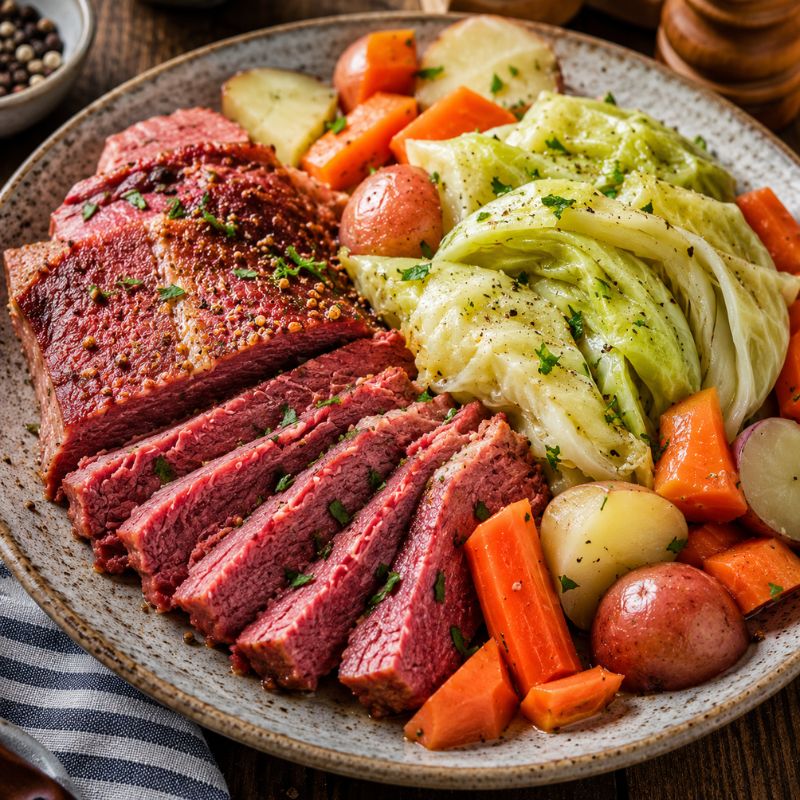
Short Description
This classic corned beef and cabbage recipe simmers seasoned brisket until tender, then cooks potatoes, carrots, and cabbage in the flavorful broth. It is a cozy one pot dinner for holidays, family meals, and hearty comfort food nights.
Key Ingredients
- Corned beef brisket: 3 lb, with spice packet
- Water or low sodium beef broth: 8 cups, enough to cover the beef
- Yellow onion: 1 large onion, quartered
- Garlic: 4 cloves, smashed
- Bay leaves: 2 leaves
- Black peppercorns: 1 tsp, optional
- Small red or gold potatoes: 1½ lb, halved
- Carrots: 4 large carrots, peeled and cut into 2 inch pieces
- Green cabbage: 1 medium head, cut into 8 wedges
- Unsalted butter: 2 tbsp, optional for serving
- Fresh parsley: 2 tbsp, chopped, optional for garnish
- Dijon mustard or whole grain mustard: ¼ cup, optional for serving
Tools Needed
- Large Dutch oven or heavy stockpot with lid
- Cutting board
- Sharp knife
- Tongs
- Ladle
- Measuring cups
- Measuring spoons
- Instant read thermometer
- Large serving platter
- Small bowl for mustard
Cooking Instructions
Step 1: Rinse the Corned Beef
Remove the corned beef brisket from its package and save the spice packet. Rinse the brisket briefly under cool water to remove excess surface brine. Pat lightly with paper towels. This step helps reduce extra saltiness while keeping the classic corned beef flavor.
Step 2: Add Beef and Aromatics to the Pot
Place the brisket in a large Dutch oven or heavy stockpot, fat side up. Add the spice packet, 1 quartered yellow onion, 4 smashed garlic cloves, 2 bay leaves, and 1 tsp black peppercorns if using. Pour in about 8 cups water or low sodium beef broth, using enough liquid to cover the beef by about 1 inch.
Step 3: Bring to a Gentle Simmer
Set the pot over medium high heat and bring the liquid to a gentle simmer. Small bubbles should rise around the edges. Once simmering, reduce the heat to low, cover the pot, and keep the liquid at a quiet simmer. Avoid a hard boil because it can make the meat tough.
Step 4: Cook the Corned Beef Until Tender
Simmer the corned beef for about 2½ to 3 hours, or until it is fork tender. A 3 lb brisket usually needs close to 3 hours. Check the liquid level occasionally and add hot water if needed to keep the beef mostly covered. The meat is ready when a fork slides in with little resistance and the internal temperature reaches at least 145°F with a 3 minute rest.
Step 5: Add the Potatoes and Carrots
Carefully add 1½ lb halved potatoes and 4 carrots cut into 2 inch pieces to the pot. Cover and simmer for 15 minutes. The vegetables should begin to soften but should not fall apart. The broth will season them with a warm, savory, lightly spiced flavor.
Step 6: Add the Cabbage
Add 1 medium cabbage cut into 8 wedges. Place the wedges on top of the potatoes and carrots if the pot is full. Cover and simmer for 15 to 20 minutes, or until the cabbage is tender but still holds its shape. The leaves should look glossy, soft, and lightly translucent near the edges.
Step 7: Rest the Beef
Transfer the corned beef to a cutting board and let it rest for 10 minutes. Resting helps the juices settle and makes slicing easier. Keep the vegetables warm in the pot while the beef rests.
Step 8: Slice Against the Grain
Look for the direction of the meat fibers, then slice the corned beef across those fibers into ¼ inch slices. Cutting against the grain makes the meat feel more tender. If sliced with the grain, the pieces can taste stringy even when the beef is cooked well.
Step 9: Serve With Vegetables
Arrange the sliced corned beef on a large platter with potatoes, carrots, and cabbage. Spoon a little warm cooking broth over the vegetables. Add 2 tbsp butter to the vegetables if desired, then sprinkle with 2 tbsp chopped parsley. Serve with Dijon mustard or whole grain mustard on the side.
Why You’ll Love This Recipe
It is hearty, comforting, and deeply flavorful.
The recipe cooks the meat and vegetables in one pot.
The corned beef becomes tender with slow gentle simmering.
The cabbage, potatoes, and carrots absorb the seasoned broth.
It is perfect for St. Patrick’s Day, Sunday dinner, and cozy family meals.
The leftovers are useful for sandwiches, hash, soups, and breakfast skillets.
The method is simple and beginner friendly.
The dish feels special without needing complicated ingredients.
Mistakes to Avoid & Solutions
Boiling the Meat Too Hard
Corned beef is brisket, which needs gentle cooking. A hard boil can tighten the meat fibers and make the beef dry or tough. Keep the pot at a low simmer with small bubbles. If the liquid is bubbling aggressively, lower the heat right away.
Skipping the Rinse
Corned beef is cured in brine, so the surface can be very salty. A quick rinse removes excess brine without washing away the flavor inside the meat. If the final dish often tastes too salty, rinsing is especially helpful.
Not Using Enough Liquid
The brisket should stay mostly covered while it cooks. If too much liquid evaporates, the top can dry out and cook unevenly. Check occasionally and add hot water or broth as needed. Cold liquid can slow down cooking, so hot liquid is better.
Adding the Vegetables Too Early
Potatoes, carrots, and cabbage cook much faster than the beef. If they go in at the beginning, they can become mushy before the meat is tender. Add potatoes and carrots near the end, then cabbage last.
Cutting the Beef With the Grain
Slicing with the grain makes corned beef feel chewy. Always look for the muscle fibers and cut across them. Thin slices are also easier to chew and serve neatly.
Using Only High Sodium Broth
Corned beef is already salty. If using broth instead of water, choose low sodium broth. Taste the cooking liquid before adding extra salt. Most recipes do not need added salt at all.
Not Resting Before Slicing
Hot corned beef can lose juices if sliced immediately. Let it rest for 10 minutes. This helps the slices stay moist and easier to cut.
Serving and Pairing Suggestions
Corned beef and cabbage is a complete meal on its own, but a few simple sides can make it even better. Serve it with rye bread, soda bread, dinner rolls, roasted carrots, mustard sauce, horseradish cream, or a crisp green salad. The salty beef tastes especially good with tangy mustard and soft buttered vegetables.
For family style serving, arrange the sliced beef in the center of a large platter and place cabbage wedges, potatoes, and carrots around it. Spoon a little warm broth over the vegetables so they look glossy and inviting. For a plated meal, add a few slices of beef, one cabbage wedge, several potatoes, and carrots, then finish with parsley and mustard.
For a casual buffet, keep the vegetables in a warm covered dish and serve the sliced corned beef separately. Offer mustard, horseradish, pickles, and bread on the side. Drink pairings can include iced tea, sparkling water with lemon, ginger ale, apple cider, or a malty beer for adults.
Storage and Reheating Tips
Let leftovers cool, then store the corned beef and vegetables in airtight containers in the refrigerator. Leftovers should be refrigerated within 2 hours and used within 3 to 4 days.
For best texture, store the beef with a little cooking broth so it stays moist. Store cabbage separately if possible, because it can become softer as it sits. Corned beef can also be frozen for longer storage. Wrap slices tightly, add a little broth if possible, and freeze for up to 2 months for best quality.
To reheat on the stovetop, place sliced corned beef in a skillet with 2 to 3 tbsp broth or water. Cover and warm over low heat for 5 to 7 minutes. To reheat vegetables, warm them in a covered saucepan with a splash of broth until hot. Leftovers should be reheated to 165°F as measured with a food thermometer.
A microwave works for quick reheating. Place beef and vegetables in a microwave safe dish, add a spoonful of broth, cover loosely, and heat in 45 second intervals until hot. Avoid overheating because the beef can become dry and the cabbage can turn limp.
FAQs
1. How long does corned beef take to cook?
A 3 lb corned beef brisket usually takes about 2½ to 3 hours on the stovetop at a gentle simmer. Larger pieces may need more time. The meat should be fork tender and should reach at least 145°F with a 3 minute rest for safety.
2. Should corned beef be cooked fat side up or down?
Fat side up works well for simmering because the fat can gently baste the meat as it cooks. If the brisket fits better another way, that is fine too. The most important part is keeping the meat mostly covered with liquid.
3. Do you rinse corned beef before cooking?
Yes, a quick rinse is helpful. It removes extra surface brine and can keep the finished dish from tasting overly salty. The beef will still have plenty of cured flavor.
4. When should cabbage be added?
Cabbage should be added near the end of cooking. It usually needs only 15 to 20 minutes to become tender. Adding it too early can make it too soft and dull.
5. Why is my corned beef tough?
Corned beef can be tough if it is cooked at too high a boil, not cooked long enough, or sliced with the grain. Use a gentle simmer, cook until fork tender, and slice against the grain.
6. Can this recipe be made in a slow cooker?
Yes. Place the corned beef, spices, onion, garlic, and enough liquid to cover most of the meat in a slow cooker. Cook on low for 8 to 9 hours. Add potatoes and carrots during the last 3 hours, then cabbage during the last 1 to 1½ hours.
7. What can be made with leftover corned beef?
Leftover corned beef can be used in sandwiches, Reuben melts, breakfast hash, soups, fried rice, omelets, baked potatoes, or grain bowls. Slice it thinly or chop it depending on the dish.
Tips & Tricks
Rinse the corned beef briefly to reduce extra saltiness.
Keep the liquid at a gentle simmer, not a hard boil.
Use low sodium broth if adding broth instead of water.
Add vegetables near the end so they stay tender, not mushy.
Cut cabbage into wedges so it holds together better.
Rest the meat before slicing.
Slice against the grain for the most tender bite.
Save some cooking broth for reheating leftovers.
Serve mustard on the side for a bright, tangy contrast.
Recipe Variations
Slow Cooker Corned Beef and Cabbage
Place 3 lb corned beef, spice packet, 1 quartered onion, 4 garlic cloves, and 4 cups water or low sodium broth in a slow cooker. Cook on low for 8 to 9 hours. Add 1½ lb potatoes and 4 carrots during the last 3 hours. Add cabbage wedges during the last 1 to 1½ hours. The flavor becomes mellow, tender, and deeply savory.
Beer Braised Corned Beef
Replace 2 cups of the water with 2 cups lager or stout. Keep the rest of the recipe the same. Simmer gently until tender. The beer adds malty depth and a slightly richer broth. This version pairs well with mustard, rye bread, and roasted carrots.
Honey Mustard Glazed Corned Beef
Cook the corned beef as directed, then transfer it to a foil lined baking sheet. Mix 2 tbsp Dijon mustard, 2 tbsp honey, and 1 tbsp brown sugar. Spread over the beef and bake at 400°F for 10 to 12 minutes until glossy. The flavor becomes sweet, tangy, and lightly caramelized.
Spicy Corned Beef and Cabbage
Add ½ tsp red pepper flakes and 1 sliced jalapeño to the cooking liquid. Cook as directed. The broth becomes warmer and slightly spicy, while the cabbage and potatoes absorb a gentle kick. Serve with cooling sour cream or yogurt sauce if desired.
Extra Vegetable Corned Beef Dinner
Add 2 parsnips cut into chunks and 2 celery stalks cut into 2 inch pieces with the carrots and potatoes. Add the cabbage last. This version tastes sweeter, more aromatic, and more vegetable forward.
Corned Beef Hash Variation
Use leftovers for a next day breakfast. Chop 2 cups cooked corned beef, 2 cups cooked potatoes, and ½ cup cooked carrots. Sauté in 1 tbsp butter or oil over medium heat for 8 to 10 minutes until browned at the edges. Serve with eggs and mustard.
Low Carb Corned Beef and Cabbage
Skip the potatoes and add extra cabbage, carrots, celery, and cauliflower florets. Add cauliflower during the last 10 to 12 minutes so it stays tender but not mushy. The flavor remains hearty while the meal feels lighter.
Conclusion
Corned beef and cabbage is a dish built on patience, warmth, and simple ingredients that become more flavorful together. The beef brings salty richness, the broth carries spice and aroma, and the vegetables soften into something comforting without needing much extra work. A full pot on the stove has a way of making the kitchen feel grounded and welcoming.
This recipe is especially satisfying because it gives structure to a classic meal that can sometimes feel intimidating. The timing matters, but the steps are simple: simmer gently, add vegetables in stages, rest the beef, and slice it the right way. Those details make the difference between tough meat and tender slices.
The dish also gives generous leftovers, which can turn into sandwiches, hash, soups, or easy lunches the next day. A platter of corned beef, cabbage, potatoes, and carrots feels hearty, familiar, and deeply comforting. It is a meal that rewards slow cooking and brings people to the table with very little fuss.
Corned Beef And Cabbage

Ingredients
- 3 lb Corned beef brisket with spice packet
- 8 cups Water or low sodium beef broth enough to cover the beef
- 1 large Yellow onion quartered
- 4 cloves, smashed Garlic
- 2 Bay leaves
- 1 tsp Black peppercorns optional
- 1½ lb Small red or gold potatoes halved
- 4 large Carrots peeled and cut into 2 inch pieces
- 1 Green cabbage medium head, cut into 8 wedges
- 2 tbsp Unsalted butter optional for serving
- 2 tbsp Fresh parsley
- ¼ cup Dijon mustard or whole grain mustard optional for serving
Instructions
- Remove the corned beef brisket from its package and save the spice packet. Rinse the brisket briefly under cool water to remove excess surface brine. Pat lightly with paper towels. This step helps reduce extra saltiness while keeping the classic corned beef flavor.
- Place the brisket in a large Dutch oven or heavy stockpot, fat side up. Add the spice packet, 1 quartered yellow onion, 4 smashed garlic cloves, 2 bay leaves, and 1 tsp black peppercorns if using. Pour in about 8 cups water or low sodium beef broth, using enough liquid to cover the beef by about 1 inch.
- Set the pot over medium high heat and bring the liquid to a gentle simmer. Small bubbles should rise around the edges. Once simmering, reduce the heat to low, cover the pot, and keep the liquid at a quiet simmer. Avoid a hard boil because it can make the meat tough.
- Simmer the corned beef for about 2½ to 3 hours, or until it is fork tender. A 3 lb brisket usually needs close to 3 hours. Check the liquid level occasionally and add hot water if needed to keep the beef mostly covered. The meat is ready when a fork slides in with little resistance and the internal temperature reaches at least 145°F with a 3 minute rest.
- Carefully add 1½ lb halved potatoes and 4 carrots cut into 2 inch pieces to the pot. Cover and simmer for 15 minutes. The vegetables should begin to soften but should not fall apart. The broth will season them with a warm, savory, lightly spiced flavor.
- Add 1 medium cabbage cut into 8 wedges. Place the wedges on top of the potatoes and carrots if the pot is full. Cover and simmer for 15 to 20 minutes, or until the cabbage is tender but still holds its shape. The leaves should look glossy, soft, and lightly translucent near the edges.
- Transfer the corned beef to a cutting board and let it rest for 10 minutes. Resting helps the juices settle and makes slicing easier. Keep the vegetables warm in the pot while the beef rests.
- Look for the direction of the meat fibers, then slice the corned beef across those fibers into ¼ inch slices. Cutting against the grain makes the meat feel more tender. If sliced with the grain, the pieces can taste stringy even when the beef is cooked well.
- Arrange the sliced corned beef on a large platter with potatoes, carrots, and cabbage. Spoon a little warm cooking broth over the vegetables. Add 2 tbsp butter to the vegetables if desired, then sprinkle with 2 tbsp chopped parsley. Serve with Dijon mustard or whole grain mustard on the side.