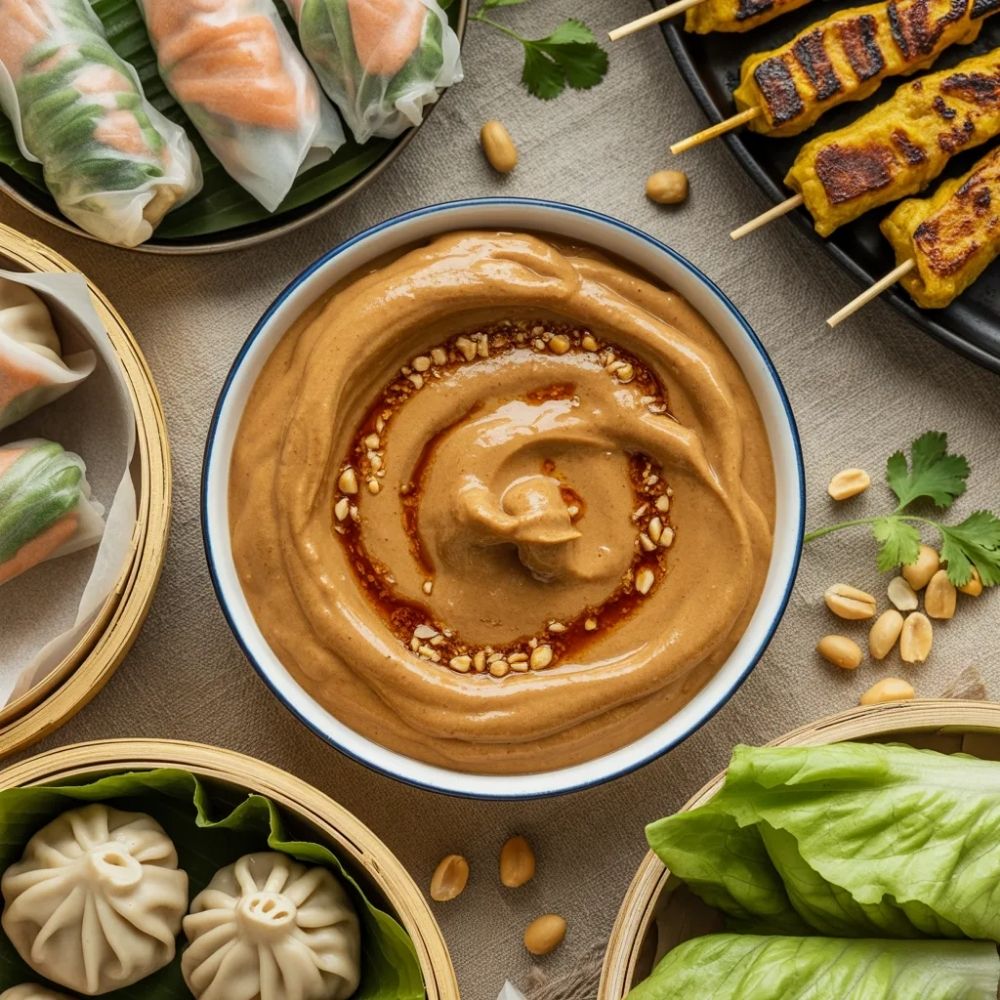
In pan-Asian and Southeast Asian cuisine, a well-executed peanut sauce recipe is highly valued for its ability to balance sweet, salty, savory, sour, and spicy flavor profiles. Often associated with traditional street food vendors, peanut sauces function effectively as a marinade, a rich dressing, or a smooth dipping sauce.
While many commercial varieties rely heavily on artificial stabilizers and excess sugar, a homemade peanut sauce yields a vastly superior depth of flavor using simple kitchen staples. This comprehensive guide outlines an easy peanut sauce recipe, explores the cultural lineage of thailand peanut sauce, and details how to integrate it into world-class culinary dishes.
Regional Variations: Thai vs. Vietnamese Styles
The structural base of an asian peanut sauce varies noticeably depending on geographic and cultural traditions.
Thailand Peanut Sauce
An authentic thai restaurant peanut sauce recipe utilizes a foundation of rich coconut milk, red curry paste, and tamarind paste. This combination creates an aromatic, complex peanut thai sauce that pairs traditionally with open-flame grilled meats.
Peanut Sauce Recipe Vietnamese Style
A peanut sauce recipe vietnamese style leans toward a lighter, sweeter profile. It typically omits coconut milk and curry paste, relying instead on a base of broth, hoisin sauce, and garlic. This variation is the definitive sauce for vietnamese spring roll selections.
The Ultimate Easy Peanut Sauce Recipe
This easy peanut sauce strikes an ideal balance, serving as a versatile peanut dipping sauce or a robust flavor base for a hot peanut saute sauce recipe.
Ingredients
- 1/2 cup Creamy Peanut Butter: Unsweetened, natural varieties provide the best control over sweetness.
- 1/3 cup Full-Fat Coconut Milk: Essential for a smooth, velvety texture.
- 2 tablespoons Soy Sauce (or Tamari for a gluten-free alternative)
- 1 tablespoon Fresh Lime Juice: Provides vital acidity to cut through dense fats.
- 1 tablespoon Honey or Brown Sugar: Balances the salt and acid.
- 1 teaspoon Sriracha or Chili Garlic Sauce: Adjust to create a spicy peanut sauce.
- 1 clove Garlic, finely minced
- 1 teaspoon Fresh Ginger, finely grated
- 2 to 3 tablespoons Warm Water: Added gradually to reach the desired pouring consistency.
Step-by-Step Execution
Place the creamy peanut butter, minced garlic, and grated ginger into a medium mixing bowl.
Pour in the full-fat coconut milk, soy sauce, lime juice, honey, and chili sauce.
Whisk the mixture vigorously. Initially, the peanut butter will seize and look clumpy as it reacts to the cool liquids. Continue whisking as the emulsifiers stabilize.
Gradually drizzle in warm water one tablespoon at a time until the mixture transforms into a silky, uniform peanut butter sauce recipe.
Taste and adjust. For extra heat, increase the chili paste; for more brightness, express an additional squeeze of fresh lime juice.
Companion Master Recipe: Authentic Chicken Satay
A classic recipe with peanut sauce is the iconic street food pairing of grilled skewers and peanut satay sauce. To execute a flawless chicken satay recipe, the meat must be properly marinated to contrast with the rich sauce for satay.
Chicken Satay Marinade Instructions
To prepare a high-quality thai chicken satay marinade or chicken satay marinade, combine the following components in a large bowl:
- 1 can (13.5 oz) Full-Fat Coconut Milk
- 1 tablespoon Lemongrass paste
- 1 tablespoon Brown Sugar
- 1 tablespoon Fish Sauce
- 1 tablespoon Ground Turmeric (gives satay chicken and peanut sauce its signature bright yellow color)
- 2 cloves Garlic, minced
Cut 1.5 pounds of boneless, skinless chicken breast or thigh meat into thin, long strips. Submerge the chicken peanut thai strips into the marinade. Cover and refrigerate for a minimum of 2 hours, or ideally overnight, to fully tenderize the muscle fibers.
Grilling and Serving
Thread the marinated meat onto soaked wooden bamboo skewers. Grill over medium-high direct heat for 3 to 4 minutes per side until the edges show dark, charred caramelization.
Serve the hot chicken peanut satay or chicken peanut satay sauce creations immediately alongside a small bowl of cold peanut satay, providing an exceptional contrast of temperatures and textures. This complete array represents a classic satay recipe thai or thai peanut satay recipe presentation.
The Definitive Dipping Companion: Spring and Summer Rolls
A thick, savory peanut dip serves as the perfect structural anchor for fresh, vegetable-forward rolls. Whether serving translucent rice paper wrappers or crispy fried wrappers, a designated dip sauce for spring rolls or dip for spring rolls is mandatory.
When selecting or adjusting a recipe for spring roll sauce, consistency is key. The sauce must be viscous enough to cling to the smooth rice paper surface without running off.
Versatile Pairing Chart:
Fresh Rolls with Peanut Sauce / Peanut Sauce Fresh Rolls: Pair fresh, uncooked rolls stuffed with shrimp, vermicelli noodles, and mint with a cold peanut dipping sauce for fresh rolls.
Peanut Sauce for Spring Rolls / Sauce for Spring Rolls Peanut: Fried, crispy wrappers pair best with a slightly sweeter peanut butter sauce for spring roll style.
Peanut Sauce for Summer Roll: Summer rolls featuring crisp julienned bell peppers, carrots, and purple cabbage match perfectly with a zesty thai peanut salad dressing recipe or a standard peanut dip for spring rolls.
To prepare an optimal peanut sauce for spring roll recipe or peanut sauce recipe for fresh rolls, use the base recipe above but reduce the water content by half to ensure a thick, heavy texture suitable for a dipping sauce for fresh rolls.
Transforming Staples into Peanut Noodles
Beyond dipping, a peanut butter sauce recipe can instantly elevate plain grains into a hearty peanut noodle dish. Utilizing a peanut dressing for noodles turns basic pantry items into a high-protein, flavorful meal.
To execute a basic noodle peanut sauce recipe or a classic thai peanut noodle dish:
- Boil 8 ounces of long pasta or rice noodles according to package instructions.
- While hot, drain the noodles and return them to the pot.
- Pour a generous quantity of peanut sauce noodles or thai peanut sauce and noodles over the hot starch. The residual heat from the pasta will thin the peanut oils slightly, allowing the sauce to coat every strand evenly.
- Toss thoroughly with fresh bean sprouts, shredded carrots, and crushed roasted peanuts.
Noodle Variations Reference Table
| Culinary Style | Suggested Starch | Secondary Protein | Key Topping | Search Alignment |
| Thai Peanut Noodles | Rice Noodles | Grilled Shrimp | Fresh Cilantro | thai peanut noodles |
| Peanut Chicken Noodle | Lo Mein Noodles | Shredded Chicken | Scallions | peanut chicken and noodles |
| Peanut Butter Pasta | Spaghetti | Baked Tofu | Sesame Seeds | pasta with peanut butter |
| Stir-Fry Noodles | Udon Noodles | Sliced Beef | Crushed Peanuts | peanut sauce for stir fry |
Whether researching noodles and peanut butter, noodle peanut butter, or looking up intricate peanut noodles recipes, the technical principle remains identical: ensure the sauce is fully emulsified before combining it with the hot pasta matrix.
Storage, Safety, and Quality Control
Proper handling ensures a batch of homemade peanut sauce remains food-safe and retains its smooth emulsion over time.
Refrigeration: Store the sauce in a tightly sealed glass jar or airtight container. It can be kept safely under refrigeration for up to 7 days.
Managing Separation: Because natural peanut butter lacks chemical stabilizers, cold temperatures will cause the natural oils to separate from the solid proteins. When removing from the refrigerator, the sauce may appear solid or clumpy. To restore the texture, microwave the jar for 15 seconds, add a teaspoon of warm water, and stir vigorously with a fork until the smooth emulsion re-establishes.
Freezer Guidelines: Peanut sauce can be frozen for up to 2 months. Thaw completely in the refrigerator overnight before reheating and whisking.
Place the creamy peanut butter, minced garlic, and grated ginger into a medium mixing bowl. Whisk the mixture vigorously. Initially, the peanut butter will seize and look clumpy as it reacts to the cool liquids.
Peanut Sauce Recipe
Print This
Ingredients
Instructions
Pour in the full-fat coconut milk, soy sauce, lime juice, honey, and chili sauce.
Continue whisking as the emulsifiers stabilize.
Gradually drizzle in warm water one tablespoon at a time until the mixture transforms into a silky, uniform peanut butter sauce recipe.
Taste and adjust. For extra heat, increase the chili paste; for more brightness, express an additional squeeze of fresh lime juice.