Alfredo sauce has a way of making dinner feel rich, cozy, and a little more special without needing a long list of ingredients. A warm pan of butter, cream, garlic, and Parmesan can turn into a silky sauce that clings beautifully to pasta, vegetables, chicken, shrimp, or even roasted potatoes. The aroma is simple but inviting: sweet butter, mellow garlic, salty cheese, and warm cream coming together into something smooth and comforting.
The biggest challenge with Alfredo sauce is texture. Many home cooks run into the same problems: the sauce turns grainy, separates, becomes too thick, or tastes flat instead of creamy and balanced. The good news is that most of those issues come down to heat control, cheese quality, and timing. Alfredo sauce likes gentle heat, freshly grated Parmesan, and a little patience.
This recipe keeps the process easy and reliable. The butter melts slowly, the garlic softens without browning, the cream warms until silky, and the Parmesan melts gradually into a glossy finish. The sauce tastes rich but not heavy, creamy but not gluey, and savory without needing complicated seasoning.
It is a classic choice for fettuccine, but it can also dress up vegetables, proteins, casseroles, and quick weeknight meals. Once the method is understood, homemade Alfredo sauce becomes one of those useful kitchen basics that feels both simple and impressive.
Short Description
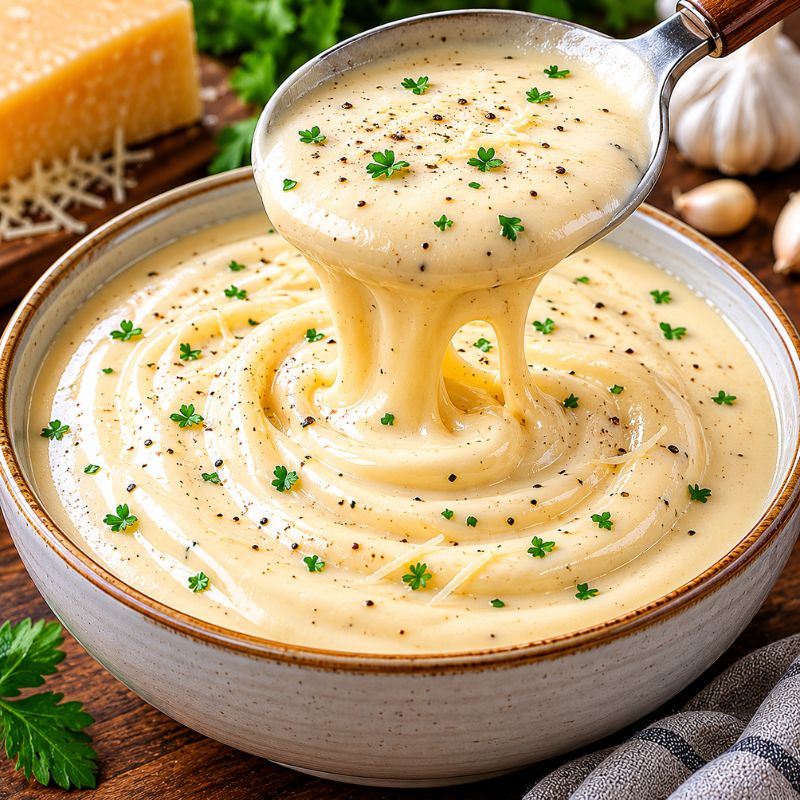
Alfredo sauce is a creamy, buttery Parmesan sauce made with simple ingredients and gentle heat. This rich, smooth recipe is perfect for pasta, chicken, shrimp, vegetables, and easy comfort food dinners.
Key Ingredients
- Unsalted butter: ½ cup
- Heavy cream: 1½ cups
- Garlic: 3 cloves, minced
- Freshly grated Parmesan cheese: 1½ cups
- Salt: ¼ tsp, plus more to taste
- Black pepper: ¼ tsp
- Ground nutmeg: ⅛ tsp, optional
- Fresh parsley: 1 tbsp, chopped, optional for garnish
- Pasta water: ¼ cup, optional for thinning
Tools Needed
- Medium saucepan or large skillet
- Wooden spoon or silicone spatula
- Whisk
- Measuring cups
- Measuring spoons
- Garlic press or sharp knife
- Cheese grater
- Small bowl
Cooking Instructions
Step 1: Prepare the Cheese
Grate 1½ cups Parmesan cheese from a block before starting the sauce. Freshly grated cheese melts more smoothly than pre shredded cheese, which often contains anti caking ingredients. The shreds should be fine and fluffy so they melt quickly into the cream. Keep the cheese nearby because the sauce comes together fast.
Step 2: Melt the Butter
Place a medium saucepan or large skillet over medium low heat. Add ½ cup unsalted butter and let it melt slowly for 1 to 2 minutes. The butter should look glossy and pale yellow, not browned. If it starts sizzling too aggressively, lower the heat.
Step 3: Soften the Garlic
Add 3 minced garlic cloves to the melted butter. Stir for 30 to 45 seconds until the garlic smells warm and fragrant. Do not let the garlic brown because browned garlic can make the sauce taste bitter. The goal is a soft, mellow garlic aroma.
Step 4: Add the Cream
Pour in 1½ cups heavy cream and whisk gently until the butter and cream look blended. Keep the heat at medium low. Warm the mixture for 3 to 4 minutes until small bubbles appear around the edges. Do not boil the cream. A gentle simmer keeps the sauce smooth and prevents separation.
Step 5: Season the Sauce
Add ¼ tsp salt, ¼ tsp black pepper, and ⅛ tsp ground nutmeg if using. Stir well. Nutmeg is optional, but it adds a subtle warmth that makes creamy sauces taste deeper. Taste carefully before adding more salt because Parmesan will add saltiness later.
Step 6: Melt in the Parmesan
Reduce the heat to low. Add the freshly grated Parmesan in small handfuls, whisking after each addition. Let each handful melt before adding the next. This slow method helps the sauce become smooth instead of grainy. The sauce should look creamy, glossy, and slightly thick.
Step 7: Adjust the Texture
If the sauce becomes too thick, whisk in 1 tbsp pasta water at a time until it loosens. Use up to ¼ cup pasta water if needed. The sauce should coat the back of a spoon and flow slowly, not sit like a paste. If it is too thin, simmer gently for 1 to 2 minutes while stirring.
Step 8: Taste and Finish
Taste the sauce and adjust with a tiny pinch of salt or black pepper if needed. Remove from the heat once it tastes creamy, savory, and balanced. Stir in 1 tbsp chopped parsley if desired. Serve immediately while the sauce is warm and silky.
Step 9: Toss With Pasta or Serve
Add hot cooked pasta directly to the sauce and toss gently for 1 to 2 minutes. Fettuccine, linguine, penne, and tortellini all work well. If the pasta absorbs too much sauce, add a splash of pasta water and toss again. The finished dish should look glossy, creamy, and evenly coated.
Why You’ll Love This Recipe
It uses simple ingredients and delivers rich, classic flavor.
The sauce comes together in about 15 minutes.
Fresh Parmesan gives the sauce a smooth, savory finish.
It works with pasta, chicken, shrimp, vegetables, potatoes, and casseroles.
The texture is creamy and luxurious without being complicated.
It is easy to adjust the thickness with pasta water.
The flavor can be kept classic or customized with herbs, spices, or extra garlic.
It makes a quick weeknight meal feel more comforting and polished.
Mistakes to Avoid & Solutions
Using Pre Shredded Parmesan
Pre shredded Parmesan often contains anti caking ingredients that can prevent smooth melting. This can make the sauce grainy or clumpy. Use freshly grated Parmesan from a block for the best texture. A fine grater works best because smaller shreds melt faster and more evenly.
Boiling the Sauce
Heavy cream can separate if it is boiled too hard. Alfredo sauce should be warmed gently over medium low or low heat. Look for small bubbles around the edges, not a rolling boil. If the sauce starts boiling, remove the pan from the heat for 30 seconds and lower the temperature before continuing.
Adding Cheese Too Quickly
Dumping all the cheese into the pan at once can cause clumps. Add Parmesan in small handfuls and whisk after each addition. Let the cheese melt before adding more. This gradual method helps create a smooth, glossy sauce.
Using Too Much Salt Early
Parmesan cheese is naturally salty, so the sauce can become too salty if it is seasoned heavily before the cheese goes in. Start with ¼ tsp salt, then taste after the cheese melts. Add more only if needed.
Letting the Garlic Burn
Garlic cooks fast in butter. If it turns dark brown, the sauce may taste bitter. Cook garlic for only 30 to 45 seconds, just until fragrant. If it burns, it is better to start over with fresh butter and garlic rather than trying to hide the bitterness.
Making the Sauce Too Thick
Alfredo sauce thickens as it sits and as pasta absorbs moisture. If it becomes too thick, whisk in pasta water 1 tbsp at a time. Warm cream can also help, but pasta water is especially useful because its starch helps the sauce cling to noodles.
Reheating Too Aggressively
Alfredo sauce can separate when reheated over high heat. Reheat slowly over low heat with a splash of cream, milk, or water. Stir often until the sauce becomes smooth again. Avoid microwaving for too long at once.
Serving and Pairing Suggestions
Alfredo sauce is most famous with fettuccine, but it works beautifully with many types of pasta. Toss it with linguine, penne, rigatoni, ravioli, tortellini, or gnocchi. The sauce also pairs well with grilled chicken, sautéed shrimp, roasted salmon, mushrooms, broccoli, spinach, peas, or asparagus.
For a classic dinner, serve Alfredo pasta with garlic bread and a crisp green salad. For a lighter plate, pair the sauce with steamed vegetables and lean protein. For a family style meal, place the pasta in a large serving bowl and finish with extra Parmesan, parsley, and cracked pepper. For a plated meal, twirl the pasta into shallow bowls and add grilled chicken or shrimp on top.
Alfredo sauce also works as a creamy base for casseroles, white pizza, baked pasta, or vegetable gratins. For drinks, pair it with sparkling water with lemon, iced tea, cucumber water, or a crisp white wine for adults. Fresh, bright drinks help balance the richness of the sauce.
Storage and Reheating Tips
Alfredo sauce tastes best fresh, but leftovers can be stored with care. Let the sauce cool slightly, then transfer it to an airtight container. Refrigerate for up to 3 days. If the sauce is mixed with pasta, store it the same way, but expect the pasta to absorb some of the sauce as it sits.
Freezing Alfredo sauce is not ideal because cream based sauces can separate after thawing. If freezing is necessary, place cooled sauce in a freezer safe container and freeze for up to 1 month. Thaw overnight in the refrigerator and reheat slowly with extra cream or milk.
To reheat on the stovetop, place the sauce in a pan over low heat. Add 1 to 2 tbsp milk, cream, or water and stir gently until smooth and warm. To reheat pasta with sauce, add a splash of milk or water, cover, and warm over low heat for 4 to 6 minutes. For the microwave, heat in short 20 to 30 second intervals, stirring between each round. Slow reheating gives the best chance of keeping the sauce creamy.
FAQs
1. Why did my Alfredo sauce turn grainy?
Grainy Alfredo sauce usually comes from overheating the cheese or using pre shredded Parmesan. Use freshly grated Parmesan and add it over low heat. Whisk in small handfuls so the cheese melts gently into the cream.
2. Can Alfredo sauce be made without heavy cream?
Yes, but the texture will be lighter. Use 1½ cups half and half instead of heavy cream, then simmer gently until slightly thickened. Avoid boiling because lower fat dairy can separate more easily. The sauce will taste less rich but still creamy.
3. How do you thin Alfredo sauce?
Add warm pasta water 1 tbsp at a time until the sauce reaches the desired consistency. Milk or cream can also be used. Pasta water is especially helpful because the starch helps the sauce cling to noodles.
4. Can Alfredo sauce be made ahead of time?
Yes, but it is best served fresh. If making ahead, store it in an airtight container in the refrigerator for up to 3 days. Reheat slowly over low heat and add a splash of milk or cream to bring back the smooth texture.
5. What pasta works best with Alfredo sauce?
Fettuccine is the classic choice because the wide noodles hold the creamy sauce well. Linguine, penne, rigatoni, tortellini, and gnocchi also work beautifully. Choose pasta with enough surface area or ridges to catch the sauce.
6. Can garlic be skipped?
Yes. Traditional style Alfredo can be made without garlic for a cleaner butter and Parmesan flavor. If skipping garlic, the sauce will taste milder and more delicate. Add a little extra black pepper or parsley for balance.
7. Why did my Alfredo sauce separate?
Separation usually happens when the heat is too high or the sauce is reheated too quickly. Keep the heat low, avoid boiling, and stir often. To fix a separated sauce, whisk in 1 tbsp warm cream or pasta water at a time until it comes back together.
Tips & Tricks
Use freshly grated Parmesan for the smoothest sauce.
Keep the heat low when adding cheese.
Do not boil the cream.
Add cheese gradually and whisk well.
Save pasta water before draining the noodles.
Serve the sauce right away for the best texture.
Use unsalted butter so the salt level is easier to control.
Add black pepper at the end for a fresh, warm finish.
For extra glossy sauce, toss pasta directly in the pan.
Recipe Variations
Garlic Parmesan Alfredo Sauce
Add 1 extra garlic clove for a stronger garlic flavor. Cook the garlic gently in butter for 30 to 45 seconds, then continue with the cream and Parmesan. The flavor becomes richer, warmer, and more aromatic. This version is excellent with fettuccine, chicken, and roasted broccoli.
Light Alfredo Sauce
Replace 1½ cups heavy cream with 1½ cups half and half. Add 1 tsp cornstarch mixed with 1 tbsp cold water to help thicken the sauce. Simmer gently for 2 to 3 minutes before adding Parmesan. The flavor is lighter and less rich, but still creamy and comforting.
Cream Cheese Alfredo Sauce
Add 2 oz cream cheese after the cream warms. Whisk until smooth before adding Parmesan. This makes the sauce thicker, tangier, and extra creamy. If it becomes too thick, loosen it with pasta water 1 tbsp at a time.
Cajun Alfredo Sauce
Add 1 to 1½ tsp Cajun seasoning with the cream. Reduce the salt to ⅛ tsp at first because Cajun seasoning can be salty. The flavor becomes bold, smoky, peppery, and slightly spicy. This variation pairs especially well with shrimp, chicken, sausage, and penne.
Mushroom Alfredo Sauce
Add 1 cup sliced mushrooms to the butter before adding garlic. Cook for 5 to 6 minutes until the mushrooms release moisture and turn golden. Add garlic, cream, and Parmesan as written. The flavor becomes earthy, savory, and perfect with fettuccine or baked pasta.
Spinach Alfredo Sauce
Stir in 2 cups fresh baby spinach after the Parmesan melts. Cook for 1 to 2 minutes until the spinach wilts. The sauce becomes creamy with a fresh green note. This version works well with chicken, tortellini, or whole wheat pasta.
Lemon Alfredo Sauce
Add 1 tsp lemon zest and 1 tbsp fresh lemon juice at the end, after removing the pan from heat. Stir well and taste before adding more. The lemon brightens the sauce and cuts through the richness. This variation is lovely with shrimp, salmon, asparagus, or peas.
Conclusion
Alfredo sauce is a beautiful example of how a few simple ingredients can create something rich, comforting, and memorable. Butter, cream, garlic, and Parmesan come together into a sauce that feels silky, warm, and deeply satisfying. The method is not difficult, but gentle heat and good cheese make all the difference. When the sauce is made with care, it coats pasta in a smooth, glossy layer instead of turning heavy or grainy.
This recipe is useful because it can fit so many meals. It can turn plain pasta into dinner, add richness to vegetables, or make chicken and shrimp feel more complete. The flavor is classic, but the variations leave plenty of room for creativity.
A little lemon makes it brighter, Cajun seasoning makes it bold, and mushrooms add earthy depth. Once the basic method is learned, Alfredo sauce becomes a dependable kitchen skill that feels elegant without being fussy. It is creamy, comforting, and always welcome at the table.
Alfredo Sauce

Ingredients
- ½ cup Unsalted butter
- 1½ cups Heavy cream
- 3 Garlic cloves, minced
- 1½ cups Freshly grated Parmesan cheese
- ¼ tsp Salt plus more to taste
- ¼ tsp Black pepper
- ⅛ tsp Ground nutmeg optional
- 1 tbsp Fresh parsley chopped, optional for garnish
- ¼ cup Pasta water optional for thinning
Instructions
- Grate 1½ cups Parmesan cheese from a block before starting the sauce. Freshly grated cheese melts more smoothly than pre shredded cheese, which often contains anti caking ingredients. The shreds should be fine and fluffy so they melt quickly into the cream. Keep the cheese nearby because the sauce comes together fast.
- Place a medium saucepan or large skillet over medium low heat. Add ½ cup unsalted butter and let it melt slowly for 1 to 2 minutes. The butter should look glossy and pale yellow, not browned. If it starts sizzling too aggressively, lower the heat.
- Add 3 minced garlic cloves to the melted butter. Stir for 30 to 45 seconds until the garlic smells warm and fragrant. Do not let the garlic brown because browned garlic can make the sauce taste bitter. The goal is a soft, mellow garlic aroma.
- Pour in 1½ cups heavy cream and whisk gently until the butter and cream look blended. Keep the heat at medium low. Warm the mixture for 3 to 4 minutes until small bubbles appear around the edges. Do not boil the cream. A gentle simmer keeps the sauce smooth and prevents separation.
- Add ¼ tsp salt, ¼ tsp black pepper, and ⅛ tsp ground nutmeg if using. Stir well. Nutmeg is optional, but it adds a subtle warmth that makes creamy sauces taste deeper. Taste carefully before adding more salt because Parmesan will add saltiness later.
- Reduce the heat to low. Add the freshly grated Parmesan in small handfuls, whisking after each addition. Let each handful melt before adding the next. This slow method helps the sauce become smooth instead of grainy. The sauce should look creamy, glossy, and slightly thick.
- If the sauce becomes too thick, whisk in 1 tbsp pasta water at a time until it loosens. Use up to ¼ cup pasta water if needed. The sauce should coat the back of a spoon and flow slowly, not sit like a paste. If it is too thin, simmer gently for 1 to 2 minutes while stirring.
- Taste the sauce and adjust with a tiny pinch of salt or black pepper if needed. Remove from the heat once it tastes creamy, savory, and balanced. Stir in 1 tbsp chopped parsley if desired. Serve immediately while the sauce is warm and silky.
- Add hot cooked pasta directly to the sauce and toss gently for 1 to 2 minutes. Fettuccine, linguine, penne, and tortellini all work well. If the pasta absorbs too much sauce, add a splash of pasta water and toss again. The finished dish should look glossy, creamy, and evenly coated.