
Achieving a restaurant-quality dinner at home often feels like a balancing act, but learning the perfect method for pan seared salmon is a foundational culinary skill that delivers immediate rewards. A flawless piece of fish features an incredibly crispy, golden exterior crust contrasted with a tender, moist, and flaky interior.
While many home cooks struggle with fish sticking to the metal or drying out, mastering a few core variables—such as heat management, moisture removal, and pan selection—will ensure success every time you step up to the burner. This comprehensive guide covers everything you need to know about cooking salmon on stove tops, using both non-stick and heavy cast iron cookware to prepare world-class fried salmon recipes.
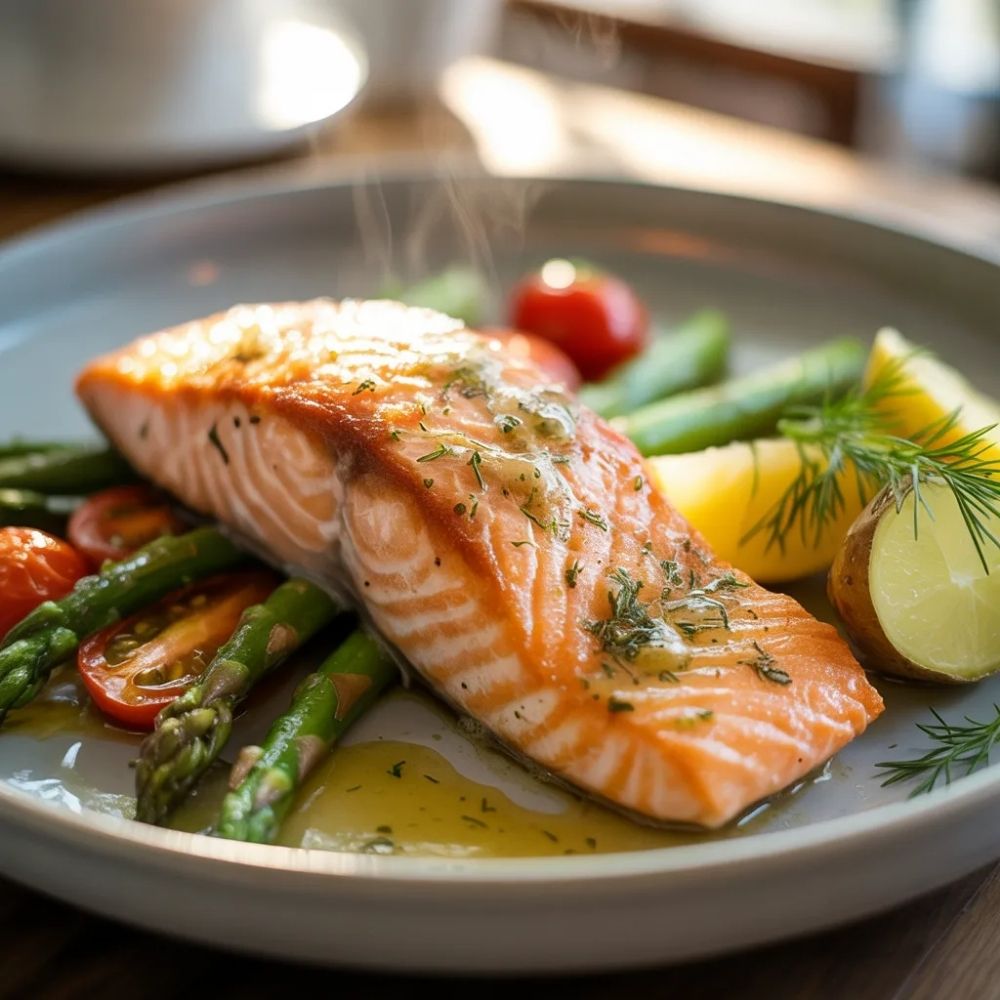
The Science of Stovetop Searing
When you pan saute salmon or opt for searing salmon in a pan, you are primarily utilizing conduction heating. Direct thermal energy transfers from the burner, through the metal pan, and directly into the flesh or skin of the fish.
To achieve a beautifully seared salmon, you must trigger two distinct scientific transformations:
The Maillard Reaction: This chemical reaction occurs between amino acids and reducing sugars when exposed to high heat (above 285°F). It produces the deep savory flavor compounds and the golden-brown color matrix on the surface of the meat.
Moisture Vaporization: If the surface of your pan roasted salmon fillet is wet when it enters the fat, the liquid will instantly turn to steam. This creates a thermal barrier that drops the pan temperature, resulting in pale, rubbery, and boiled fish rather than a pan crusted salmon.
Required Equipment and Ingredient Prep
To successfully cook pan fried salmon dishes without structural tearing, your kitchen tools must be meticulously chosen.
The Perfect Pan Selection
Salmon Cast Iron Pan / Salmon on Cast Iron Skillet: This is the absolute best vessel for a heavy pan sear salmon fillet project. Cast iron retains an immense amount of heat, preventing the pan temperature from dropping when cold fish is introduced. This guarantees a dark, uniform crust.
Stainless Steel Skillet: Excellent for deglazing and creating pan sauces, but requires careful temperature monitoring to prevent adhesion.
Heavy-Duty Non-Stick Frying Pan: Ideal for culinary beginners learning how to fry salmon in pan environments without worrying about sticking.
Foundational Preparation Steps
To execute a top-tier pan cook salmon recipe, buy center-cut, uniform fillets (roughly 6 ounces each). If you choose to pan sear salmon with skin, ensure the scales have been completely scraped away.
Remove the fish from refrigeration 15 minutes before cooking to take the chill off the muscle tissue. Take a fresh paper towel and firmly press down on all sides of the flesh and skin.
This step is critical; removing surface moisture is the single most important factor when executing a pan sear salmon with skin or pan fried salmon recipes framework. Season both sides generously with coarse kosher salt and freshly cracked black pepper right before it hits the skillet.
Step-by-Step Master Pan Seared Salmon Method
Follow this precise professional technique to ensure your salmon in a frying pan cooks flawlessly from start to finish.
Step 1: Heat the Fat
Place your skillet over medium-high heat on your stove top salmon burner. Add 1 tablespoon of a neutral oil with a high smoke point, such as avocado oil, canola oil, or clarified butter (ghee). Avoid extra virgin olive oil for a hard sear, as its low smoke point will cause it to burn and turn bitter. Allow the oil to heat for 2 to 3 minutes until it shimmers and is visually fluid across the pan surface.
Step 2: The Initial Drop and Press
Gently lay the pan seared skin on salmon fillets into the hot oil, moving away from your body to prevent hot grease from splashing toward you. The moment the fish hits the pan, you will hear a loud, crisp sizzle.
Because fish skin contains a high volume of moisture-heavy collagen, it will immediately attempt to curl up when exposed to high heat. To prevent this, take a flexible fish spatula and press down firmly on the center of each fillet for the first 10 to 15 seconds. This holds the skin flat against the hot metal, ensuring an even, crisp crust across the entire surface of your skillet fried salmon.
Step 3: Managing the Cook on the Skin Side
Leave the fish completely undisturbed. Do not shake the pan or move the fillets. For an exceptional recipe for seared salmon, perform 90% of the cooking process on the skin side. This protects the delicate interior flesh from direct heat, preventing it from drying out.
Watch the side profile of the salmon in a skillet. You will see the opaque color line slowly creeping up from the bottom toward the top. Cook on the skin side for 4 to 5 minutes, depending on thickness. The skin should detach effortlessly from the pan when it is perfectly crisp; if it resists or tears, leave it for another 30 seconds.
Step 4: The Flip and Finish
Slide your spatula underneath the fillet and flip it gently over to the flesh side. Turn the burner heat down to medium-low. Cook on this second side for just 1 to 2 minutes. This acts as a brief “kiss” of heat to finish setting the top proteins while keeping the core succulent and tender.
During this final minute, you can transform the dish into a rich sauteed salmon by adding 1 tablespoon of unsalted butter, a crushed garlic clove, and a squeeze of fresh lemon juice directly to the pan pan, spooning the foaming fat over the top of the fish.
Step 5: Rest and Serve
Remove the salmon cooked in a pan immediately from the hot skillet to prevent carryover heat from overcooking the fish. Place it onto warm plates with the crispy skin facing upward to ensure it retains its hard texture. Let it rest for 2 minutes before enjoying.
Nutritional Breakdown
Salmon is widely celebrated as a dense source of bioavailable proteins, essential fatty acids, and microelements. A standard 6-ounce serving of crisp pan fried salmon prepared with minimal oil contains approximately the following values:
-
Total Energy Output: 340 Calories (kcal)
-
Protein Content: 38 grams (highly digestible amino acid profile)
-
Total Lipid Fat: 20 grams
-
Saturated Fat: 4 grams
-
Monounsaturated Fat: 7 grams
-
Polyunsaturated Fat: 8 grams (heavily concentrated with beneficial Omega-3 Fatty Acids)
-
-
Carbohydrates: 0 grams
-
Sodium Matrix: 90 mg (natural baseline, excluding added sea salt)
-
Key Micronutrients: High levels of Vitamin B12, Vitamin D, Selenium, and Potassium.
Frequently Asked Questions (FAQ)
How do I stop salmon from sticking to the pan when cooking on the stove?
Sticking occurs when cold protein fibers form a chemical bond with the microscopic pores of hot metal cookware. To stop this when preparing salmon cooked on the stove, you must ensure your pan is fully preheated before adding oil, your oil is shimmering-hot before adding the fish, and your fillet surface has been patted completely dry with a paper towel.
Should I cook salmon on the stove top with the skin on or off?
It is highly recommended to cook with the skin on. The skin acts as a vital insulation layer that protects the delicate interior meat from intense heat during cooking salmon on the pan procedures. Even if you do not plan to eat the skin, leaving it on during cooking preserves the juices and makes the fillet much easier to flip without breaking.
How do I know when my pan fried salmon is fully cooked?
The most reliable method is using an instant-read digital thermometer inserted into the thickest core of the meat. Pull the fish at 125°F to 130°F for a perfect medium-rare to medium structure (the center will remain slightly translucent and juicy). Alternatively, press gently on the top of the fillet; if the muscle layers separate cleanly along the white fat lines, it is ready to serve.
Why does a white substance appear on the side of my salmon in a skillet?
The white gel-like substance is called albumin, a perfectly safe, liquid protein contained within the fish. When the muscle fibers are exposed to rapid or excessive heat, they contract tightly, squeezing the liquid albumin to the surface where it coagulates into a solid white paste. To minimize albumin pooling, cook your salmon on stovetop recipe variants using moderate heat rather than an aggressive, smoking flame.
Can I use a lid when making salmon in a frying pan?
Avoid using a lid when your goal is achieving a pan crusted salmon or crispy skin. Trapping a lid over a salmon in a skillet recipe traps the rising moisture inside the pan environment, turning your frying process into a steaming process, which will ruin the crisp texture of the exterior crust.
Pan Seared Salmon
Print ThisIngredients
- Center-cut, uniform salmon fillets (roughly 6 ounces each).
- Seasonings of choice.
Instructions
Step 1: Heat the Fat
Place your skillet over medium-high heat on your stove top salmon burner. Add 1 tablespoon of a neutral oil with a high smoke point. Allow the oil to heat for 2 to 3 minutes until it shimmers and is visually fluid across the pan surface.
Step 2: The Initial Drop and Press
Gently lay the pan seared skin on salmon fillets into the hot oil, moving away from your body to prevent hot grease from splashing toward you. The moment the fish hits the pan, you will hear a loud, crisp sizzle.
Take a flexible fish spatula and press down firmly on the center of each fillet for the first 10 to 15 seconds.
Step 3: Managing the Cook on the Skin Side
Leave the fish completely undisturbed. Do not shake the pan or move the fillets.
Watch the side profile of the salmon in a skillet. The skin should detach effortlessly from the pan when it is perfectly crisp; if it resists or tears, leave it for another 30 seconds.
Step 4: The Flip and Finish
Slide your spatula underneath the fillet and flip it gently over to the flesh side. Turn the burner heat down to medium-low. Cook on this second side for just 1 to 2 minutes.
Add 1 tablespoon of unsalted butter, a crushed garlic clove, and a squeeze of fresh lemon juice directly to the pan pan, spooning the foaming fat over the top of the fish.
Step 5: Rest and Serve
Remove the salmon cooked in a pan immediately from the hot skillet to prevent carryover heat from overcooking the fish. Place it onto warm plates with the crispy skin facing upward to ensure it retains its hard texture. Let it rest for 2 minutes before enjoying.