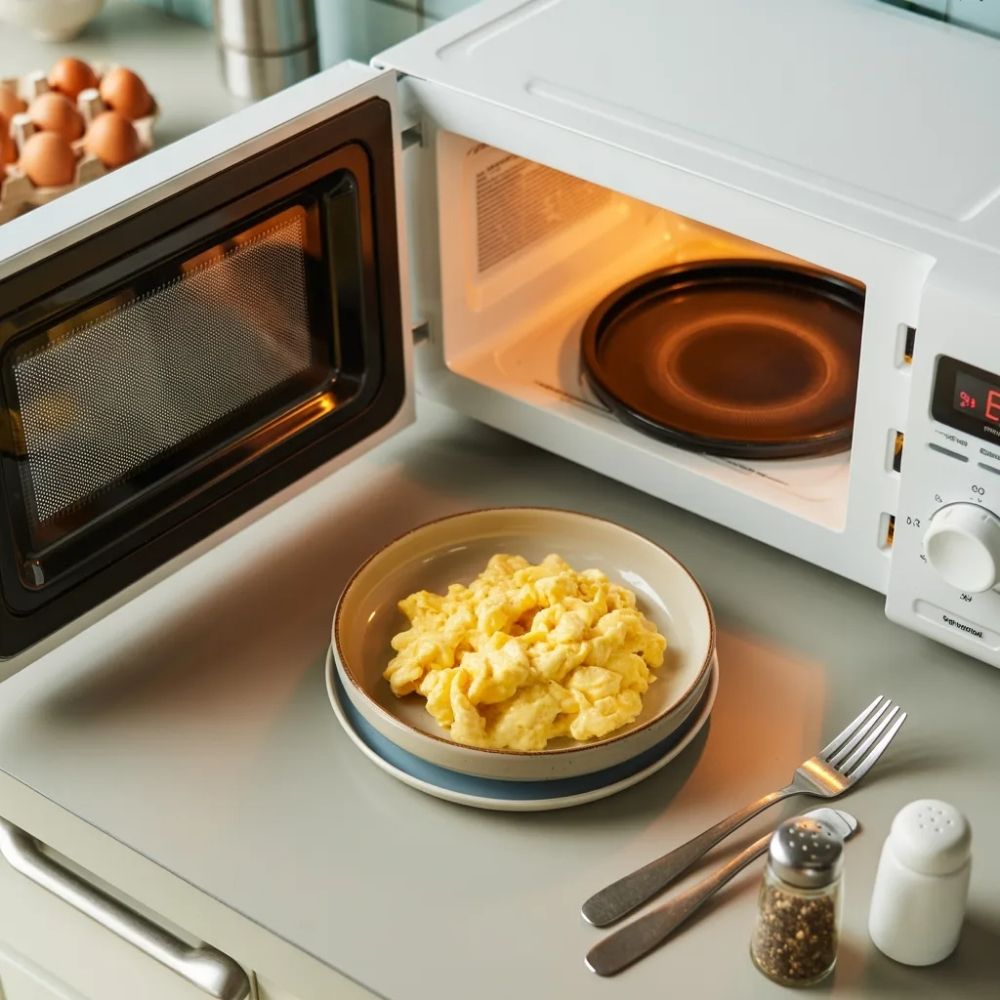
When morning schedules leave minimal time for stovetop cooking and pan cleanup, utilizing alternative kitchen appliances is an excellent solution. Learning how to prepare microwave scrambled eggs is a highly efficient culinary shortcut that yields hot, fluffy results in under two minutes.
While some cooks worry that cooking eggs and microwave technology results in a rubbery texture, achieving a tender curd simply requires proper timing and moisture management. This comprehensive guide outlines the best way to make eggs in microwave ovens, addresses common variations, and ensures perfect execution every morning.
The Science of Cooking Eggs on Microwave Settings
A conventional stove cooks eggs via conduction—heat transfers from the pan directly to the liquid egg mass. Conversely, a microwave oven cooks via radiation. Radio waves agitate water molecules inside the whites and yolks, causing them to vibrate rapidly and generate thermal energy.
Because egg proteins coagulate very quickly when heated, a continuous blast of microwave energy will cause the protein strands to tighten excessively, squeezing out water and creating a dry, rubbery texture. To prevent this, the cooking process must be broken up into short intervals interspersed with stirring to distribute the heat evenly.
Required Equipment and Ingredients
To prepare scrambled eggs in microwave oven appliances successfully, choose the correct vessels to ensure even heating.
Equipment Options:
- Microwave Eggs Bowl: A small, microwave-safe ceramic or glass bowl with high sides.
- Microwave Mug Scrambled Eggs: A standard 12-ounce ceramic coffee mug.
Ingredients:
- 2 Large Eggs
- 1 Tablespoon Water or Butter: Added moisture is crucial for steaming the proteins.
- Salt and Pepper: To taste.
- Optional Add-Ins: Shredded cheddar, chives, or diced ham.
Step-by-Step Microwave Eggs Recipe
[Crack & Whisk in Mug] ➔ [Microwave 45 Secs] ➔ [Stir Curds] ➔ [Microwave 30 Secs] ➔ [Rest 1 Min]
Follow this baseline method to make microwave scrambled eggs or a quick microwave scrambled egg in a cup with an optimal, pillowy texture.
Step 1: Prep the Vessel
Lightly coat the interior of a microwave eggs in bowl or mug with non-stick cooking spray, a drop of olive oil, or a small smear of butter. This step prevents the egg proteins from bonding permanently to the ceramic surface during coagulation.
Step 2: Whisk Thoroughly
Crack two large eggs directly into the vessel. To make standard microwave scrambled eggs no milk or microwave scrambled eggs without milk, add exactly one tablespoon of water instead. Water turns to steam quickly, creating pockets of air that fluff the eggs. Whisk vigorously with a fork for 30 seconds until the yolks and whites are completely homogenous and slightly frothy. Season with a pinch of salt and pepper.
Step 3: The First Heating Interval
Place the mug or bowl in the center of the microwave. Set the appliance to high power (100%) and cook for 45 seconds. At this stage, the outer edges will begin to set, while the center remains entirely liquid.
Step 4: Stir and Complete the Cook
Remove the vessel carefully. Use a fork to stir the mixture thoroughly, pulling the cooked curds from the edges into the liquid center. Return the vessel to the microwave and cook on high for an additional 30 to 45 seconds. Stop cooking when the eggs are mostly set but still look slightly wet on top; they will finish cooking from residual heat.
Step 5: Rest and Serve
Allow the microwave scrambled egg in a mug to rest undisturbed for 60 seconds before consuming. This resting period allows the thermal energy to equalize, finishing the cook without drying out the eggs.
Alternative Styles: From Fried to Over-Easy
While scrambling is the most common method, a microwave can also be adjusted to cook eggs microwave style using alternative presentation methods.
How to Prepare Over-Easy Eggs
It is entirely possible to make over easy eggs in microwave or over easy eggs in the microwave environments without a stove.
- Lightly grease a small, flat-bottomed microwave-safe bowl.
- Crack one egg into the bowl, taking a toothpick to gently prick the yolk membrane once.
- Add one tablespoon of water around the edge of the egg.
- Cover the bowl with a microwave-safe paper towel or plate.
- Cook on 50% power for 60 to 90 seconds. Watch closely; remove the egg the moment the white turns opaque but the yolk remains fluid.
Microwave Fried Eggs
To simulate fried eggs microwave style, use a pre-heated microwave browning dish or grease a small plate heavily with butter. Crack the egg onto the plate, pierce the yolk once, cover, and microwave on high for 45 to 60 seconds to achieve firm edges.
Customizations and Master Formula Guides
Adapting a basic microwave egg scramble recipe allows for easy customization with morning staples like dairy and protein toppings.
Adding Cheese Properly
When preparing microwave scrambled eggs and cheese or microwave scrambled eggs with cheese, timing is critical. Do not add cheese at the beginning of the process, as the fat in the cheese can overheat and greasy separation will occur. Instead, fold shredded cheese into the eggs during the stirring break between the first and second microwave intervals. This ensures the cheese melts uniformly into the warm curds.
Comprehensive Reference Chart for Microwave Cooking
To consistently cook scrambled eggs in microwave settings or simply understand how things react when scrambled in microwave environments, consult this baseline parameter chart.
| Desired Style | Primary Vessel | Power Level | Total Cooking Time | Key Mechanical Step |
| microwave scrambled eggs | Ceramic Mug | 100% (High) | 75 to 90 seconds | Stir halfway through to redistribute liquid. |
| make eggs in microwave (Over-Medium) | Small Glass Bowl | 70% (Medium-High) | 90 seconds | Cover to trap steam and set top whites. |
| cook a scrambled egg in the microwave (Single Egg) | Small Ramekin | 100% (High) | 45 to 60 seconds | Reduce initial interval to 30 seconds. |
| fried eggs microwave style | Flat Salad Plate | 100% (High) | 50 seconds | Pierce yolk with toothpick before heating. |
| over easy eggs in microwave | Shallow Custard Cup | 50% (Medium) | 70 seconds | Use low power to protect yolk fluidity. |
Pro-Tips for Microwave Success
Watch the Power Output: Standard kitchen microwaves range from 700 watts to 1200 watts. If utilizing a high-wattage modern microwave, reduce the power level to 80% to ensure the eggs do not overcook or pop.
The Exploding Yolk Warning: Never microwave a whole, un-cracked egg in its shell, as the steam buildup will cause a dangerous explosion. Even when cooking whole yolks out of the shell, always prick the membrane once with a toothpick to allow steam to escape safely.
Cleanup Strategy: If any egg residue sticks to the inside of the mug, fill the vessel with warm water and a teaspoon of baking soda immediately after eating. Let it sit for 5 minutes, and the residue will wipe away effortlessly with a sponge.
Lightly grease a small, flat-bottomed microwave-safe bowl. Crack one egg into the bowl, taking a toothpick to gently prick the yolk membrane once. Add one tablespoon of water around the edge of the egg. Cover the bowl with a microwave-safe paper towel or plate. Cook on 50% power for 60 to 90 seconds. Watch closely; remove the egg the moment the white turns opaque but the yolk remains fluid.
Microwave Scrambled Eggs
Print This
Ingredients
Instructions