Many home cooks rely on store-bought jars for convenience, but learning a classic mayonnaise recipe from scratch completely transforms your culinary repertoire. A proper homemade mayo features a velvety, luxurious texture and a bright, clean flavor profile that commercial shelf-stable alternatives simply cannot replicate.
A common concern when attempting to make mayonnaise at home is the fear of the mixture breaking or separating into a greasy liquid. Fortunately, creating a stable, restaurant-quality emulsion is incredibly simple once you understand the basic kitchen physics at play.
This comprehensive guide outlines the biological science of sauces, a foolproof easy mayonnaise recipe using an immersion blender, a detailed nutritional breakdown, and an essential FAQ troubleshooting segment.
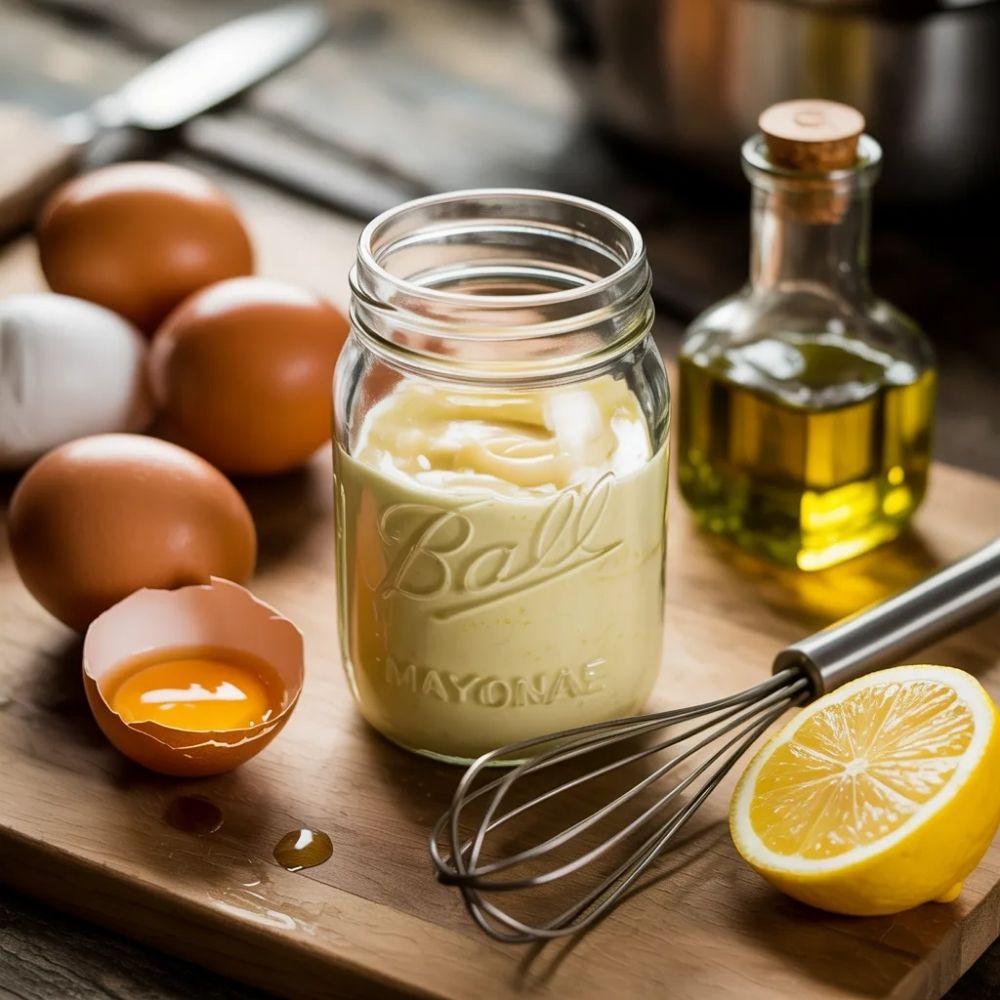
The Science of Emulsion: Why Molecular Structure Matters
Mayonnaise is a biochemical marvel known as a permanent emulsion. By definition, an emulsion is a forced blend of two naturally incompatible liquids: a fat (oil) and a water-based acid (lemon juice or vinegar).
Under normal conditions, oil and water repel each other. To bind them together permanently into a smooth homemade mayo recipe, you must introduce two key components:
High Mechanical Shear: This rapid spinning breaks the large oil molecules down into billions of microscopic droplets.
An Emulsifier (Lecithin): Found abundantly inside raw egg yolks, lecithin is a unique molecule containing both a hydrophilic (water-loving) head and a lipophilic (fat-loving) tail. The lipophilic tail anchors itself deep inside the tiny oil droplets, while the hydrophilic head bonds with the surrounding acid. This molecular structure encapsulates the fat, preventing the individual oil droplets from grouping back together and separating.
Required Equipment and Ingredient Selection
To execute a simple homemade mayonnaise successfully, your choice of mayonnaise ingredients and mixing tools must be precise.
The Ideal Tool Selection
The Stick Immersion Blender: This tool provides the absolute fastest, most foolproof method for beginners learning how to make mayonnaise. It shears the fat at the bottom of the vessel instantly, pulling the remaining ingredients down in a controlled stream.
The High-Speed Food Processor: Excellent for whipping up larger batches.
The Classic Wire Whisk: The traditional method for manual execution, which requires a slow, continuous wrist motion and a patient drop-by-drop oil integration.
Choosing Your Oil and Acid
The Oil Matrix: To create a healthy mayonnaise recipe or a mayonnaise recipe with olive oil, select a refined light olive oil. Avoid cold-pressed extra virgin olive oil for immersion blender methods; the high-speed spinning blades break the complex polyphenols inside extra virgin oil, causing the sauce to take on a highly bitter, metallic taste. Alternatively, avocado oil or safflower oil work beautifully for a healthy homemade mayonnaise recipe.
The Acid Component: Freshly squeezed lemon juice provides a clean flavor, while raw apple cider vinegar introduces an earthy depth.
Step-by-Step 2-Minute Homemade Mayonnaise Recipe
Follow this ultra-fast immersion blender method to ensure your diy mayonnaise emulsifies perfectly on your very first try.
Ingredients
-
1 Large Egg: Must be at room temperature (cold eggs do not emulsify easily).
-
1 Cup (240ml) Light Olive Oil or Avocado Oil
-
1 Tablespoon Fresh Lemon Juice or White Wine Vinegar
-
1 Teaspoon Dijon Mustard: Adds a pleasant kick and contains natural mucilage that assists the lecithin in binding the emulsion.
-
1/2 Teaspoon Fine Sea Salt
Step-by-Step Instructions:
Pour your room-temperature egg, lemon juice, Dijon mustard, sea salt, and light olive oil directly into a tall, narrow glass jar or the plastic blending beaker that came with your immersion blender. The jar must be just slightly wider than the head of the blender.
Allow the ingredients to settle completely for 1 minute. The oil will naturally float in a distinct layer directly on top of the heavier, water-based egg mixture at the bottom.
Lower your stick immersion blender all the way to the absolute bottom of the jar, pressing it firmly against the glass base so it completely covers the egg yolk.
Turn the blender on to its highest speed setting. Do not move, lift, or tilt the blender for the first 20 seconds. You will see a thick, white, creamy cloud begin to form rapidly underneath the blender head.
Once the bottom layer is completely white and creamy, slowly tilt and raise the blender upward by half an inch. This movement gently pulls the remaining oil down into the spinning blades. Continue moving the blender up and down slowly for another 20 seconds until all the oil is fully integrated and your homemade healthy mayo recipe is thick, glossy, and holds its shape.
Transfer the finished sauce into a clean glass jar, seal it tightly, and store it in your refrigerator. Use it as a rich baseline spreads or thin it out with a splash of buttermilk to create an exceptional mayonnaise dressing recipe for salad.
Nutritional Breakdown
A clean, home-cooked basic mayonnaise recipe contains zero hydrogenated trans-fats, high-fructose corn syrup, or synthetic chemical preservatives. A standard 1-tablespoon serving contains approximately the following values:
-
Total Energy Output: 95 Calories (kcal)
-
Total Lipid Fat: 11 grams
-
Monounsaturated Fats: 8 grams (heart-healthy fats derived from olive or avocado oils)
-
Saturated Fat: 1.5 grams
-
Polyunsaturated Fat: 1 gram
-
-
Cholesterol Matrix: 12 mg (derived naturally from the egg yolk core)
-
Sodium Matrix: 80 mg (highly controlled; commercial spreads often contain double this amount)
-
Carbohydrates: 0 grams
-
Protein Content: 0.1 grams
Frequently Asked Questions (FAQ)
My homemade mayonnaise turned out runny and liquid. How do I fix broken mayo?
Do not throw away a broken, runny batch of made mayonnaise. You can easily rescue it using a simple reset trick. Take a clean jar, add 1 room-temperature egg yolk and 1 teaspoon of warm water to the bottom. Place your immersion blender over the new yolk, turn it on high, and slowly pour your broken, runny mayonnaise mixture into the jar in a thin, continuous stream instead of using fresh oil. The new yolk will easily re-emulsify the broken sauce, restoring a thick texture.
Is it safe to use raw egg yolks in a homemade mayonnaise recipe?
Consuming raw eggs carries a very minor risk of Salmonella exposure. To completely eliminate this risk while maintaining an easy homemade mayonnaise recipe, purchase pasteurized eggs from your local grocery store. Pasteurized eggs have been gently warmed to a precise temperature that kills all foodborne bacteria without cooking the delicate protein fibers inside the egg.
Can I make a delicious mayonnaise recipe using extra virgin olive oil?
If your goal is a deep homemade mayonnaise olive oil profile, you must blend your oils. Because pure extra virgin olive oil turns intensely bitter when sheared by high-speed blender blades, use a manual wire whisk to emulsify it slowly by hand, or blend 1/4 cup of extra virgin olive oil with 3/4 cup of a neutral oil (like safflower or avocado oil). This provides a rich flavor without the bitter chemical aftertaste.
How long does a jar of home made mayonnaise keep fresh in the fridge?
Because a simple homemade mayonnaise recipe contains no chemical preservatives, its shelf life depends entirely on the freshness of the raw egg used. As a general safety rule, store your mayo in an airtight container in the deepest part of your refrigerator and consume it within 1 to 2 weeks. Never leave the jar sitting out on a warm kitchen counter during a meal, as raw emulsions spoil quickly.
Why must all my ingredients be at room temperature before blending?
Temperature dictates how easily liquid fat can break down into microscopic droplets. If you use a cold egg directly from the refrigerator combined with room-temperature oil, the dramatic temperature difference prevents the lecithin proteins from wrapping around the fat molecules efficiently. This almost always results in a broken, separated mixture. Always pull your egg out of the fridge 30 minutes before cooking to ensure a smooth blend.
Mayonnaise Recipe
Print ThisIngredients
- 1 Large Egg: Must be at room temperature (cold eggs do not emulsify easily).
- 1 Cup (240ml) Light Olive Oil or Avocado Oil
- 1 Tablespoon Fresh Lemon Juice or White Wine Vinegar
- 1 Teaspoon Dijon Mustard: Adds a pleasant kick and contains natural mucilage that assists the lecithin in binding the emulsion.
- 1/2 Teaspoon Fine Sea Salt
Instructions
Pour your room-temperature egg, lemon juice, Dijon mustard, sea salt, and light olive oil directly into a tall, narrow glass jar or the plastic blending beaker that came with your immersion blender.
Allow the ingredients to settle completely for 1 minute.
Lower your stick immersion blender all the way to the absolute bottom of the jar, pressing it firmly against the glass base so it completely covers the egg yolk.
Turn the blender on to its highest speed setting. Do not move, lift, or tilt the blender for the first 20 seconds.
Once the bottom layer is completely white and creamy, slowly tilt and raise the blender upward by half an inch. Continue moving the blender up and down slowly for another 20 seconds until all the oil is fully integrated and your homemade healthy mayo recipe is thick, glossy, and holds its shape.
Transfer the finished sauce into a clean glass jar, seal it tightly, and store it in your refrigerator.