
In the realm of Mediterranean and Middle Eastern cuisine, few ingredients are as versatile, rich, and deeply satisfying as labneh. Often referred to as labneh yogurt cheese, this ancient ingredient occupies the perfect culinary space between a thick, spreadable cheese and a tangy, refreshing dip.
Despite its luxurious texture and complex flavor profile, it requires no advanced cheesemaking equipment or complex chemistry. This comprehensive guide outlines the nature of this traditional dairy product, provides an exact labneh recipe, and explores how to serve it as a centerpiece dish.
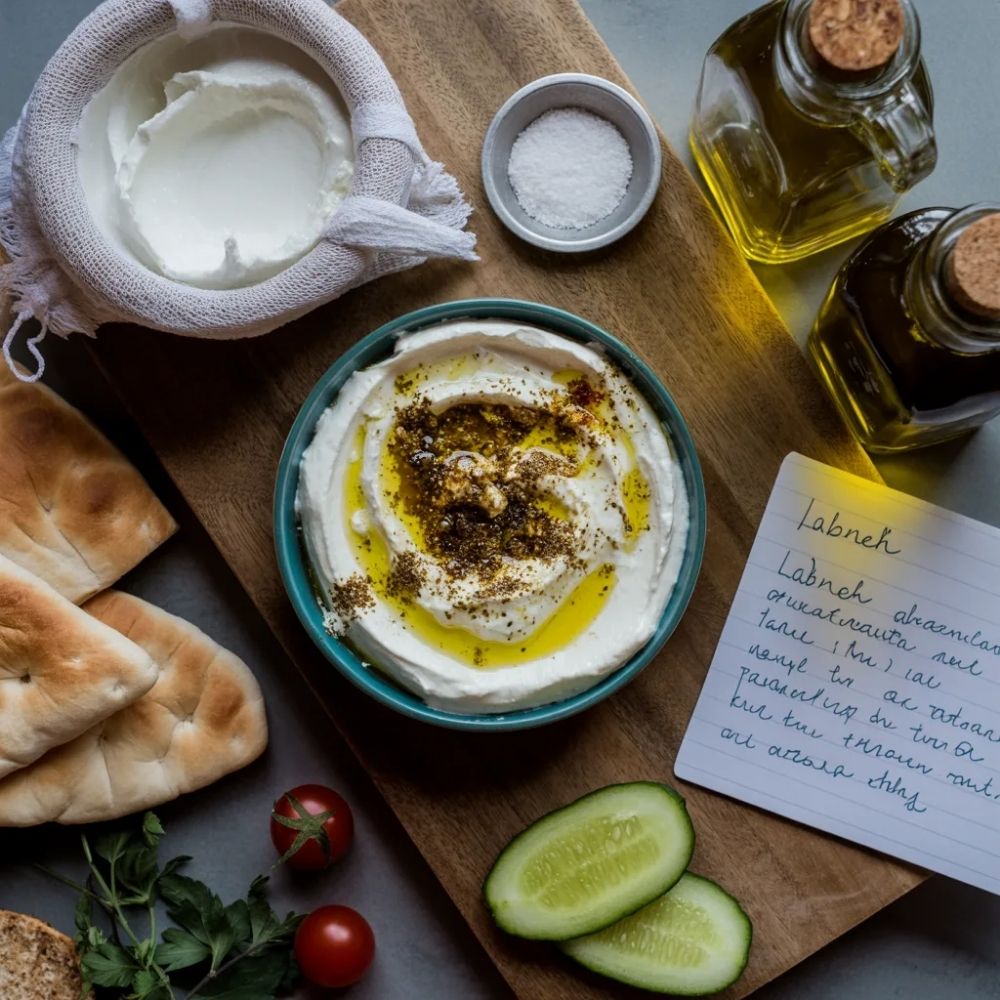
What is Labneh?
Historically prominent across the Levant, labneh is fundamentally a strained yogurt. In traditional dairy processing, milk is fermented into yogurt, and the resulting mass is suspended in porous cloth bags to allow the liquid whey to drain away under the influence of gravity.
As the water content decreases, the concentration of milk solids, proteins, and fats increases. The result is a thick, spreadable dairy product with a consistency similar to cream cheese, but featuring the distinctively bright, acidic, and probiotic-rich profile of cultured yogurt.
Ingredients and Equipment
The beauty of a classic labneh cheese recipe lies in its absolute simplicity. It relies entirely on quality ingredients and patience.
Ingredients
- 32 ounces (1 quart) Plain Whole Milk Yogurt: Full-fat Greek yogurt or traditional-style whole milk yogurt is mandatory.
- 1/2 teaspoon Kosher Salt: Salt is crucial not only for enhancing flavor but also for drawing out moisture through osmosis, accelerating the straining process.
- High-Quality Extra Virgin Olive Oil: For serving and preservation.
- Za’atar, Dried Mint, or Sumac: Traditional spice toppings.
Equipment
- A large mixing bowl
- A fine-mesh strainer or colander
- Cheesecloth: Alternatively, clean flour sack towels, a nut milk bag, or large unbleached coffee filters can be used.
- A kitchen twine or rubber band (if hanging the mixture)
Step-by-Step Labneh Recipe
[Mix Yogurt & Salt] ➔ [Place in Cheesecloth Strainer] ➔ [Strain in Fridge 12-24 Hrs] ➔ [Plate & Garnish]
Step 1: Seasoning the Base
Place the fine-mesh strainer over a deep mixing bowl, ensuring the bottom of the strainer sits at least two inches above the floor of the bowl to allow space for the pooling whey. Line the strainer with four layers of cheesecloth, allowing the excess cloth to drape over the sides.
In a separate bowl, empty the entire quart of whole milk yogurt. Add the kosher salt. Using a silicone spatula, incorporate the salt thoroughly into the yogurt. This step ensures even distribution, which guarantees consistent moisture extraction throughout the batch.
Step 2: Setting up the Strainer
Pour the salted yogurt directly into the center of the lined strainer. Gather the four corners of the cheesecloth upward to form a bundle, enclosing the yogurt completely. Twist the top of the cheesecloth gently to create a slight amount of pressure on the yogurt mass, and secure it with kitchen twine or a rubber band.
Step 3: The Draining Process (Timing and Texture)
Place the entire apparatus (bowl, strainer, and yogurt bundle) into the refrigerator. The duration of the straining process determines the final utility of the product:
12 Hours (Soft Dip Texture): Ideal for preparing a spreadable labneh dip. The consistency will resemble thick sour cream or premium hummus.
24 to 48 Hours (Firm Cheese Texture): This satisfies the standard requirement for a firm labneh yogurt cheese. The moisture content will decrease significantly, yielding a texture identical to traditional cream cheese, capable of holding its shape on a platter.
72 Hours (Labneh Balls): The mixture becomes firm enough to be rolled into individual spheres. These balls can be submerged in a jar of extra virgin olive oil infused with herbs, allowing them to preserve for months at room temperature.
Step 4: Separation and Collection
Once the desired texture is reached, carefully untie the cheesecloth. Transfer the thickened cheese to a clean container. The translucent, yellowish liquid accumulated in the bottom of the mixing bowl is acid whey. Do not discard this liquid immediately; it contains water-soluble proteins, lactic acid, and calcium, and can be used as a liquid base for baking bread, marinating meats, or blending into smoothies.
Creating the Perfect Labneh Dip
One of the most popular ways to utilize this ingredient is by converting it into a vibrant centerpiece for an appetizer platter. A well-executed labneh dip recipe focuses on contrasting the cool, acidic base of the dairy with warm, earthy, or spicy toppings.
Traditional Plating Technique
To serve a classic labneh dip, transfer a generous portion of the 12-hour strained mixture onto a wide, shallow bowl or rimmed plate. Using the back of a large spoon, press into the center of the cheese and move outward in a circular motion to create deep, concentric swirling ridges. These ridges act as structural channels designed to hold the toppings.
Essential Toppings and Garnishes
The Olive Oil Pool: Generously pour high-quality, cold-pressed extra virgin olive oil over the surface until the valleys of the swirls are fully filled. The oil protects the cheese from drying out when exposed to air and balances the sharp acidity.
The Spice Component: Dust the surface heavily with za’atar (a traditional Levantine blend of wild thyme, toasted sesame seeds, and sumac). Sumac can also be added independently to contribute a bright, citrusy note and a striking crimson color.
Fresh Herbal Elements: Finely chiffonaded fresh mint leaves or minced dill add an aromatic contrast to the rich fat content.
Culinary Applications, Storage, and Safety
Understanding the storage characteristics and culinary adaptability of this yogurt cheese maximizes its utility in a modern kitchen.
Serving Suggestions
As a Spread: Utilize the 24-hour firm product as a direct, lower-calorie, probiotic-rich substitute for commercial cream cheese on bagels, sandwiches, or flatbreads.
As an Accompaniment: Place a dollop next to roasted root vegetables, grilled lamb chops, or seared chicken to provide a cooling element that cuts through heavy savory flavors.
With Fresh Produce: Pair the dip directly with crisp garden vegetables such as English cucumbers, radishes, heirloom tomatoes, and warm pita bread.
Storage Parameters and Shelf Life
Because labneh contains live cultures and salt, it possesses a resilient shelf life when stored properly under refrigeration.
Refrigeration: Store the finished cheese in an airtight glass or food-grade plastic container. Ensure any pooling condensation is wiped away. It will remain fresh and safe for consumption for up to 2 weeks.
Oil Preservation: If the cheese is strained for 72 hours, rolled into balls, and completely submerged in clean olive oil inside a sterilized glass jar, it can keep in a cool, dark pantry for up to 6 months. Ensure the cheese remains entirely underwater/under-oil to prevent contact with ambient mold spores.
Signs of Spoilage: Discard the product immediately if any colorful mold colonies (pink, blue, or green) appear on the surface, or if the aroma shifts from a clean, sharp tang to a pungent, yeasty odor.
Mix Yogurt & Salt
Labneh Recipe
Print This
Ingredients
Instructions
Place in Cheesecloth
Strainer Strain in Fridge 12-24 Hrs
Plate & Garnish