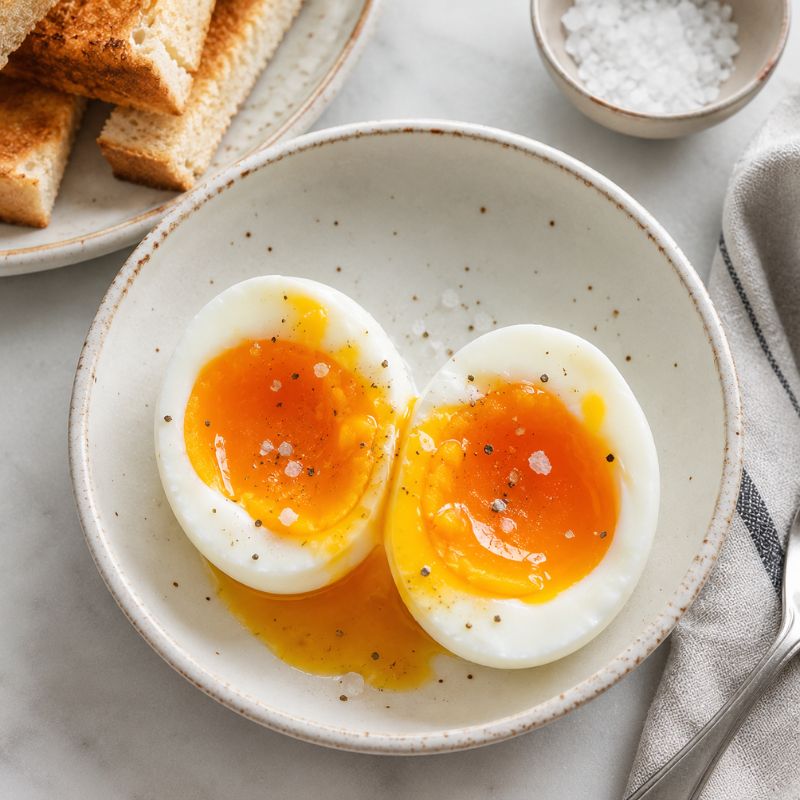
Hard boiled eggs feel simple, yet they have a funny way of testing patience in the kitchen.
The method sounds easy enough: eggs, water, heat, and a timer. Still, many home cooks know the small frustration of shells that refuse to peel, yolks that turn dry, or that gray green ring that appears when the eggs sit too long in hot water.
That is why a reliable hard boiled egg method is worth keeping close. It turns a basic ingredient into something useful, nourishing, and ready for almost any meal.
Hard boiled eggs can make breakfast feel more complete, add protein to a salad, fill a lunch box, or become a quick snack on a busy afternoon. They do not need much to taste good. A little salt, a touch of pepper, and that clean, rich egg flavor can be enough.
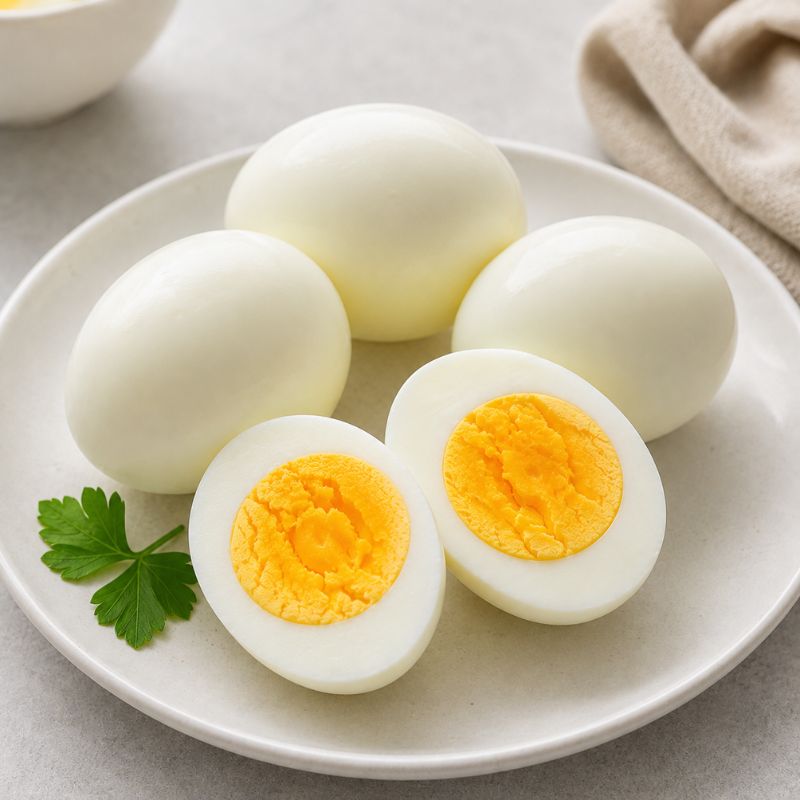
The secret is gentle timing. When the eggs are cooked properly, the whites become smooth and tender, while the yolks stay bright, firm, and pleasant instead of chalky. Once the rhythm is clear, hard boiled eggs become one of those small kitchen skills that makes everyday cooking feel much easier.
Short Description
Hard boiled eggs are a simple, protein rich kitchen staple made by gently cooking eggs in hot water, then cooling them in an ice bath for easy peeling and a smooth, tender texture.
Key Ingredients
- Large eggs: 6 eggs
- Water: Enough to cover the eggs by about 1 inch
- Ice: 2 cups, for the ice bath
- Cold water: 4 cups, for the ice bath
- Salt: ½ tsp, optional for serving
- Black pepper: ¼ tsp, optional for serving
Tools Needed
- Medium saucepan with lid
- Slotted spoon
- Large bowl
- Measuring spoon
- Timer
- Colander, optional
Cooking Instructions
Step 1: Choose and Arrange the Eggs
Place 6 large eggs in a single layer at the bottom of a medium saucepan. Try not to stack them, because crowded eggs can bump into each other and crack while heating. Eggs that are a few days old often peel more easily than very fresh eggs. If one egg has a visible crack before cooking, set it aside and use another.
Step 2: Add Water
Pour cold water into the saucepan until the eggs are covered by about 1 inch. The water should fully surround each egg so they cook evenly. If the water level is too low, the top of the egg may cook differently from the bottom. For best results, keep the pan size reasonable so the eggs do not roll around too much.
Step 3: Bring to a Gentle Boil
Set the saucepan over medium high heat. Bring the water to a gentle boil, which usually takes 8 to 10 minutes depending on your stove and pan. Look for steady bubbles rising around the eggs, not a violent rolling boil. If the water boils too hard, the eggs may knock against the pan and crack.
Step 4: Cover and Rest
Once the water reaches a gentle boil, turn off the heat. Cover the saucepan with a lid and leave the eggs in the hot water for 10 to 12 minutes. For a slightly softer, golden yolk, use 10 minutes. For a fully firm yolk, use 12 minutes. The whites should look set and smooth, while the yolks should be bright yellow and tender, not dry or powdery.
Step 5: Prepare the Ice Bath
While the eggs rest, fill a large bowl with 2 cups of ice and 4 cups of cold water. This cold bath stops the cooking process fast. It also helps the egg contract slightly from the shell, which makes peeling easier. If this step is skipped, the eggs may continue cooking and develop a gray green ring around the yolk.
Step 6: Transfer the Eggs
Use a slotted spoon to move the hot eggs into the ice bath. Let them sit for at least 10 minutes. The shells should feel cool to the touch before peeling or storing. If the ice melts too quickly, add another handful of ice or replace some of the water with colder water.
Step 7: Peel the Eggs
Gently tap each egg on the counter to crack the shell all over. Roll it lightly under your palm, then start peeling from the wider end where the air pocket usually sits. Peel under a thin stream of cool water if the shell sticks. If the egg white tears, slow down and loosen the membrane before pulling away more shell.
Step 8: Season and Serve
Slice the eggs in half, sprinkle with ½ tsp salt and ¼ tsp black pepper if desired, and serve. The yolk should be firm but still pleasant, with a clean, rich flavor. The white should feel tender, not rubbery. For meal prep, leave the shells on until the eggs are ready to eat.
Why You’ll Love This Recipe
- Hard boiled eggs are fast, affordable, and reliable once the timing is right.
- They are naturally high in protein, which makes them helpful for breakfast, snacks, lunch boxes, and post workout meals.
- The flavor is mild enough to pair with many ingredients, including avocado, toast, salads, herbs, pickles, rice bowls, and roasted vegetables.
- This recipe works well for meal prep because the eggs store beautifully in the refrigerator.
- Only a few basic kitchen tools are needed, so it is accessible for beginner cooks.
- The texture is customizable. The yolks can be made slightly softer or completely firm by adjusting the resting time.
- They fit many eating styles, especially simple home cooking, high protein meals, and low effort weekday food.
Mistakes to Avoid & Solutions
Overboiling the Eggs
A hard, rolling boil can cause eggs to crack and turn the whites rubbery. The solution is to bring the water to a gentle boil, then turn off the heat and let the eggs finish cooking in covered hot water. This gives more control and creates a softer texture. If the stove runs hot, lower the heat slightly once bubbles begin to appear.
Skipping the Ice Bath
Without an ice bath, the eggs keep cooking after they leave the pan. This can make the yolks dry and create that gray green edge around the center. Always transfer the eggs into ice water for at least 10 minutes. If ice is not available, use the coldest tap water possible and change it once or twice.
Using Eggs Straight From a Crowded Pan
When eggs are stacked or packed too tightly, they may cook unevenly. Some can crack, while others may not firm up properly. Use a saucepan wide enough to hold them in a single layer. For more than 6 eggs, use a larger pot and keep the water level 1 inch above the eggs.
Peeling Too Quickly
Peeling while the eggs are still warm can tear the whites. Give them enough time in the ice bath before peeling. Start at the wider end and gently lift the thin membrane under the shell. If the shell fights back, peel under cool running water.
Cooking Without a Timer
Guessing the time can lead to inconsistent results. A few extra minutes can change the yolk from creamy to chalky. Set a timer as soon as the pot is covered. Use 10 minutes for a firm but slightly creamy yolk, and 12 minutes for a fully cooked yolk.
Using Extremely Fresh Eggs
Very fresh eggs can be harder to peel because the membrane sticks more tightly to the white. For hard boiled eggs that need clean, neat surfaces, choose eggs that have been in the fridge for several days. The flavor will still be lovely, but peeling becomes less frustrating.
Serving and Pairing Suggestions
Hard boiled eggs can be served warm, chilled, sliced, chopped, or mashed. For breakfast, pair them with whole grain toast, avocado, cherry tomatoes, and a sprinkle of everything seasoning. For lunch, slice them over a crisp salad with cucumbers, greens, olives, and a lemony dressing. They also work well beside roasted sweet potatoes, rice bowls, steamed asparagus, or a simple bowl of soup.
For a family style meal, place peeled eggs on a platter with small bowls of salt, pepper, paprika, fresh herbs, and hot sauce. For a plated serving, cut each egg in half and add a light drizzle of olive oil with chopped chives. For a buffet table, turn them into deviled eggs, egg salad toast, or protein packed snack cups with vegetables and hummus.
Drink pairings can stay simple. Try iced tea, sparkling water with lemon, fresh orange juice, or a light green smoothie. The clean flavor of the eggs plays well with fresh, bright drinks.
Storage and Reheating Tips
Hard boiled eggs store best in the refrigerator. If the shells are still on, place the cooled eggs in an airtight container and refrigerate for up to 7 days. Keeping the shells on helps protect the texture and prevents the eggs from absorbing other fridge smells. If the eggs are already peeled, store them in an airtight container with a slightly damp paper towel to keep them from drying out. Peeled eggs are best eaten within 3 days.
Do not leave hard boiled eggs at room temperature for more than 2 hours. If they have been sitting out longer, it is safer to discard them.
Reheating hard boiled eggs needs care. Avoid microwaving whole eggs in their shells because pressure can build inside. For a gentle warm up, place peeled eggs in a bowl, pour hot water over them, and let them sit for 5 minutes. This warms them without turning the whites rubbery. If chopped eggs are being added to a dish, stir them in near the end so they warm through without overcooking.
FAQs
1. How long should hard boiled eggs cook?
For large eggs, let them sit covered in hot water for 10 to 12 minutes after the water reaches a gentle boil. Ten minutes gives a firm yolk with a slightly softer center. Twelve minutes gives a fully set yolk. Extra large eggs may need 1 additional minute.
2. Why do hard boiled eggs have a gray ring around the yolk?
That gray green ring usually comes from overcooking or slow cooling. The eggs stay hot inside even after they leave the pan. An ice bath stops the cooking quickly and helps keep the yolks bright yellow.
3. How can hard boiled eggs be easier to peel?
Use eggs that are a few days old, cool them in an ice bath for at least 10 minutes, and start peeling from the wider end. Peeling under cool running water can also help separate the shell from the egg white.
4. Can hard boiled eggs be made ahead of time?
Yes, they are excellent for meal prep. Store unpeeled hard boiled eggs in an airtight container in the refrigerator for up to 7 days. Peeled eggs should be eaten sooner, ideally within 3 days.
5. Can more than 6 eggs be boiled at once?
Yes, but use a larger pot so the eggs sit in a single layer. Add enough water to cover them by about 1 inch. The cooking time stays close to the same, but make sure the water reaches a gentle boil before the heat is turned off and the pot is covered.
6. Why do eggs crack while boiling?
Eggs can crack if the water boils too aggressively or if they hit the bottom and sides of the pan. Use medium high heat, avoid a rough boil, and place the eggs in a single layer. Starting with cold water can also help the temperature rise more gradually.
7. Are hard boiled eggs healthy?
Hard boiled eggs are nutrient dense and naturally rich in protein. They also contain vitamins and minerals, including vitamin B12, choline, and selenium. They can be part of a balanced meal when paired with vegetables, whole grains, fruit, or healthy fats.
Tips & Tricks
Use a timer every time. Hard boiled eggs reward precision.
Choose eggs that are not brand new if easy peeling matters.
Do not overcrowd the pot. A single layer gives better results.
Cool the eggs fully before peeling.
Peel under running water when the shell sticks.
Season just before serving for the freshest flavor.
For neat slices, chill the eggs first and use a sharp knife. Wipe the blade between cuts if needed.
For meal prep, label the container with the cooking date.
Recipe Variations
Classic Salt and Pepper Eggs
Use 6 peeled hard boiled eggs, ½ tsp salt, and ¼ tsp black pepper. Slice the eggs in half and sprinkle the seasoning evenly over the top. The flavor is clean, simple, and comforting. This version works well for breakfast plates, snack boxes, and quick lunches.
Paprika Herb Eggs
Use 6 peeled hard boiled eggs, ¼ tsp smoked paprika, 1 tbsp chopped parsley, ¼ tsp salt, and a tiny pinch of black pepper. Slice the eggs in half, sprinkle with salt and paprika, then finish with parsley. The smoked paprika adds warmth, while the herbs bring a fresh garden note. This variation tastes beautiful with toast or roasted vegetables.
Avocado Egg Mash
Use 4 hard boiled eggs, 1 ripe avocado, 1 tbsp lemon juice, ¼ tsp salt, and ⅛ tsp black pepper. Chop the eggs, mash the avocado in a bowl, then fold everything together. Add 1 tbsp chopped cilantro or chives if desired. The texture becomes creamy and rich without needing mayonnaise. Serve it on toast, lettuce cups, or crackers.
Greek Yogurt Egg Salad
Use 6 chopped hard boiled eggs, ⅓ cup plain Greek yogurt, 1 tsp Dijon mustard, 1 tbsp chopped dill, ¼ tsp salt, and ⅛ tsp black pepper. Stir the yogurt, mustard, dill, salt, and pepper in a bowl, then fold in the chopped eggs. The flavor is tangy, fresh, and lighter than classic egg salad. Chill for 15 minutes before serving for the best texture
Spicy Chili Lime Eggs
Use 6 peeled hard boiled eggs, 1 tbsp lime juice, ¼ tsp chili powder, ¼ tsp salt, and 1 tsp finely chopped green onion. Slice the eggs in half, brush lightly with lime juice, then sprinkle with chili powder and salt. Finish with green onion. This version tastes bright, zesty, and slightly spicy. It is great for snack boards or a quick protein bite.
Everything Bagel Eggs
Use 6 peeled hard boiled eggs, 1 tbsp everything bagel seasoning, and 2 tbsp plain Greek yogurt or cream cheese for dipping. Slice the eggs in half and sprinkle the seasoning over the top. Serve with the yogurt or cream cheese on the side. The flavor is savory, nutty, and satisfying, especially for breakfast.
Conclusion
Hard boiled eggs prove that simple food can still feel deeply useful and satisfying. This recipe offers confidence in small ways because the process is clear, repeatable, and easy to remember. Once the timing, ice bath, and gentle peeling method are understood, the whole process feels calm instead of frustrating.
The best part is how many meals these little eggs can support. They can sit quietly in the fridge and turn into breakfast, lunch, a snack, or a protein rich topping in minutes. They also do not ask much from the cook. A saucepan, water, eggs, and a timer can create something nourishing for the week.
This is the kind of recipe that belongs in every home kitchen because it is practical, dependable, and easy to customize. Keeping a few ready makes everyday meals feel a little more organized, a little more balanced, and a lot less stressful.
Perfect Hard Boiled Eggs

Ingredients
- 6 eggs
- Water Enough to cover the eggs by about 1 inch
- 2 cups Ice for the ice bath
- cups Cold water for the ice bath
- ½ tsp Salt optional for serving
- ¼ tsp Black pepper optional for serving
Instructions
- Place 6 large eggs in a single layer at the bottom of a medium saucepan. Try not to stack them, because crowded eggs can bump into each other and crack while heating. Eggs that are a few days old often peel more easily than very fresh eggs. If one egg has a visible crack before cooking, set it aside and use another.
- Pour cold water into the saucepan until the eggs are covered by about 1 inch. The water should fully surround each egg so they cook evenly. If the water level is too low, the top of the egg may cook differently from the bottom. For best results, keep the pan size reasonable so the eggs do not roll around too much.
- Set the saucepan over medium high heat. Bring the water to a gentle boil, which usually takes 8 to 10 minutes depending on your stove and pan. Look for steady bubbles rising around the eggs, not a violent rolling boil. If the water boils too hard, the eggs may knock against the pan and crack.
- Once the water reaches a gentle boil, turn off the heat. Cover the saucepan with a lid and leave the eggs in the hot water for 10 to 12 minutes. For a slightly softer, golden yolk, use 10 minutes. For a fully firm yolk, use 12 minutes. The whites should look set and smooth, while the yolks should be bright yellow and tender, not dry or powdery.
- While the eggs rest, fill a large bowl with 2 cups of ice and 4 cups of cold water. This cold bath stops the cooking process fast. It also helps the egg contract slightly from the shell, which makes peeling easier. If this step is skipped, the eggs may continue cooking and develop a gray green ring around the yolk.
- Use a slotted spoon to move the hot eggs into the ice bath. Let them sit for at least 10 minutes. The shells should feel cool to the touch before peeling or storing. If the ice melts too quickly, add another handful of ice or replace some of the water with colder water.
- Gently tap each egg on the counter to crack the shell all over. Roll it lightly under your palm, then start peeling from the wider end where the air pocket usually sits. Peel under a thin stream of cool water if the shell sticks. If the egg white tears, slow down and loosen the membrane before pulling away more shell.
- Slice the eggs in half, sprinkle with ½ tsp salt and ¼ tsp black pepper if desired, and serve. The yolk should be firm but still pleasant, with a clean, rich flavor. The white should feel tender, not rubbery. For meal prep, leave the shells on until the eggs are ready to eat.