Whether you are preparing a comforting batch of comfort food, assembling a game-day platter of chips, or trying to elevate dinner with a rich cheese sauce for broccoli, mastering a scratch-made cheese sauce is an essential culinary milestone. A premier, restaurant-quality sauce should be glossy, deeply savory, and completely smooth.
Many home cooks struggle with making cheese sauces, often ending up with a grainy, split, or rubbery texture. Fortunately, keeping your cheese smooth simply requires understanding basic food chemistry and starch stabilization.
This comprehensive guide covers the science of melting dairy, a foolproof homemade cheddar cheese sauce template, diverse global variations, a complete nutritional breakdown, and an essential troubleshooting FAQ section.
The Science of Smooth Melting: Preventing Grainy Breakdown
To understand why a homemade cheese sauce for mac and cheese can easily separate into oil and clumps, you have to look at the structural matrix of cheese. Cheese is a biological emulsion composed of three main elements: water, milkfat, and a tight web of casein proteins held together by calcium ions.
When cheese is subjected to direct, aggressive heat, the casein protein web tightens and shrinks rapidly. This squeeze forces out the internal water and lets the trapped milkfat escape, causing the sauce to split into a greasy layer of oil floating over grainy lumps of protein.
To prevent this split and achieve a perfect velvet cheese sauce consistency, you must protect the dairy fats using two techniques:
The Starch Buffer (Rox & Bechamel): Co-cooking equal parts butter and flour creates a roux. When milk is whisked into this roux, the flour starches swell and hydrate, creating a thick, high-viscosity liquid layer. This physical starch barrier prevents the protein strands from binding together tightly, keeping them floating smoothly in the sauce.
Thermal Control: Casein proteins break down easily at boiling temperatures. For a smooth melt, always remove your sauce pan from the hot stove burner before stirring in your cheese. The residual heat of the liquid is more than enough to melt the dairy cleanly.
Required Equipment and Ingredient Parameters
To successfully build a creamy cheese sauce without any graininess, choosing the right tools and ingredients is paramount.
Essential Equipment
-
A Heavy-Bottomed Saucepan: Thick metal cookware distributes heat evenly across the base, preventing hot spots from scorching your dairy.
-
A Stainless Steel Wire Whisk: The best tool for blending flour into melted butter and smoothly incorporating cold milk without clumping.
-
A Box Grater: For shredding cheese from a fresh block.
The Ingredients Checklist
The Cheese Selection: Always shred your own cheese from a fresh block. Avoid pre-packaged bags of shredded cheese; they are coated in anti-caking cellulose powders and potato starches that actively block clean melting, leaving your mac and cheese sauce texturally chalky and thick.
The Flour & Butter: Standard all-purpose flour and unsalted butter form your foundational roux.
The Liquid Matrix: Whole milk introduces essential dairy fats that yield a luxurious finish. For a deep, pub-style flavor profile, you can swap a portion of the milk for a pale ale to build a rich beer cheese sauce.
Step-by-Step Homemade Cheddar Cheese Sauce Recipe
Follow this classic French-method mornay sauce technique to build a flawless, silky cheddar cheese sauce in under ten minutes.
Ingredients
-
2 Tablespoons Unsalted Butter
-
2 Tablespoons All-Purpose Flour
-
1.5 Cups Whole Milk (Preferably slightly warm or room temperature)
-
2 Cups (200g) Sharp Cheddar Cheese: Freshly grated from a block.
-
1/4 Teaspoon Garlic Powder
-
1/4 Teaspoon Smoked Paprika (For a light golden hue and warmth)
-
1/2 Teaspoon Kosher Salt
-
1/4 Teaspoon Fresh Black Pepper
Step-by-Step Instructions:
Place your heavy saucepan over medium heat. Add the 2 tablespoons of unsalted butter and let it melt completely until it begins to foam gently.
Sprinkle the 2 tablespoons of all-purpose flour directly into the melted butter. Whisk immediately and continuously for 60 seconds. This creates your roux, and cooking it briefly flashes off the raw, pasty flour taste while keeping a pale golden color.
While whisking with one hand, slowly stream your milk into the pan in a steady trickle. Continuous whisking at this stage is vital to keep the roux dissolving evenly into the liquid without forming lumps.
Bring the liquid to a very gentle simmer over medium heat. Cook for 3 to 4 minutes, whisking frequently, until the starch granules fully hydrate. The liquid will transform into a smooth white sauce that coats the back of a spoon—this is a classic French bechamel sauce for mac and cheese. Whisk in your garlic powder, smoked paprika, salt, and black pepper.
The Critical Step: Turn your stove burner completely off and move the saucepan to a cool side of the stove.
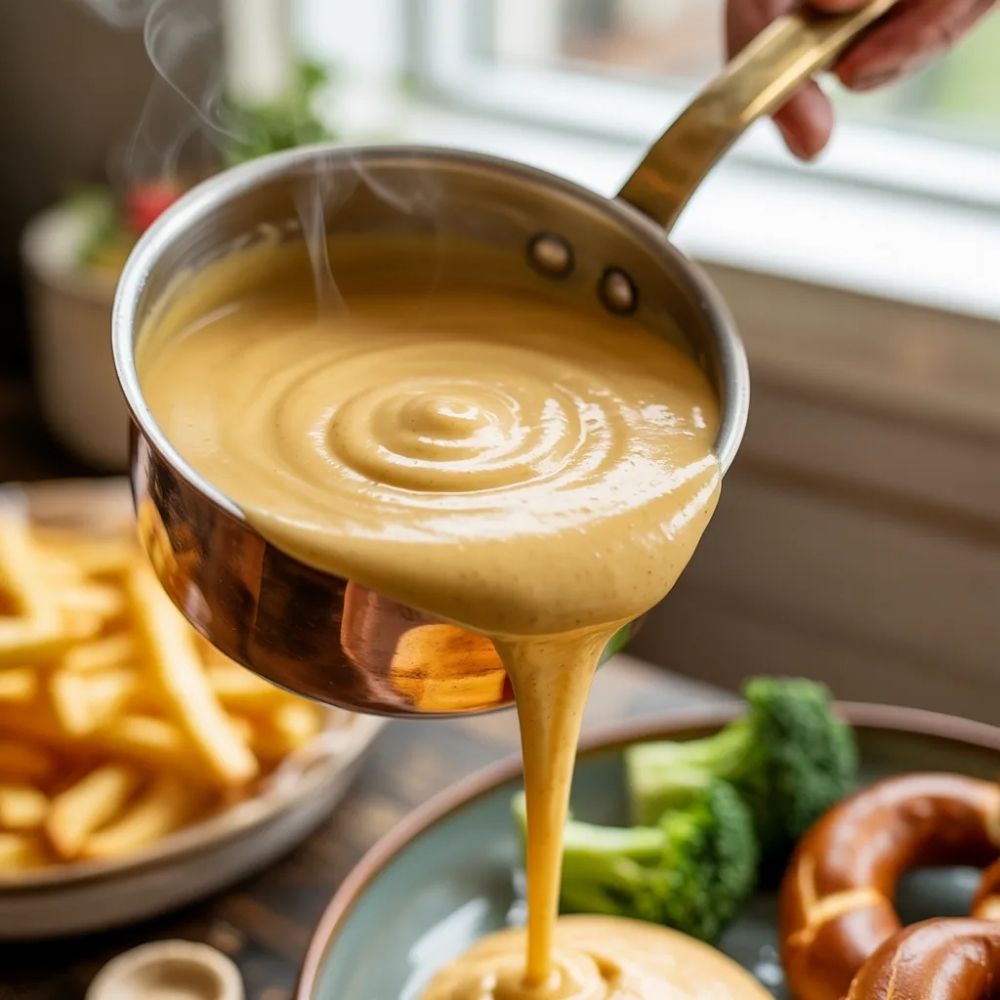
Add your freshly grated sharp cheddar cheese to the pan one handful at a time, whisking gently after each addition. The residual heat of the starch sauce will easily melt the cheese, yielding a glossy, perfectly smooth homemade cheddar cheese sauce. Pour immediately over pasta, roasted vegetables, or use as a premier cheese sauce for pretzels.
Global Cheese Sauce Adaptations
Once you understand the basic rules of starch and dairy physics, you can easily pivot this technique into several distinct global variants.
Variant 1: The French Mornay Sauce
To elevate your dish into an authentic mornay presentation—the classic topping for chicken cordon bleu sauce or high-end gratins—swap the sharp cheddar cheese for a blend of equal parts Swiss Gruyère and Parmigiano-Reggiano. Finish the sauce with a tiny pinch of ground nutmeg to add a subtle, nutty complexity.
Variant 2: Stadium-Style Queso Sauce
To shift your recipe into a vibrant queso sauce or homemade nacho cheese sauce, substitute half of the cheddar for a smooth melting Monterey Jack or Pepper Jack cheese. Stir in a can of drained diced green chilis or tomatoes, a pinch of ground cumin, and a dash of hot sauce right at the end to create a perfect dip for chips.
Variant 3: Indulgent Gorgonzola Steak Sauce
To cook a premium blue cheese sauce for steak, replace the cheddar cheese with 4 ounces of crumbled Gorgonzola or Roquefort blue cheese. Build your base by sautéing a finely minced shallot in the butter before adding the flour, and use a mix of heavy cream and beef broth as your liquid matrix to pair perfectly with grilled beef.
Culinary Variant and Application Reference Chart
Use this parameter table to select the ideal cheese profiles and liquid bases for your favorite family meals.
| Sauce Variant Style | Core Cheese Selection | Primary Liquid Component | Structural Base Method | Best Meal Pairing | Search Intent Alignment |
| Sharp Cheddar Blend | Block Sharp Cheddar | Whole Milk | Flour & Butter Roux | macaroni and cheese sauce | cheese sauce for mac n cheese |
| Authentic Mornay | Gruyère & Parmesan | Whole Milk | Traditional Classic Roux | cauliflower and cheese sauce | mornay sauce |
| Tex-Mex Dip | Pepper Jack & Cheddar | Milk & Chili Juices | Roux + Diced Tomatoes | cheese sauce for chips / nachos | homemade nacho cheese |
| Steakhouse Blue | Gorgonzola or Roquefort | Heavy Cream & Broth | Reduced Cream Matrix | steak and blue cheese sauce | blue cheese sauce for steak |
Nutritional Breakdown
A standard 1/4-cup serving of scratch-made, starch-stabilized easy cheese sauce provides a rich supply of dietary fats, bone-building calcium, and clean proteins.
-
Total Energy Output: 165 Calories (kcal)
-
Protein Content: 7 grams (dense source of dairy casein proteins)
-
Total Lipid Fat: 13 grams
-
Saturated Fat: 8 grams (derived from real cream and natural butter fats)
-
Monounsaturated Fat: 3.5 grams
-
-
Total Carbohydrates: 4 grams
-
Dietary Fiber: 0.1 grams
-
Sugars: 1.5 grams
-
-
Sodium Matrix: 290 mg (highly controlled; commercial processed cheese sauces easily double this value)
-
Key Micronutrients: High concentrations of Calcium, Phosphorus, Vitamin A, Zinc, and Riboflavin.
Frequently Asked Questions (FAQ)
Why did my cheese sauce turn out grainy, chalky, and separated?
A grainy texture is almost always caused by using pre-shredded cheese from a grocery bag, or exposing the cheese to high heat. Pre-bagged cheeses are treated with powdery starch coatings to keep the strands from sticking together in the bag, which will make your sauce chalky.
Additionally, if you let your sauce boil after adding the cheese, the protein fibers will seize up and push out the fat, causing it to split. Always grate your own cheese from a fresh block and stir it in with the heat turned completely off.
Can I create a quick, smooth cheese dip using Velveeta?
Yes, if you are short on time, making a cheese dip with velveeta or a cheese sauce using velveeta is an exceptionally fast shortcut. Velveeta is a processed cheese product that contains built-in emulsifying salts (sodium phosphate).
These salts keep the dairy fats permanently bonded, allowing the cheese to melt into a perfectly liquid, glossy velvet cheese sauce consistency without needing a flour roux or starch buffer. Simply melt it over low heat with a can of diced tomatoes and chilis.
How do I properly reheat leftover cheese sauce without it splitting into oil?
Reheating a starch-bound sauce in a microwave at full power will melt the dairy emulsion, leaving you with a greasy puddle. To reheat your sauce safely, place it in a small saucepan over low heat on your stovetop. Add 1 to 2 tablespoons of fresh milk or water to help loosen the cold starches. Whisk continuously as it warms up; the gentle heat and fresh liquid will re-emulsify the fats, bringing back a smooth texture.
Is it possible to make a healthier cheese sauce using alternative dairy options?
Yes, you can easily craft a lighter, high-protein sauce by making an alfredo sauce with cottage cheese or a cottage cheese pasta sauce. To do this, blend 1 cup of low-fat cottage cheese with 2 tablespoons of milk and 1/4 cup of grated parmesan in a high-speed blender until completely smooth.
Warm the blended mixture very gently in a skillet over low heat—do not let it boil—to create an excellent, creamy pasta ricotta sauce alternative that is low in fat and packed with protein.
Can I freeze a batch of homemade cheese sauce for future meal prep?
It is not recommended to freeze cheese sauces made with a traditional flour and milk roux. Freezing forces the water molecules to form large ice crystals, which disrupts the delicate starch and fat bonds. When you thaw the sauce out, it will almost always split into a watery, clumpy texture.
Because this simple cheese sauce recipe takes less than 10 minutes to whip up from scratch, it is best enjoyed fresh or stored in your refrigerator for up to 4 days.
Cheese Sauce
Print ThisIngredients
- 2 Tablespoons Unsalted Butter
- 2 Tablespoons All-Purpose Flour
- 1.5 Cups Whole Milk (Preferably slightly warm or room temperature)
- 2 Cups (200g) Sharp Cheddar Cheese: Freshly grated from a block.
- 1/4 Teaspoon Garlic Powder
- 1/4 Teaspoon Smoked Paprika (For a light golden hue and warmth)
- 1/2 Teaspoon Kosher Salt
- 1/4 Teaspoon Fresh Black Pepper
Instructions
Place your heavy saucepan over medium heat. Add the 2 tablespoons of unsalted butter and let it melt completely until it begins to foam gently.
Sprinkle the 2 tablespoons of all-purpose flour directly into the melted butter. Whisk immediately and continuously for 60 seconds.
While whisking with one hand, slowly stream your milk into the pan in a steady trickle. Continuous whisking at this stage is vital to keep the roux dissolving evenly into the liquid without forming lumps.
Bring the liquid to a very gentle simmer over medium heat. Cook for 3 to 4 minutes, whisking frequently, until the starch granules fully hydrate. Whisk in your garlic powder, smoked paprika, salt, and black pepper.
Turn your stove burner completely off and move the saucepan to a cool side of the stove.
Add your freshly grated sharp cheddar cheese to the pan one handful at a time, whisking gently after each addition. Pour immediately over pasta, roasted vegetables, or use as a premier cheese sauce for pretzels.