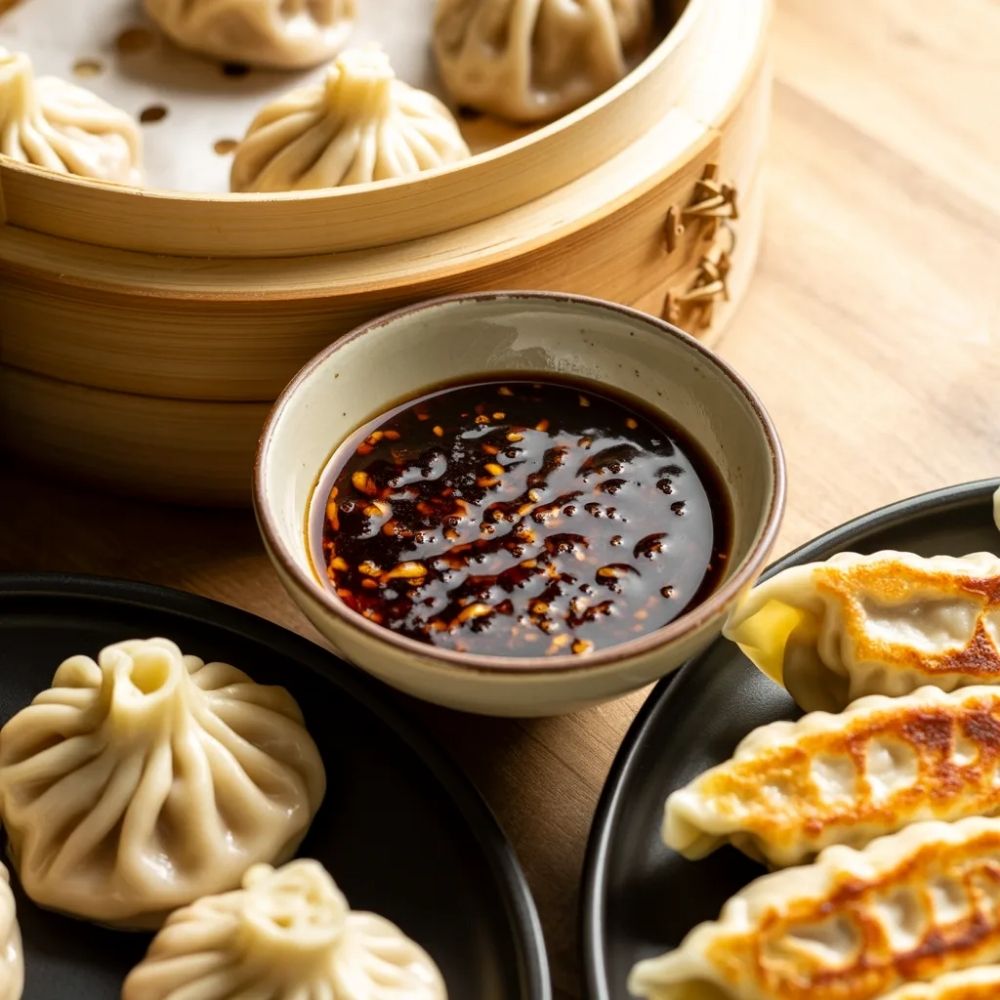
Whether you are steaming a basket of delicate dim sum, boiling savory wontons, or pan-searing crisp potstickers, a high-quality dumpling sauce is an absolute necessity. A great dipping sauce for dumplings should never be a background afterthought; it acts as a crucial culinary counterweight, slicing through the heavy, rich fats of ground meat fillings while enhancing the delicate starches of the dough wrappers.
Many home cooks simply pour plain soy sauce into a ramekin, resulting in a one-dimensional, overly salty profile. Crafting an authentic, restaurant-grade chinese dumpling sauce requires balancing four foundational pillars of Asian flavor chemistry. This comprehensive guide covers the science of umami balance, a foolproof simple dumpling sauce recipe, a complete nutritional breakdown, and an essential troubleshooting FAQ section.
The Science of Flavor Balance: The Four Elemental Pillars
To understand why a professional potsticker sauce tastes so complex compared to plain bottle sauces, you must examine how different flavor molecules interact on your tongue. An authentic gyoza dipping sauce relies on a precise biochemical synergy between four distinct elements:
The Salty Base (Aged Soy Sauce): Provides the foundational umami (glutamate) matrix that highlights the savory proteins inside the dumpling filling.
The Acidic Brightness (Chinkiang Vinegar): Traditional chinese dumpling sauce recipes utilize black rice vinegar. This ingredient introduces a deep, malty acidity that instantly breaks up heavy interior fats and cleanses your palate between bites.
The Pungent Aromatics (Fresh Garlic & Sesame): Allicin from crushed raw garlic adds a sharp flavor bite, while toasted sesame oil provides aromatic lipids that coat your tongue, extending the finish of the sauce.
The Sweet Counterweight (Sugar Matrix): A tiny touch of sweetness acts as a chemical buffer, smoothing out the harsh, aggressive edges of the raw garlic and sharp vinegar.
Required Equipment and Ingredient Selection
To successfully mix a homemade dumpling sauce with a perfect, uniform distribution of flavors, your raw ingredients must match authentic standards.
Essential Equipment
-
A Garlic Press or Microplane Grater: Crucial for pulverizing raw garlic into a fine paste. Chopping garlic with a knife leaves large, crunchy chunks that can easily overwhelm a single bite of your dumpling dip.
-
A Small Wire Whisk: For completely dissolving granulated sugars into the cold vinegar liquid.
-
A Dedicated Saucier Ramekin: For individual dipping presentation.
The Authentic Ingredients Matrix
Chinkiang Vinegar (Chinese Black Vinegar): The irreplaceable heart of a true soup dumpling sauce. Made from fermented rice and grains, it boasts a deeply complex, woody, and slightly sweet flavor profile that standard white or apple cider vinegars cannot replicate.
Light Soy Sauce: Provides a sharp, bright saltiness. Avoid thick, sweet dark soy sauce for this preparation, as it will make the dipping sauce for potstickers muddy and overly viscous.
Chinese Chili Oil: For a vibrant, smoky heat element. Look for varieties containing sediment flakes (chili crisp) at the bottom of the jar to add texture to your dumpling dipping sauce recipes.
Step-by-Step 5-Minute Dumpling Sauce Recipe
Follow this streamlined, no-cook preparation to build an exceptional easy dipping sauce for dumplings that elevates any store-bought or scratch-made potsticker.
Ingredients
-
3 Tablespoons Light Soy Sauce
-
2 Tablespoons Chinkiang Chinese Black Vinegar (or regular rice vinegar)
-
1 Teaspoon Toasted Sesame Oil
-
1 Teaspoon Chinese Chili Oil (with chili flakes to taste)
-
1 Clove Garlic: Finely grated or pressed into a smooth paste.
-
1/2 Teaspoon Finely Grated Fresh Ginger
-
1/2 Teaspoon Sugar (Granulated white sugar or brown sugar)
-
1 Teaspoon Fresh Scallions (Green Onions): Finely sliced into thin rings.
Step-by-Step Instructions:
Press your fresh garlic clove and grate your fresh ginger directly into the bottom of a small mixing bowl.
Pour your light soy sauce and authentic Chinkiang black vinegar directly over the aromatics.
Add the 1/2 teaspoon of sugar to the liquid. Use your small wire whisk to agitate the mixture vigorously for 60 seconds until you can no longer see or hear any gritty sugar crystals scraping against the bottom of the bowl. Dissolving the sugar completely is vital to achieving a smooth, balanced sauce.
Stream in your toasted sesame oil and fiery chili oil, whisking gently to distribute the oil droplets evenly across the top layer of the liquid.
Toss your freshly sliced green scallions directly into the bowl. Allow the completed gyoza dip to sit undisturbed at room temperature for 5 minutes before serving. This brief resting window allows the liquids to draw out the fragrant, water-soluble oils hidden within the fresh garlic, ginger, and green onions.
Regional Dipping Sauce Variance Parameter Chart
Use this quick-reference style table to adapt your pot sticker sauce recipes to match diverse global dumpling varieties.
| Culinary Region / Style | Primary Acid Base | Primary Umami Base | Key Aromatic Elements | Best Food Pairing | Target Search Intent |
| Authentic Chinese Dim Sum | Chinkiang Black Vinegar | Light Soy Sauce | Pressed Garlic, Ginger, Scallions | Pork dipping sauces for wontons | chinese dumpling sauce |
| Japanese Izakaya Gyoza | Rice Wine Vinegar | Light Soy Sauce | Toasted Sesame Oil & Chili Oil (Rayu) | Pan-fried pork & cabbage gyrozs | gyoza dipping sauce |
| Fiery Szechuan Wonton | Black Vinegar & Black Soy | Light Soy Sauce | Abundant Chili Crisp, Szechuan Peppercorns | dipping sauce for wonton dishes | dumpling sauce recipes |
| Korean Mandu Style | Rice Vinegar | Light Soy Sauce | Gochugaru (Chili Flakes) & Toasted Sesame Seeds | Steamed or fried vegetable mandu | dumpling sauce easy |
Nutritional Breakdown
A standard home-cooked, un-thickened simple dumpling sauce is naturally low in cholesterol and containing zero dairy fats. A standard 2-tablespoon serving contains approximately the following values:
-
Total Energy Output: 35 Calories (kcal)
-
Total Lipid Fat: 2.5 grams
-
Saturated Fat: 0.3 grams
-
Monounsaturated Fats: 1.1 grams (derived from pure plant-based sesame lipids)
-
-
Total Carbohydrates: 2.5 grams
-
Dietary Fiber: 0.1 grams
-
Sugars: 2 grams
-
-
Protein Content: 1 gram (derived naturally from fermented soy proteins)
-
Sodium Matrix: 840 mg (High-density umami profile; easily moderated by utilizing a low-sodium soy sauce baseline)
-
Key Micronutrients: Trace concentrations of Manganese, Iron, Magnesium, and Vitamin B6.
Frequently Asked Questions (FAQ)
What can I use as a substitute if I cannot find Chinkiang black vinegar?
If your local grocery store does not carry authentic Chinese black vinegar, you can easily create a substitute to finish your gyoza sauce recipes. Mix equal parts high-quality balsamic vinegar and standard Japanese rice vinegar. Balsamic vinegar mimics the deep, woody sweetness and dark color of Chinkiang vinegar, while the clean rice vinegar introduces that sharp, bright, and vital Asian acidity.
How long can I safely store a batch of homemade dumpling sauce in the fridge?
Because a raw dumpling dipping sauce contains fresh ingredients like raw garlic, ginger, and green onions, it should be stored in a sealed airtight container or glass jar inside your refrigerator. Kept cold, it stays perfectly fresh and flavorful for up to 1 week. Over time, the garlic will infuse more deeply into the liquid, making the sauce noticeably spicier and more pungent the longer it sits.
Why is the oil floating in a separate layer on top of my potsticker sauce?
Oil and water are naturally incompatible, meaning your chili oil and sesame oil will always float to the top surface of a dip for pot stickers. This is completely normal and desired in Asian cuisine. The floating oil ensures that when you submerge a dumpling into the dish, it picks up a light micro-coating of aromatic fat right along with the savory, vinegar-rich liquid underneath. Simply give the ramekin a fast stir with a chopstick right before dipping.
Can I make a completely gluten-free version of this recipe?
Yes, you can easily adapt this into a 100% gluten-free dipping sauce. Standard commercial soy sauces are brewed with wheat grains, making them unsafe for celiac diets. To bypass this, simply swap the light soy sauce for an equal amount of certified gluten-free Tamari or coconut aminos. Authentic Chinkiang rice vinegar is naturally gluten-free, but double-check your bottle label to ensure it hasn’t been cut with wheat or barley malt byproducts.
Is this sauce suitable for authentic Shanghai soup dumplings (Xiao Long Bao)?
Yes, this blend works beautifully, but for an ultra-traditional soup dumpling sauce experience, make two small adjustments. Omit the chili oil, garlic, and green scallions completely. Instead, shred fresh, peeled ginger root into paper-thin, matchstick-sized strands.
Drop these fine ginger matchsticks directly into a pool of pure Chinkiang black vinegar with just a splash of light soy sauce. The clean, spicy heat of the raw ginger matchsticks cuts through the rich, hot pork broth inside the soup dumpling perfectly.
Dumpling Sauce
Print ThisIngredients
- 3 Tablespoons Light Soy Sauce
- 2 Tablespoons Chinkiang Chinese Black Vinegar (or regular rice vinegar)
- 1 Teaspoon Toasted Sesame Oil
- 1 Teaspoon Chinese Chili Oil (with chili flakes to taste)
- 1 Clove Garlic: Finely grated or pressed into a smooth paste.
- 1/2 Teaspoon Finely Grated Fresh Ginger
- 1/2 Teaspoon Sugar (Granulated white sugar or brown sugar)
- 1 Teaspoon Fresh Scallions (Green Onions): Finely sliced into thin rings.
Instructions
Press your fresh garlic clove and grate your fresh ginger directly into the bottom of a small mixing bowl.
Pour your light soy sauce and authentic Chinkiang black vinegar directly over the aromatics.
Add the 1/2 teaspoon of sugar to the liquid. Use your small wire whisk to agitate the mixture vigorously for 60 seconds until you can no longer see or hear any gritty sugar crystals scraping against the bottom of the bowl.
Stream in your toasted sesame oil and fiery chili oil, whisking gently to distribute the oil droplets evenly across the top layer of the liquid.
Toss your freshly sliced green scallions directly into the bowl. Allow the completed gyoza dip to sit undisturbed at room temperature for 5 minutes before serving.